(Χωρίς τίτλο)

Κυριακή της Ορθοδοξίας – ΔΙΣ: Θεία Λειτουργία στην Μονή Πετράκη χωρίς ΜΜΕ (αλλά με τους πολιτικούς που ψήφισαν το νομοσχέδιο για το γάμο των ομοφυλοφίλων παρόντες;)

Ημερομηνία:23/3/24

Διαφορετικά από κάθε άλλη φορά θα εορταστεί από τα μέλη της Ιεράς Συνόδου η Κυριακή της Ορθοδοξίας, λόγω των αποφάσεων που ελήφθησαν μετά από την ψήφιση απο την Βουλή του νόμου για τα ομοφυλόφιλα ζευγάρια και την τεκνοθεσία από ομοτλόφιλα ζευγάρια.

Έτσι, για πρώτη φορά η Συνοδική Θεία Λειτουργία δεν θα γίνει στην Μητρόπολη Αθηνών, αλλά στην Μονή Πετράκη, ενώ οι Ιεράρχες απάντησαν αρνητικά στην πρόσκληση της Κατερίνας Σακελλαροπούλου για το ετήσιο γεύμα που κατ’  έθος παρατίθεται στο Προεδρικο Μέγαρο την Κυριακή της Ορθοδοξίας.

Υπεθυμίζεται ότι η Πρόεδρος της Δημοκρατίας απαντησε με μια λιτή ανακοινωση στον Αρχιεπίσκοπο Αθηνών και Πάσης Ελλάδος και τα μέλη της Διαρκούς Ιεράς Συνόδου, οι οποίοι δεν αποδέχθηκαν να παραβρεθούν στο καθιερωμένο γεύμα στο Προεδρικό Μέγαρο, τονίζοντας ότι τόσο ο Αρχιεπίσκοπος, όσο και τα Μέλη της ΔΙΣ «είναι πάντα ευπρόσδεκτοι στο Προεδρικό Μέγαρο», ενώ είναι «σεβαστή η απόφασή τους να μην αποδεχθούν την πρόσκληση».

Η ανακοίνωση της Προεδρίας της Δημοκρατίας ανέφερε «Η Πρόεδρος της Δημοκρατίας Κατερίνα Σακελλαροπούλου απέστειλε στις 4 Μαρτίου, προσκλήσεις προς τον Πρόεδρο της Διαρκούς Ιεράς Συνόδου της Εκκλησίας της Ελλάδος, Αρχιεπίσκοπο Αθηνών και πάσης Ελλάδος Ιερώνυμο, και τα Μέλη της Συνόδου, για το καθιερωμένο γεύμα που παραθέτει προς τιμήν τους στο Προεδρικό Μέγαρο, με την ευκαιρία της Εορτής της Ορθοδοξίας. Ο Πρόεδρος και τα Μέλη της Δ.Ι.Σ. είναι πάντα ευπρόσδεκτοι στο Προεδρικό Μέγαρο, παράλληλα όμως είναι σεβαστή και η απόφασή τους ως προς το αν θα αποδεχθούν την πρόσκληση».

Κυριακή της Ορθοδοξίας - Μητρόπολη Αθηνών

Έτσι, κατόπιν Συνοδικής Αποφάσεως της Διαρκούς Ιεράς Συνόδου, η Κυριακή της Ορθοδοξίας θα εορτασθεί την 24η Μαρτίου 2024, στο Καθολικό της Ιεράς Μονής Ασωμάτων Πετράκη.

Η Συνοδική Θεία Λειτουργία μάλιστα θα τελεσθεί χωρίς την παρουσία Μ.Μ.Ε. (τηλεοπτικών συνεργείων και φωτορεπόρτερ).

Η ανακοίνωση της Ιεράς Συνόδου αναφέρει:

«Την προσεχή Κυριακή 24 Μαρτίου 2024, Α’ Κυριακή των Νηστειών, εορτάζεται πανορθοδόξως η Αναστήλωση των Ιερών Εικόνων, η οποία καθιερώθηκε το 843 από την Αυτοκράτειρα Θεοδώρα, τον υιό της Μιχαήλ Γ’ και τον Πατριάρχη Κωνσταντινουπόλεως Μεθόδιο τον Ομολογητή.

Στο πλαίσιο των λατρευτικών εκδηλώσεων για την ως άνω Εορτή, κατόπιν Συνοδικής Αποφάσεως της Διαρκούς Ιεράς Συνόδου κατά τη Συνεδρία της 5ης Μαρτίου 2024, θα τελεσθεί, κατά την ημέρα αυτή, στο Καθολικό της Ιεράς Μονής Ασωμάτων Πετράκη, Συνοδική Θεία Λειτουργία, ιερουργούντων των Σεβασμιωτάτων Συνοδικών Μητροπολιτών Νικοπόλεως και Πρεβέζης κ. Χρυσοστόμου, Ιερισσού, Αγίου Όρους και Αρδαμερίου κ. Θεοκλήτου και Μαρωνείας και Κομοτηνής κ. Παντελεήμονος. Τον πανηγυρικό της ημέρας θα εκφωνήσει ο Σεβασμιώτατος Συνοδικός Μητροπολίτης Αιτωλίας και Ακαρνανίας κ. Δαμασκηνός.

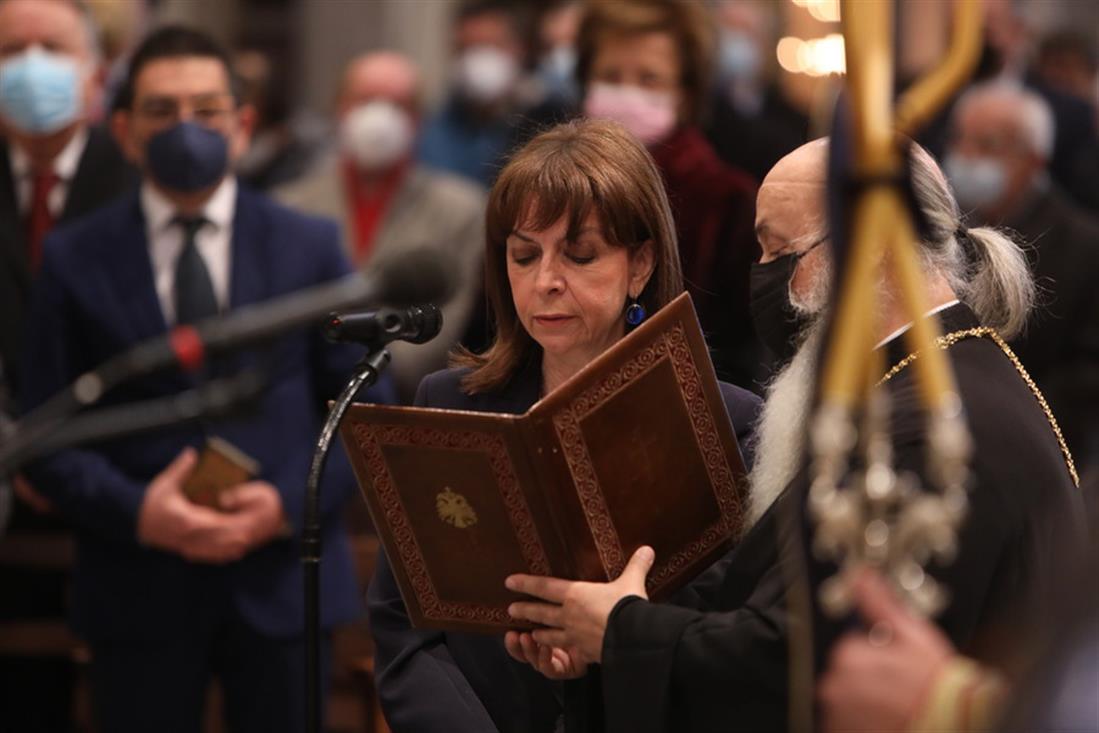
Προ της Απολύσεως της Θείας Λειτουργίας θα αναγνωσθεί ο «Συνοδικός Τόμος της Ορθοδοξίας» εις ανάμνησιν του γεγονότος της Αναστηλώσεως των Ιερών Εικόνων».

Πως θα πεις στον αδελφό σου άσενα σου βγάλω το σκουπιδάκι από το μάτι σου ενώ δεν βλέπεις το δοκάρι που έχεις στο δικό σου μάτι; (Ματθαίος κεφ.7, στίχοι 3 και 4).

Γάμος ομόφυλων ζευγαριών: Τα «όχι» και οι αποχές από τη ΝΔ

(ΓΙΑΝΝΗΣ ΠΑΝΑΓΟΠΟΥΛΟΣ/EUROKINISSI)


Ένας-ένας οι βουλευτές ανοίγουν τα χαρτιά τους

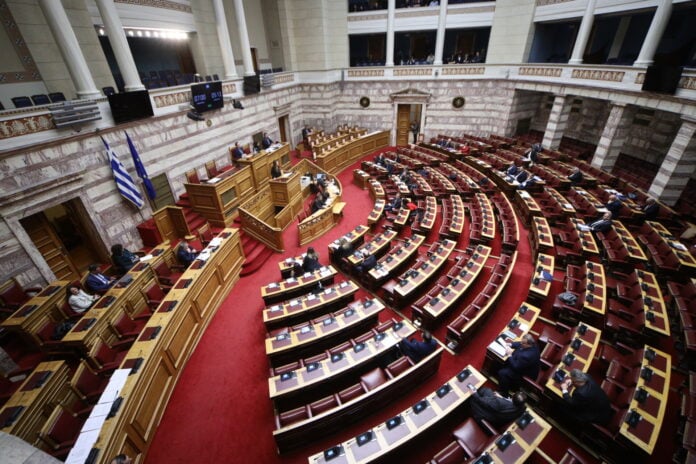
Την ώρα που συζητείται το νομοσχέδιο για τον γάμο των ομόφυλων ζευγαριών στην Ολομέλεια της Βουλής, βουλευτές της Νέας Δημοκρατίας «άνοιξαν» τα χαρτιά τους σχετικά με την στάση, που θα κρατήσουν.

Ειδικότερα, μέχρι στιγμής έχουν δηλώσει ότι θα απέχουν από την αυριανή (15/2) ψηφοφορία ο πρώην υπουργός Υγείας, Θάνος Πλεύρης, καθώς και ο Στέλιος Πέτσας. Το νομοσχέδιο δήλωσαν ότι θα καταψηφίσουν ο Μίλτος Χρυσομάλλης, η Άννα Καραμανλή, ο Ευριπίδης Στυλιανίδης, ο Χαράλαμπος Αθανασίου και ο Μάριος Σαλμάς.

«Αυτό για μένα είναι αξιακό»

Ο κ. Χρυσομάλλης τόνισε χαρακτηριστικά:

«Η μεγάλη παράταξη της Νέας Δημοκρατίας, παρέμεινε σταθερή στα 50 χρόνια της ιστορίας της διότι κατόρθωσε να ενσωματώσει διαφορετικές απόψεις με επιτυχία γιατί όλοι εμείς προερχόμαστε από διάφορες πολιτικές προσεγγίσεις – φιλελεύθεροι, συντηρητικοί, κεντρώοι, δεξιοί και συνυπάρχουμε για τα πολλά στα οποία συμφωνούμε, αλλά και γι αυτά στα οποία διαφωνούμε και πρώτος τα αναγνωρίζει όλα ο ίδιος ο πρόεδρός μας και πρωθυπουργός. Η ΝΔ είναι ένα μεγάλο λαϊκό κόμμα που εκφράζει τις ανησυχίες και τις προσδοκίες όλων των Ελλήνων.

Αυτές τις ανησυχίες φωνάζω κι εγώ σήμερα με την αρνητική ψήφο μου για το συγκεκριμένο νομοσχέδιο. Τοποθετούμαι όμως κατά συνείδηση και όχι απέχοντας. Δεν δύναμαι να φανταστώ μια κοινωνία, που ο πατέρας και η μητέρα θα αντικατασταθούν από τον γονέα 1 και τον γονέα 2 και τα παιδιά θα στερούνται τα οφέλη που ο πατέρας και η μητέρα από κοινού προσφέρουν. Κι αυτό για μένα είναι αξιακό. Γιατί έχουμε την ευθύνη να διατηρήσουμε ότι κληρονομήσαμε, να προστατεύσουμε την κοινωνία και πάνω από όλα τα παιδιά μας».

«Δεν μπορώ να ψηφίσω»

Ταυτόχρονα ο Θάνος Πλεύρης αναφερόμενος στον λόγο που δεν δύναται να ψηφίσει, υπογράμμισε:

«Δεν μπορώ να ψηφίσω τις συγκεκριμένες διατάξεις που προωθεί η κυβέρνηση, αλλά θα επιλέξω στάση που δεν θα δώσει δικαίωμα σε κανέναν να εκμεταλλευτεί τη διαφωνία μου για μικροπολιτικούς λόγους».

«Είναι θέμα συνείδησης και συνείδηση σημαίνει πως αντέχεις και αναγνωρίζεις τον πολιτικό σου ρόλο. Συνεπώς δεν μπορώ να ψηφίσω τις συγκεκριμένες διατάξεις που προωθεί η κυβέρνηση αλλά θα επιλέξω στάση που δεν θα δώσει το δικαίωμα να εκμεταλλευτεί κανείς τη διαφωνία μου για μικροπολιτικούς λόγους» είπε χαρακτηριστικά ο βουλευτής της ΝΔ.

Α. Καραμανλή: «Έχω κόκκινες γραμμές»

“Δεν ξέρω πότε η έννοια της οικογένειας έχασε την ιερότητά της και φτάσαμε στο σημείο να θεωρείται οκ ένα παιδί να μην πει ποτέ μαμά, ούτε πότε ο βράχος των παιδικών μας χρόνων, ο πατέρας, έγινε ανώνυμο σπέρμα. Αν αυτό είναι πρόοδος τότε είμαι συντηρητική και οπισθοδρομική. Αν όμως είναι ένα μοιραίο βήμα για την αποσύνθεση της κοινωνικής συνοχής, την διάλυση των δεσμών που ξεκινούν από την οικογένεια και καθορίζουν όλη μας τη ζωή, τότε όχι δεν μπορώ να συναινέσω και γι αυτό καταψηφίζω το νομοσχέδιο”, δήλωσε η βουλευτής της ΝΔ, ‘Αννα Καραμανλή από την Ολομέλεια.

Τέλος, η κυρία Καραμανλή καταφέρθηκε εναντίον όσων κατηγορούν τους διαφωνούντες βουλευτές σαν ομοφοβικούς και αναχρονιστικούς και κατήγγειλε συνάδελφό της από το κυβερνών κόμμα, ο οποίος της απέδωσε κίνητρα ψηφοθηρίας, όταν δήλωσε ότι τάσσεται εναντίον του νομοσχεδίου.

«Κλονίζεται το μοντέλο της ελληνικής παραδοσιακής οικογένειας»

Στη συζήτηση που εξελίσσεται στην ολομέλεια, ο βουλευτής της ΝΔ, Ευριπίδης Στυλιανίδης, ανέφερε μεταξύ άλλων, ότι: «Διεθνείς μελέτες έχουν δείξει ότι τα γενετικά αίτια που προσδιορίζουν τον σεξουαλικό προσανατολισμό, αφορούν σε μικρό μονάχα ποσοστό, της ΛΟΑΤΚΙ κοινότητας. Ένα μεγάλο ποσοστό επέλεξε αυτόν τον προσανατολισμό από μόδα, από εμπειρία, από επιλογή ή από άλλες συνθήκες. Ως εκ τούτου, είναι πολύ σημαντικά τα κοινωνικά και οικογενειακά βιωματικά πρότυπα, όχι μόνο για την ψυχολογία των παιδιών αλλά και για τη διαμόρφωση της σεξουαλικής τους ταυτότητας».

Παράλληλα, πρόσθεσε ότι «η νομοθέτηση του γάμου των ομοφυλόφιλων ζευγαριών, κλονίζει αναμφισβήτητα το επιτυχημένο μοντέλο της ελληνικής παραδοσιακής οικογένειας, απομακρύνει από τα ορθόδοξα χριστιανικά πρότυπα της ελληνικής παράδοσης και αποδυναμώνει την προσπάθεια δημογραφικής ενίσχυσης μιας χώρας που πλήττεται σφοδρά από την υπογεννητικότητα […] Αυτό που χρειάζεται σήμερα κυρίως στην Ελλάδα, είναι η στήριξη της τρίτεκνης και πολύτεκνης οικογένειας».

Στ. Πέτσας: «Για λόγους νομικούς, βιοηθικούς και πολιτικούς δεν μπορώ να συμφωνήσω»

Ο βουλευτής της ΝΔ, Στέλιος Πέτσας δήλωσε από το βήμα της Βουλής ότι θα απέχει από την ψηφοφορία. Μεταξύ των λόγων που επικαλέστηκε ο κ. Πέτσας για τη διαφωνία του, είναι το άρθρο 11 του νομοσχεδίου, για το οποίο υποστήριξε ότι ανοίγει ένα μεγάλο παράθυρο στην παρένθετη κύηση, στην οποία η κυβέρνηση επιθυμεί να κλείσει την πόρτα – κι αυτό γιατί μετά την ψήφιση του νόμου, παιδί που αποκτάται με οποιονδήποτε νόμιμο τρόπο στο εξωτερικό, αναγνωρίζεται αυτομάτως στο εσωτερικό. “Είναι πραγματικά οξύμωρο να θέλεις να απαγορεύσεις κάτι, και όμως με το σχέδιο νόμου να το επιτρέπεις. Επιπλέον αυτή η αντίφαση είναι εξαιρετικά πιθανό να οδηγήσει σε καταδίκη της Ελλάδας στο Ειδικό Δικαστήριο των Δικαιωμάτων του Ανθρώπου, καθώς το μόνο κριτήριο για την απαγόρευση της παρένθετης κύησης για ομόφυλα ζευγάρια στην Ελλάδα θα είναι ο τόπος γέννησης ενός παιδιού, κάτι που υπογραμμίζεται και στην έκθεση της Επιστημονικής Υπηρεσίας της Βουλής” ανέφερε συγκεκριμένα.

Εξάλλου, ο κ. Πέτσας δήλωσε, ότι τον προβληματίζει οποιαδήποτε ρωγμή στην πολιτική σταθερότητα, που με τόσο κόπο κατακτήσαμε τα τελευταία χρόνια, με το ενδεχόμενο να καταγραφούν στις Ευρωεκλογές ιστορικά υψηλά επίπεδα αποχής, και την ενίσχυση μέσω αυξημένης ψήφου διαμαρτυρίας, ετερόκλητων και ενδεχομένως αντιευρωπαϊκών δυνάμεων στην επόμενη Ευρωβουλή. Καταλήγοντας, ο κ. Πέτσας τόνισε ότι: “Για λόγους νομικούς, βιοηθικούς και πολιτικούς, πιστός στις αρχές και στις αξίες μου, ως σύζυγος πατέρας και πολιτικός δεν μπορώ να συμφωνήσω με αυτή την νομοθετική πρωτοβουλία. Επειδή όμως στηρίζω τον πρωθυπουργό, Κυριάκο Μητσοτάκη και την κυβέρνηση που αποκατέστησε την εμπιστοσύνη στην πατρίδα μας, επειδή μια διαφωνία, έστω και σημαντική, δεν μπορεί να θολώσει τις λοιπές πολιτικές μας που κάνουν καλύτερη τη ζωή των Ελλήνων, αλλά και επειδή επιθυμώ την ενότητα της παράταξης στην οποία ανήκω από μικρό παιδί, θα απέχω από την ονομαστική ψηφοφορία”.

«Το σύμφωνο συμβίωσης έχει λύσει τα βασικά ζητήματα για την προστασία των παιδιών»

«Το σύμφωνο συμβίωσης έχει λύσει τα βασικά ζητήματα για την προστασία των παιδιών, όπως αυτά της καταγωγής, της διατροφής, ζητήματα ασφαλιστικά, συνταξιοδοτικά, κληρονομικά, πάντα με γνώμονα το συμφέρον του παιδιού», είπε ο βουλευτής της ΝΔ Χαράλαμπος Αθανασίου ο οποίος επικαλέστηκε και τη νομολογία για την προστασία του παιδιού και το υφιστάμενο θεσμικό πλαίσιο. Ο κ. Αθανασίου δήλωσε ότι θα καταψηφίσει το νομοσχέδιο και ότι το ζήτημα της προστασίας των παιδιών προβάλλεται προσχηματικά. «Όλα τα προβαλλόμενα επιχειρήματα, ότι για την προστασία των παιδιών των ομόφυλων ζευγαριών, απαιτείται γάμος, είναι χωρίς έρεισμα και συνεπώς προσχηματικά», είπε ο κ. Αθανασίου. Πρόσθεσε επίσης ότι η συνταγματική έννοια του γάμου τον περιορίζει στα ουσιώδη στοιχεία που ισχύουν διαχρονικά στην ελληνική κοινωνία και στις θεμελιώδεις αρχές που τον διέπουν στην ελληνική έννομη τάξη, δηλαδή στη μόνιμη συμβίωση δύο προσώπων διαφορετικού φύλου.

Κάθε άλλη νοηματοδότηση της ομόφυλης σχέσης είναι ανυπόστατη διότι δεν μπορεί να υπάρξει γάμος χωρίς τη συμβολή δύο φύλων, είπε ο Χαράλαμπος Αθανασίου και πρόσθεσε: «Στη ΝΔ, ως η κατεξοχήν μεγάλη δημοκρατική παράταξη, είναι επόμενο να προσεγγίζουμε αξιακά ζητήματα από διαφορετική σκοπιά αλλά πάντοτε με αρραγή ενότητα, ευθύνη και πολιτισμό. Γιατί η παράταξή μας, είναι παράταξη της ευθύνης και της συνέπειας».

ΠΗΓΗ:https://www.naftemporiki.gr/politics/1591112/gamos-omofylon-zeygarion-ta-ochi-kai-oi-apoches-apo-tin-nd/

Ώρα να πέσει το εγκληματικό ψευτορωμαίϊκο και να ρθει το αληθινό να το αντικαταστήσει

Μόνο χρειάζονται αγνοί πατριώτες παλληκάρια!

Σάββατο 20 Ιουνίου 2015

Ποιος θυμάται αυτήν την υπέροχη Ελληνίδα ή τι γνωρίζετε γι αυτήν;

Η νεαρή Ελληνίδα, παιδί μεταναστών από την Αμαλιάδα, γεννημένη στην Αυστραλία
 το 1970, αποφοίτησε από το Πανεπιστήμιο της Μελβούρνης, όπου σπούδασε 
Ανοσολογία, Βιοχημεία και Παθολογία. Συνέχισε τις σπουδές της στις ΗΠΑ, 
όπου και αφιερώθηκε στην ιατρική έρευνα. Είχε γίνει το αγαπημένο θέμα 
των ειδήσεων το καλοκαίρι του 1997. Η είδηση, χωρίς καμία αμφιβολία, 
ήταν σπουδαία: μία Ελληνίδα ομογενής, η Βάσω Αποστολοπούλου, 
ερευνήτρια-ανοσιολόγος, ανακάλυψε το εμβόλιο κατά του καρκίνου του μαστού. 
Μόλις στα 27 της είχε ανακηρυχθεί «Νεαρή Αυστραλιανή της χρονιάς» και είχε 
φιλοξενηθεί στα πρωτοσέλιδα των μεγαλύτερων εφημερίδων της Μελβούρνης. 
Παράλληλα στο ερευνητικό κέντρο «Austin», όπου εργαζόταν, 
είχε υπό την καθοδήγησή της μια δεκαπενταμελή ομάδα. 
Επτά χρόνια μετά, η Βάσω Αποστολοπούλου ήταν 
 η «Γυναίκα της Χρονιάς 2003″ στην κατηγορία των επιστημόνων.
 
Σημαντικότατη συνεισφορά της  η παρασκευή του εμβολίου κατά του καρκίνου 
του μαστού, για πρώτη φορά στα ιατρικά χρονικά, το οποίο παρασκεύασε
 μαζί με συναδέλφους της στην Αυστραλία.
 
Καλώς που γεννήθηκε και μεγάλωσε στην ξένη γη, 
μακριά από την υπερφίαλη Ελλάδα, 
αφού  η αντιμετώπιση της κλινικής μελέτης
 του εμβολίου από τον Ελληνικό 
Οργανισμό Φαρμάκων (ΕΟΦ) ήταν τόσο αναίτια 
 και απογοητευτική, ώστε να τη διακόψουν 
με το αιτιολογικό ότι 
«η συνέχιση της έρευνας δεν είχε νόημα».
Παγκοσμίως, ωστόσο,  η ιατρική κοινότητα αναγνωρίζει το έργο της και την επαινεί 
για τη σπουδαία ανακάλυψή της. Η ίδια χαρακτηριστικά αναφέρει: «Όλες 
οι κλινικές δοκιμές έδειξαν πως όσον αφορά την πρόληψη του καρκίνου του μαστού 
η επιτυχία φθάνει στο 100%. Βέβαια όσον αφορά την θεραπεία του καρκίνου 
τα ποσοστά είναι χαμηλότερα αλλά, πάντως, εντυπωσιακά υψηλά». 
Όλα τα αποτελέσματα των κλινικών μελετών του εμβολίου δημοσιεύτηκαν 
στο επιστημονικό περιοδικό «Βreast Cancer Research».
 
Η Βάσω Αποστολοπούλου διαθέτει πολλές επιστημονικές περγαμηνές: επισκέπτρια 
καθηγήτρια στο Scripps Research Institute των ΗΠΑ, καθηγήτρια
 στα Πανεπιστήμια Melbourne, Monash και Victoria της Μελβούρνης 
και επικεφαλής της Μονάδας Ανοσίας και Εμβολίων
 στο Austin Research Institute της Μελβούρνης. 
Για το έργο της έχει λάβει πληθώρα τιμητικές διακρίσεις από πολλές χώρες. 
Στην Ελλάδα έλαβε το Βραβείο Μποδοσάκη για τον τομέα των Βιοϊατρικών Επιστημών. Ωστόσο, από την πλευρά της κ. Αποστολοπούλου 
εκφράζεται απογοήτευση για την ελληνική 
αντιμετώπιση της κλινικής μελέτης του εμβολίου.
Τα δύο ιερά τέρατα του παγκόσμιου αντικαρκινικού αγώνα η καθηγήτρια 
Βάσω Αποστολοπούλου και ο Νομπελίστας Καθηγητής Ιατρικής
 Harald zur Hausen – ο οποίος ανακάλυψε το πρώτο αντικαρκινικό εμβόλιο 
για τον καρκίνο του τραχήλου της μήτρας- βρέθηκαν πριν από λίγες ημέρες 
στην Πάτρα στα πλαίσια του 15ου συνεδρίου Ιατρικής Χημείας το οποίο 
διοργάνωσε το πανεπιστήμιο Πατρών, εκδήλωση η οποία συνέπεσε 
με τον εορτασμό των 50 χρόνων του πανεπιστημίου. 
……………………………………………………………………………………….
Στο Συνέδριο συμμετείχε και η διακεκριμένη ερευνήτρια, Καθηγήτρια 
Ανοσολογίας στο Πανεπιστήμιο Victoria της Αυστραλίας, κυρία Βάσω Αποστολοπούλου, 
η οποία αναφέρθηκε στην έρευνα για την ανάπτυξη Αντικαρκινικού Εμβολίου
 στην προστασία Ωοθηκών και Μαστού. Στην ομιλία της αναφέρθηκε ειδικότερα 
στη γνώση που έχει αποκτηθεί τα τελευταία χρόνια στην ανάπτυξη εμβολίων
 και στα αποτελέσματα κλινικών δοκιμών του αντικαρκινικού εμβολίου
 CVac (Cancer Vaccine). Το προϊόν, αποτέλεσμα της έρευνάς της στην Αυστραλία,
έχει ήδη ελεγχθεί με επιτυχία σε κλινικές δοκιμές Φάσης Ι, ΙΙ και ΙΙΙ
 και έχει εγκριθεί σαν θεραπευτικό εμβόλιο σε συγκεκριμένες χώρες. 
Η κυρία Αποστολοπούλου αναφέρθηκε επίσης στη συνεργασία της με Ερευνητές
 των Τμημάτων Χημείας και Ιατρικής του Πανεπιστημίου Πατρών,
 στην έρευνα που στοχεύει στην ανάπτυξη ανοσοθεραπευτικού 
εμβολίου για τη Σκλήρυνση κατά Πλάκας.  

1 σχόλιο :

Κώστας Αρβανιτιδης είπε…

Δεν με εκπλήσσει τίποτα σε αυτήν την χώρα.Ποια έρευνα,ποιο εργαστήριο, ποια επιστημονική επιτυχία της πρωτοπόρου Ελληνίδας να αναγνωρισθεί και από ποιον φορέα ακαδημαϊκό ίδρυμα ή ποιόν υπουργό,ποιας κυβέρνησης, ποιου κόμματος,με ποιο ποσοστό του Κρατικού Προϋπολογισμού για έρευνα;Καταλαβαινόμαστε τώρα,δεν χρειάζονται περισσότερα(Γιάννης Ρίτσος)
Για την αντιγραφή;Κώστας Αρβανιτιδης

Η τραγωδία των Τεμπών και των 57 νεκρών. Τι λεει ο βουλευτής της Ν.Δ. Γ. Σταμάτης. Μέρος 3ο

Δήλωση βόμβα από τον Βουλευτή της Ν.Δ. Γ. Σταμάτης για τα Τέμπη! “Μπορεί να είχα αυτοκτονήσει αν ήμουν στη θέση του Καραμανλή”

Είπε επίσης πως θα παραιτούνταν της ασυλίας εάν ήταν στη θέση του κ. Κώστα Aχιλλέα Καραμανλή

Γιώργος Σταμάτης, σεβόμαστε το φοβερό καθήκον να αναγγείλλει το θάνατο 57 ανθρώπων-παιδιών κυρίως, στις οικογένειές τους

Μια σοκαριστική δήλωση έκανε ο βουλευτής επικρατείας της Νέας Δημοκρατίας Γιώργος Σταμάτης, αναφερόμενος στην τραγωδία των Τεμπών και στον Κώστα Αχ. Καραμανλή.

Μιλώντας στο Attica TV και σχολιάζοντας δήλωση έτερου βουλευτή της πλειοψηφίας, του Λευτέρη Κτιστάκη, ο οποίος είπε πως θα παραιτούνταν της ασυλίας εάν ήταν στη θέση του κ. Καραμανλή, ο κ. Σταμάτης σημείωσε αφήνοντας άφωνους τους υπόλοιπους καλεσμένους:
«Και εγώ θα σας πω ότι μπορεί να είχα αυτοκτονήσει».

Σοκαρισμένοι οι παρουσιαστές της εκπομπής «Χωρίς Μακιγιάζ», του επανέλαβαν την ερώτηση, με τον βουλευτή να αναφέρει εκ νέου ναι μεν είναι υποθετικό το σενάριο, αλλά όντως, θα έδινε τέλος στη ζωή του.

Γιώργος Σταμάτης: Να μην σας σοκάρει καθόλου.

Δώρα Αυγέρη: Όταν λέει κάποιος ότι δεν θα μπορούσε να αντέξει, άρα φαντάζομαι στο ελάχιστο θα είχατε παραιτηθεί της ασυλίας σας.

Γιώργος Σταμάτης: Ο κάθε άνθρωπος είναι τελείως διαφορετικός, διαχειρίζεται τελείως διαφορετικά. Επειδή ήμουν ο αρμόδιος γενικός γραμματέας όταν συνέβη αυτό, να επικοινωνήσω με τις οικογένειες, αντιλαμβάνεστε ότι ήταν για εμένα πάρα πολύ οδυνηρό. Σηκώνοντας το τηλέφωνο κάποιος που έχασε τον άνθρωπό του, να μην ξέρεις τι θα του πεις. Απλά να του λες ότι είσαι εδώ ως κράτος και αν κρίνει, όποτε κρίνει, αν χρειάζεται κάτι.

Μάλιστα επέμεινε στη θέση του, λέγοντας χαρακτηριστικά: ««σας το λέω και εγώ μπορεί να είχα αυτοκτονήσει αν μου είχε συμβεί αυτό. Αλλά σας λέω δεν πρέπει να λέμε τι θα κάναμε εμείς γιατί έτσι…».

«Τι εννοείτε;» ρώτησε η Δώρα Αυγέρη για να της απαντήσει ο κ. Σταμάτης: «εγώ δεν θα άντεχα αν μου είχε συμβεί αυτό το πράγμα, είναι ξεκάθαρο. Δεν νομίζω ότι είναι κάτι που χρειάζεται ερμηνείας».

«Απλά νομίζω, στην απάντηση τι θα κάναμε εμείς, είναι σαν να αδειάζουμε αυτόν που δεν κάνει αυτό που είτε θέλουμε εμείς, είτε θέλει η κοινωνία», σχολίασε ο κ. Σταμάτης.

ΠΗΓΗ:https://www.triklopodia.gr/%ce%b4%ce%ae%ce%bb%cf%89%cf%83%ce%b7-%ce%b2%cf%8c%ce%bc%ce%b2%ce%b1-%ce%b1%cf%80%cf%8c-%cf%84%ce%bf%ce%bd-%ce%b2%ce%bf%cf%85%ce%bb%ce%b5%cf%85%cf%84%ce%ae-%cf%84%ce%b7%cf%82-%ce%bd%ce%b4-%ce%b3/

Aπολυμένος καθηγητής του Χάρβαρντ: «Όλες οι βασικές αρχές της δημόσιας υγείας πετάχτηκαν από το παράθυρο»

21/3/24

Fired Harvard Professor: ‘All the Basic Principles of Public Health Were Thrown Out the Window’

Martin Kulldorff, Ph.D., co-author of the Great Barrington Declaration, told “The Defender In-Depth” podcast, “If we don’t have this freedom of speech, then gradually, science is going to dwindle down … Academia would go there also and society as a whole.”


Martin Kulldorff, Ph.D., co-author of the Great Barrington Declaration said Harvard University’s decision to fire him for non-compliance with the university’s COVID-19 vaccine mandate is just one example of the consequences faced by anyone who questioned the official COVID-19 narratives.

In an appearance on “The Defender In-Depth” podcast, Kulldorff, an epidemiologist, said his firing is part of a broader trend of censorship and intolerance toward people who express diverging views in the broader fields of science, medicine and academia.

Kulldorff is one of the five individual plaintiffs in a lawsuit against the Biden administration alleging key administration officials and government agencies coerced social media platforms to remove content, in violation of the First Amendment.

Kulldorff discussed the latest developments in the suit — Murthy et al. v. Missouri et al. — whose plaintiffs also include the attorneys general of Missouri and Louisiana.

On Monday, the U.S. Supreme Court heard arguments on an injunction, previously granted by lower courts, barring the administration and certain federal agencies from communicating with social media platforms for the removal of content.

He also discussed the COVID-19 pandemic response of his native Sweden, which bucked the global trend by eschewing lockdowns, vaccine and mask mandates, making the country the target of global pressure and widespread media criticism. Yet, Sweden now demonstrates better public health outcomes than most other countries.

Wuhan Cover Up Cover

“The Wuhan Cover-Up” by Robert F. Kennedy Jr.
Order Now

‘Never a consensus in the scientific community’ for lockdowns

Kulldorff said Harvard was “not happy” with him when he co-authored the Great Barrington Declaration in 2020. However, it was Kulldorff’s decision not to get a COVID-19 vaccine that ultimately led Harvard to fire him.

“We had a disagreement about infection-acquired immunity,” Kulldorff said. “I was fired because I didn’t want to take the vaccine because I didn’t need it. I had better immunity from having had [COVID-19] already, and so, there was no medical reason for me to do it. And there was certain risk, because with every vaccine and drug, there’s some risk.”

Yet, many of his colleagues at Harvard and other institutions “sort of kept quiet” and “went along with it,” Kulldorff said. He attributed their cooperation to the federal funding many scientists and researchers receive from agencies such as the National Institutes of Health (NIH) and the National Institute of Allergy and Infectious Diseases.

“They sit on the biggest pile of medical research money in the world,” Kulldorff said. “So, it’s pretty scary for a scientist to speak up against their wishes, because you risk losing the resource funds that you depend on to support your family, and also to support the other people that work in your laboratory.”

Still, in personal contacts with fellow epidemiologists, Kulldorff said “The majority were arguing for focused protections over better protecting the older people, by letting kids go to school and so on. So, there was never a consensus in the scientific community, at least not in the epidemiological community, for these lockdown measures.”

Kulldorff said that during the pandemic, “all the basic principles of public health were thrown out the window.” His former institution, Harvard, was no exception, “going to online teaching before there was any government incentive or push to do so.”

This, Kulldorff said, “set the stage, and a lot of other colleges and even high schools and elementary schools sort of followed Harvard’s lead” in locking down.

Similarly, Harvard later imposed a COVID-19 vaccine mandate — which it finally ended on March 5. “There was no public health reason to mandate vaccines for students” in particular, Kulldorff said, because most of them “had COVID, so they have superior immunity. But even those few that haven’t [caught COVID-19] face minuscule risk from COVID.”

Children ‘will never fully recover’ from school closures

Kulldorff cited his native Sweden as an example of a country that bucked the trend and kept schools — and society more broadly — open during the pandemic.

“If you look at the elementary and high school students, we know that the test results went down” in countries that closed their schools, Kulldorff said. “The kids were hurt by this, and they will never fully recover from the damage that we did to them.”

Sweden was the only major Western country that kept schools open for ages 1-15, according to Kulldorff who said test results in Sweden have shown “no comparable drop — it’s just as normal, slightly going up.”

Among 1.8 million children who went to school in Sweden throughout the virus wave during the spring of 2020, “there were exactly zero COVID deaths and only a few hospitalizations,” he said.

Public health outcomes in Sweden also were positive for other population groups. “Sweden has low COVID mortality, less than the average in Europe [and] the lowest excess mortality in the Western world.”

Kulldorff said Swedish authorities were able to resist global pressure to impose lockdowns and mandates because they “had very strong support from other epidemiologists in Sweden” and “very strong support by the public” for their approach.

He noted that Sweden’s then-prime minister, Stefan Löfven, had a working-class background, having begun his career as a welder. Noting that lockdowns favored “the upper class,” Kulldorff said Löfven’s background might have made a difference as he could “understand what the effect these lockdowns had on regular people.”

Science will ‘dwindle down’ without freedom of speech

Yet, in other countries, including the U.S., dissenting views were silenced, Kulldorff said.

“Those of us who tried to speak up were either silenced or, after they couldn’t silence us anymore, we were slandered,” he said, noting that after the Great Barrington Declaration was published, Francis Collins, M.D., Ph.D., then the director of the NIH, called for “a devastating published takedown” in response.

“With scientific or other logical arguments, they have two options: They can sort of silence it by ignoring it or censoring it, which was done, or they can attack it through slander and smears,” Kulldorff said. He said postings he made on Twitter and YouTube critical of mask mandates and school closures, were removed by those platforms.

“They didn’t want the science to be known, the true science, and the true principles of public health,” Kulldorff said.

Your support helps fund this work, and CHD’s related advocacy, education and scientific research.
Donate Now


That’s why Kulldorff joined the Missouri et al. v. Biden et al. (now known as Murthy et al. v. Missouri et al.) lawsuit. He said the central argument the plaintiffs are making in this case “is that the federal government should not be allowed to coerce social media to censor people like myself.”

“They actually censored accurate, correct scientific information from scientists at Harvard and other places. And to me that’s pretty astonishing,” Kulldorff said.

Kulldorff said that during Monday’s Supreme Court hearing, “There were clearly some justices who seemed to be very sympathetic” to the plaintiffs’ position, and “seemed very concerned about the First Amendment.”

But other justices argued that “the government should be allowed to coerce social media to censor” in some instances.

By June, the Supreme Court will issue a ruling on whether or not to uphold the injunctions lower courts previously granted in this case. Kulldorff said the case will then return to the lower courts and is expected to “take years” to resolve, proceeding “in tandem” with Kennedy et al. v. Biden et al. — a similar lawsuit in which Children’s Health Defense is a plaintiff. The two lawsuits were consolidated in July 2023.

“I thought we were in agreement, as a country, as a society, that freedom of speech is important, that it is the foundation for us,” Kulldorff said. “It saddens me greatly that that’s not the case.”

“If we don’t have this freedom of speech, then gradually, science is going to dwindle down … Academia would go there also and society as a whole.”

Watch ‘The Defender In-Depth’ here:

SOURCE:https://childrenshealthdefense.org/defender/defender-in-depth-martin-kulldorff-great-barrington-declaration-public-health/

«Whole Thing Smacks of a Brave New World»: Νέο εργαλείο τεχνητής νοημοσύνης (AI) προβλέπει διστακτικότητα εμβολίων

‘Whole Thing Smacks of a Brave New World’: New AI Tool Predicts Vaccine Hesitancy

According to the University of Cincinnati researchers who developed the tool, “Despite COVID-19 vaccine mandates, many chose to forgo vaccination, raising questions about the psychology underlying how judgment affects these choices.”

Miss a day, miss a lot. Subscribe to The Defender’s Top News of the Day. It’s free.

A team of researchers has developed a “powerful new tool in artificial intelligence” (AI) that can predict if someone is or isn’t likely to get a COVID-19 vaccine.

According to the University of Cincinnati, the new AI tool “uses a small set of data from demographics and personal judgments such as aversion to risk or loss” to identify “reward and aversion judgment” patterns in humans that may help explain one’s willingness to get vaccinated.

The researchers presented their findings in a study published Tuesday in the Journal of Medical Internet Research Public Health and Surveillance.

The study’s findings “could have broad applications for predicting mental health and result in more effective public health campaigns,” the university said.

According to the study, “Despite COVID-19 vaccine mandates, many chose to forgo vaccination, raising questions about the psychology underlying how judgment affects these choices.”

The researchers claim their findings “demonstrate the underlying importance of judgment variables for vaccine choice and uptake, suggesting that vaccine education and messaging might target varying judgment profiles to improve uptake.”

But critics like Brian Hooker, Ph.D., chief scientific officer for Children’s Health Defense, said that the new technology implies that those who question vaccines have mental health problems:

“The whole implication here is that nonconformity to the government propaganda machine’s standard of care makes one some type of mental case or extreme outlier. The whole thing smacks of a Brave New World where potentially non-compliant individuals are targeted with messaging based on fear and irrationality.”

Hooker said the new technology “is a prefabricated substitute to what Big Pharma and government health agencies avoid: rational discussions of science and medicine that might expose the truth about vaccine adverse events.”


RFK Jr. Wuhan Cover Up Cover

“The Wuhan Cover-Up” by Robert F. Kennedy Jr.
Order Now

Syring into Vials

Using AI to target the ‘vaccine-hesitant’?

Nicole Vike, Ph.D., senior research associate at the University of Cincinnati’s College of Engineering and Applied Science, was the paper’s lead author.

“COVID-19 is unlikely to be the last pandemic we see in the next decades,” Vike said. “Having a new form of AI for prediction in public health provides a valuable tool that could help prepare hospitals for predicting vaccination rates and consequential infection rates.”

The study’s authors said the technology also could be used to “aid vaccine rollouts and health care preparedness by providing location-specific details” — in other words, identifying geographic areas that may experience low vaccination and high hospitalization rates, according to the study.

Critics questioned the study’s claims and also said they were worried about the potential adverse uses of this technology.

“The main problem with research like this is the underlying premise: Vaccine hesitancy must be accounted for in terms of the (aberrant) psychology of the subjects and not with reference to the efficacy and safety of the vaccine(s) in question,” said Michael Rectenwald, Ph.D., author of “Google Archipelago: The Digital Gulag and the Simulation of Freedom.”

As a result, Rectenwald said, it’s implied that “if people are vaccine-hesitant, the fault is endemic to them rather than to the vaccine itself. From this premise, the research seeks to justify vaccination as normal by linking anomalous mental and psychological characteristics with vaccine hesitancy.”

This may lead to individuals being targeted, Rectenwald said:

“Using AI to predict vaccine hesitancy on these terms might include mobilizing AI programs to target and even identify individually vaccine-hesitant subjects. We might also expect AI programs that seek to overcome vaccine hesitancy with attempts to ‘reprogram’ said defective subjects.

“At the very least, identifying, targeting and re-educating vaccine hesitant subjects is in the offing.”

Scott C. Tips, president of the National Health Federation, said the new technology poses privacy concerns.

Tips said:

“It is nobody’s business but that of the individual as to whether he or she wants to be vaccinated. Why does anyone need to predict health decisions? ‘Predictive’ AI on this issue is nothing but a solution looking for a problem. There is no problem here. In fact, we should be glad that there are people who do not want to be vaccinated.”

Similarly, Dr. Kat Lindley, president of the Global Health Project and director of the Global COVID Summit, agreed. “There are many reasons why someone may be vaccine-hesitant, and relying on a program, no matter how intelligent, to predict the outcome, I fear will underestimate the human element and individual experiences.”

Critics also question claims about the technology’s effectiveness. “AI is only as good as the programmer and the parameters it was given, which also includes the biases with which it was created,” Lindley said.

Tim Hinchliffe, editor of The Sociable, said, “We’ve seen how ChatGPT spits out nonsense and we’ve seen the diversity disaster that was Google Gemini, so it’d be best to approach the results with caution. And when there is AI-human teaming, the results can still be biased.”

“‘Garbage in, garbage out’ applies equally to AI-driven decisions and results every bit as much as it applies to any other decisions or results made by humans and ‘dumb’ computers,” Tips said. “If the AI is searching through mainstream-only files and data for its answers, then it will come up with incorrect and biased results.”
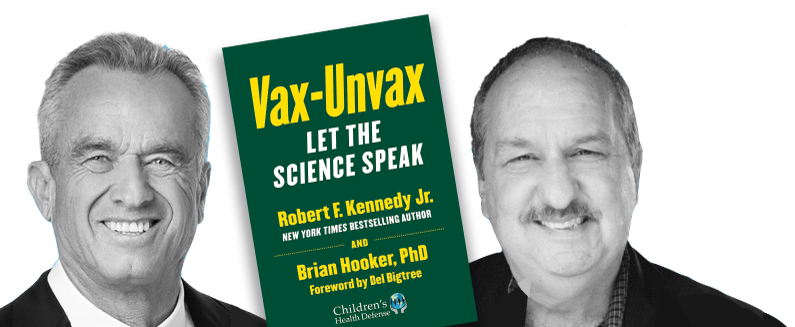
RFK Jr. and Brian Hooker Vax-Unvax

RFK Jr. and Brian Hooker’s New Book: “Vax-Unvax”
Order Now

‘Who will be the next targets of this attitude-predicting apparatus?’

Other experts suggested governments could abuse the technology and weaponize it against the public.

“It’s indicative of the state of medicine and the priorities of our federal government to see more research being done on how to increase uptake of whatever product they’re defining as a vaccine, than to do the safety studies the public has been crying out for,” said Valerie Borek, associate director and lead policy analyst for Stand For Health Freedom.

“This study fits the decades-long approach to using psychology and our subconscious to push products and agendas,” she said. “There is already technology that can assess biometric data such as heart rate, temperature and eye movements, combined with audio and location information.”

Citing an example, Borek said the Centers for Disease Control and Prevention “already has a record of using cellphone data for public health surveillance.”

Borek added:

“The government has too much data to comb through, so the use of AI is inevitable for public health surveillance. How long before the devices we voluntarily wear and carry are used for AI predictions of our health choices?

“Will those predictions lead to any governmental interventions? We need to ask these questions of our lawmakers and do what we can to minimize our digital footprint.”

According to Hinchliffe:

“If ‘AI can predict people’s attitudes,’ then predicting so-called vaccine hesitancy would be just the start. What comes next? Predicting who is a climate denier? What about predicting people’s attitudes toward presidential candidates and who they’ll likely vote for? Who needs elections when the AI already knows who will win?

“What happens when the re-education and propaganda schemes don’t work? Will data on predicting people’s attitudes go to governments so they can crack down on dissidents? Who will be the next targets of this attitude-predicting apparatus? My guess would be people who are ‘hesitant’ about the climate change narrative.”

Your support helps fund this work, and CHD’s related advocacy, education and scientific research.
Donate Now

Study claims AI can ‘make accurate predictions about human attitudes’

According to the University of Cincinnati’s announcement, the development of the new AI tool was based on a survey conducted in the U.S. in 2021, involving a representative sample of 3,476 adults. Respondents “provided information such as where they live, income, highest education level completed, ethnicity and access to the internet.”

Participants were asked if they had received a COVID-19 vaccine, with approximately 73% of respondents reporting they were vaccinated, “slightly more than the 70% of the nation’s population that had been vaccinated in 2021,” according to the study.

They were then “asked to rate how much they liked or disliked a randomly sequenced set of 48 pictures on a seven-point scale of 3 to -3,” to quantify “mathematical features of people’s judgments as they observe mildly emotional stimuli.”

“The judgment variables and demographics were compared between respondents who were vaccinated and those who were not. Three machine learning approaches were used to test how well the respondents’ judgment, demographics and attitudes toward COVID-19 precautions predicted whether they would get the vaccine,” the announcement states.

According to the study, “a small set of demographic variables and 15 judgment variables” were identified, which “predict vaccine uptake with moderate to high accuracy and high precision.”

The announcement says these findings show “that artificial intelligence can make accurate predictions about human attitudes with surprisingly little data or reliance on expensive and time-consuming clinical assessments.”

The same announcement quoted Aggelos Katsaggelos, Ph.D., endowed professor of electrical engineering and computer science at Northwestern University, who claimed “The study is anti-big-data” because the new technology “can work very simply” and without the need for “super-computation.”

“It’s inexpensive and can be applied with anyone who has a smartphone. We refer to it as computational cognition AI. It is likely you will be seeing other applications regarding alterations in judgment in the very near future,” Katsaggelos said.

Lindley disagreed. She told The Defender “Calling this anti-big-data is an oxymoron, because to be able to claim a high level of accuracy, the program would have to encompass a high level of understanding of the hesitancy itself.”

“The problem with this AI initiative is the population-wide approach, which disregards any individual concerns and experiences,” Lindley said. “If I have learned anything practicing medicine these past 20 years, it is that the human element matters and it’s unpredictable by its nature.”

‘Tip of the iceberg’: AI may also be used for rapid development of vaccines

Other AI-related technologies in the healthcare realm have recently been introduced.

At the annual meeting of the World Economic Forum (WEF) in January, Pfizer CEO Albert Bourla praised the role of AI in the development of Paxlovid, a prescription oral medication marketed as a treatment for COVID-19.

“It was developed in four months,” Bourla said, whereas development of such a drug “usually takes four years.” He said AI helped significantly reduce the amount of time needed for the “drug discovery” process, where you “really synthesize millions of molecules and then you try to discover within them, which one works.”

Bourla credited this breakthrough with saving “millions of lives” and predicted more such developments in the future. “Our job is to make breakthroughs that change patients’ lives,” Bourla said. “With AI, I can do it faster and I can do it better.”

“I truly believe that we are about to enter a scientific renaissance in life sciences because of this coexistence of advancements in technology and biology,” Bourla added. “AI is a very powerful tool. In the hands of bad people [it] can do bad things for the world, but in the hands of good people [it] can do great things for the world.”

During the same WEF panel discussion, Jeremy Hunt, the United Kingdom’s chancellor of the Exchequer, said AI could lead to the rapid development and deployment of vaccines.

“When we have the next pandemic, we don’t want to have to wait a year before we get the vaccine,” he said. “If AI can shrink the time it takes to get that vaccine to a month, then that is a massive step forward for humanity.”

A WEF project, first announced in 2019, is funding research on the use of “synthetic” AI-generated “patients” and “synthetic” clinical trial data.

Concerns over AI’s predictive ability have led to some action from lawmakers around the world. On March 13, the European Parliament passed the Artificial Intelligence Act, which contains several restrictions and prohibitions on the use of AI in various contexts.

According to Greece’s Business Daily, “Emotion recognition in the workplace and schools, social scoring, predictive policing (when it is based solely on profiling a person or assessing their characteristics), and AI that manipulates human behaviour or exploits people’s vulnerabilities” are forbidden by this legislation.

Yet, for Hinchliffe, “Using AI to predict people’s attitudes towards vaccines and vaccine hesitancy is just the tip of the iceberg,” as AI technology can then “be used to predict attitudes on just about anything.”

“If successful, predicting people’s attitudes will lead to predicting their behavior. Predicting their behavior means knowing more about them than they know about themselves,” he said. “Once humans are ‘hackable,’ then all bets are off: They can be manipulated and controlled in the most nefarious of ways.”

Correction

Source:https://childrenshealthdefense.org/defender/artificial-intelligence-predict-covid-vaccine-hesitancy/?utm_source=luminate&utm_medium=email&utm_campaign=defender&utm_id=20240321

Ο πρωτογενής ναρκισσισμός αν συνεχιστεί ως την ενήλικη ζωή καταντά ψυχοπάθεια

«Ὅλοι οἱ ψυχικὰ ἀσθενεῖς ἔχουν ὡς κέντρο τὸν ἑαυτό τους»

Ἕνας ἀκόμη σύγχρονος Στάρετς, ὁ Στάρετς Σέργιος, συμφωνεῖ μέ τά λεγόμενα τοῦ Γέροντος Πορφυρίου καί τοῦ Γέροντος Παϊσίου, πού μόλις παρουσιάσαμε:
«Στὴ βάση τῶν ψυχικῶν ἀσθενειῶν», παρατηρεῖ ὁ Στάρετς Σέργιος, «βρίσκεται ἡ ὑπερηφάνεια. Θεμέλιο τῶν ψυχικῶν ἀσθενειῶν εἶναι ἡ θεώρηση τοῦ ἑαυτοῦ μας ὡς κέντρου τῶν πραγμάτων. Ὅλοι οἱ ψυχικὰ ἀσθενεῖς ἔχουν ὡς κέντρο τὸν ἑαυτό τους».  Ἐδῶ ὁ Γέροντας ταυτίζεται πλήρως μέ τόν Γέροντα Πορφύριο, πού ὁμιλεῖ γιά τόν ἐγωισμό ὡς αἰτία τῆς κατάθλιψης.
Καί συνεχίζει: «Αὐτό, βεβαίως, δέν σημαίνει ὅτι οἱ ἴδιοι εἶναι ὑπεύθυνοι για τὴν ἀσθένειά τους. Ἡ ὑπερηφάνεια, ὅπως καὶ τὰ ἄλλα πάθη, ἔχουν στο ἄτομο ποικίλες προελεύσεις: τὴν προσωπικὴ βούληση, ἀλλὰ καὶ τὴν κληρονομικότητα, τὸ οἰκογενειακὸ περιβάλλον, τὴν κοινωνία, τὶς προσωπικὲς σχέσεις καὶ τὴν ἱστορία τοῦ καθενός. Κάθε πνευματικὸς Πατέρας πρέπει να εἶναι ταυτόχρονα καὶ ψυχίατρος. Κάθε ψυχικὴ ἀσθένεια ἔχει στήν βάση της πνευματικὰ προβλήματα».
Καί ἐδῶ ὁ Γέροντας Σέργιος ταυτίζεται μέ τόν Γέροντα Πορφύριο πού διδάσκει ὅτι πίσω ἀπό τά λεγόμενα «ψυχολογικά» κρύβονται πνευματικά προβλήματα καί δαιμόνια. «Ἡ πνευματικότητα», παρατηρεῖ ἐπίσης ὁ Στάρετς Σέργιος, «καλύπτει καὶ περιλαμβάνει τὰ πάντα. Ἑπομένως, μία πνευματικὴ πράξη μπορεῖ να θεραπεύσει». Ἐδῶ ὁ Γέροντας ἀπαντᾶ σ’ αὐτούς πού λένε ὅτι (τάχα) χρειάζεται Πνευματικός γιά τά πνευματικά καί ψυχολόγος-ψυχίατρος γιά τά ψυχολογικά προβλήματα. Ὅλα εἶναι πνευματικά προβλήματα καί χρήζουν τήν Θεία Χάρη γιά νά θεραπευθοῦν.
«Ὁ ψυχίατρος που δεν εἶναι πνευματικὸς ἄνθρωπος», σημειώνει εὔστοχα ὁ Γέροντας Σέργιος, «μπορεῖ νά ἀνακουφίσει τὸν ἀσθενῆ, νά τὸν βοηθήσει νά ξαναβρεῖ τὸν ἑαυτὸ του, νά βελτιώσει τίς σχέσεις του μὲ τοὺς ἄλλους. Ἀλλὰ κατὰ βάθος τὸν ἀφήνει ἄδειο, γιατὶ δέν τοῦ λέει πῶς νά βρεῖ ἕνα νόημα στήν ὑπάρξή του. Κάτι πού, ἀντιθέτως, κάνει ὁ πνευματικὸς Πατέρας». Νά ἡ τεράστια διαφορά προσφορᾶς τῶν μέν ἀπό τούς δέ. Ἡ «ἀπουσία νοήματος ζωῆς» εἶναι τό μεγαλύτερο πρόβλημα στόν σημερινό σύγχρονο «πολιτισμένο» ἄνθρωπο.
Ἡ θεραπεία ἐπίσης ἀπό τούς ψυχιάτρους δέν γίνεται στό βάθος ἀλλά στήν ἐπιφάνεια τῆς ἀνθρώπινης ὕπαρξης· εἶναι μία θεραπεία κυρίως στήν συμπεριφορά καί ὄχι στό «εἶναι», στήν οὐσία τῆς ἀνθρώπινης ψυχῆς.
Οἱ ψυχίατροι καί οἱ ψυχολόγοι ἀγνοοῦν τήν ἀνθρώπινη ψυχή καί ἐν πολλοῖς ἀρνοῦνται τήν ὕπαρξή της. «Ἀντίθετα μὲ ὅ,τι ἰσχυρίζεται ὁ Φρόυντ», ὑπογραμμίζει ὁ Στάρετς, «ἡ βάση τῶν ψυχικῶν ἀσθενειῶν δεν εἶναι ἡ σεξουαλικότητα, ἀλλὰ ἡ ὑπερηφάνεια». Ἡ νόσος τοῦ διαβόλου (ἡ ἀλαζονεία-ὑπερηφάνεια) εἶναι αὐτήν πού ἀρρωσταίνει καί τήν ἀνθρώπινη ὕπαρξη.
«Ἡ ὑπερηφάνεια», ὅπως παρατηρεῖ ὁ π. Παΐσιος, «γεννᾶ τόν ἐγωισμό».
Ὁ διάβολος, μπαίνοντας στήν ὑπερήφανη-ἐγωκεντρική ψυχή, τήν γεμίζει μέ λύπη, κόπωση καί ἀπόγνωση.
Κάποιος ρώτησε τόν Γέροντα Παΐσιο σχετικά μέ τήν στενοχώρια πού τοῦ ἐρχόταν γιά τίς πτώσεις του:
«Γέροντα, κάμπτομαι ἀπό τήν στενοχώρια γιά τίς πτώσεις μου καί κουράζομαι στόν ἀγώνα μου.
– Ἀπό τόν ἐγωισμό εἶναι. Ἐπειδή δέν «κάμπτεις», γι’ αὐτό ἀποκάμνεις μετά. Δέν ὑπάρχει ταπείνωση, μετάνοια, συντριβή· ὑπάρχει ἐγωισμός καί ὁ ἐγωισμός πάντα φέρνει λύπη καί ἄγχος. Ὅταν ὁ ἄνθρωπος δέν ἔχει μετάνοια, ἀλλά στενοχωριέται ἀπό ἐγωισμό, ἀπό ἀνθρωπαρέσκεια, ἐπειδή ξέπεσε στά μάτια τῶν ἄλλων, τότε ὑπάρχει μέσα του ἀγωνία, φαρμάκι, πόνος».
Ὁ καταθλιπτικός ἄνθρωπος βιώνει ἀκριβῶς τήν λύπη, τό φαρμάκι, τόν πόνο, διότι δέν «κάμπτει», δέν ταπεινώνεται, δέν μετανοεῖ ἀλλά στενοχωριέται, ἐξ αἰτίας τοῦ πληγωμένου του ἐγωισμοῦ καί τῆς ἀνθρωπαρέσκειας.
Πολλές φορές ἡ ὑπερβολική στενοχώρια γιά τά πάθη καί τίς πτώσεις μας ὑποκρύπτει μία αὐτονομημένη ἀπό τόν Θεό προσπάθεια ἠθικῆς βελτίωσής μας καί ἕναν μεγάλο ἐγωισμό.
Ὁ στάρετς Μακάριος ἔγραφε σὲ ἕνα προφανῶς καταθλιπτικὸ πρόσωπο: «Λὲς ὅτι ἡ ἀδυναμία σου νὰ ἀντισταθεῖς στὸν πειρασμό, ἡ βραδύτητά σου νὰ νικήσεις τὰ πάθη σου καὶ ἡ γενικὴ ἠθικὴ ἀδυναμία σου σὲ πιέζει πολύ, πράγμα ποὺ ἁπλὰ ἀποδεικνύει ὅτι στηρίζεις τὴν σωτηρία σου στὶς δικές σου δυνάμεις… Πῶς ἀλλιῶς θὰ ἀποκτήσουμε τὴν ταπείνωση, παρὰ μόνο ἂν ἀντικρίζουμε συνεχῶς τὸν ἑαυτό μας ὅπως πραγματικὰ εἶναι – ὁ χειρότερος τῶν ἁμαρτωλῶν». Ἡ Ρωσία τῶν στάρετς τοῦ 19ου αἰώνα ἦταν ἀρκετὰ ἐξοικειωμένη μὲ τὴν κατάθλιψη… (Ἡ κατάθλιψη) θεωρεῖτο σύμπτωμα τῆς ὑπερηφάνειας, καὶ ἡ θεραπεία του ἦταν ἡ ταπείνωση). 
Ἑπομένως: Τά πάθη καί κυρίως ὁ ἐγωισμός-ὑπερηφάνεια προξενοῦν τήν τόσο διαδεδομένη στήν ἐποχή μας κατάθλιψη.
Ἀρχ. Σάββας Ἁγιορείτης

ΤΕΛΟΣ ΚΑΙ Τῼ ΘΕῼ ΔΟΞΑ!

Μπορεί να μην υπάρχουν αλλοειδείς αλλά δαίμονες και 5Gs που θα μας αποτελειώσουν υπάρχουν σίγουρα!

Πολλοί κορόϊδευαν και ειρωνεύονταν τον Παναγιώτη για όσα λέει ή μάλλον έλεγε, αλλά το θανατικό που μας περιμένει από τα 5Gs δεν μπορεί κανείς να το αρνηθεί. Ο Κώστας Τζίμας ο ειδικός στις ακτινοβολίες και ο καθηγητής της βιολογίας Χρήστος Γεωργίου διαρρυγνύουν τα ιμάτιά τους και επιμένουν το ίδιο, <<όποιος ευρίσκεται κάτω από την επίδραση των 5Gs είναι τελειωμένος>>.

Για να παρακολουθήσουμε το βίντεο του μακαρίτη:

Γ.Ε.

Αυτές είναι οι συνέπειες αν σας κάνουν μετάγγιση από mRNA εμβολιασμένους!

Review Not peer-reviewed version
Concerns regarding Transfusions of Blood Products Derived from Genetic Vaccine Recipients and   for Specific Measures
Jun Ueda * , Hideyuki Motohashi , Yuriko Hirai , Kenji Yamamoto , Yasufumi Murakami , Masanori Fukushima , Akinori Fujisawa *
Posted Date: 15 March 2024
doi: 10.20944/preprints202403.0881.v1
Keywords: COVID-19 vaccine; genetic vaccine; blood product; blood transfusion; spike protein; post-
vaccination syndrome; harm–benefit assessment; prion; spikeopathy; inspection standard; diagnostic
criteria
Preprints.org is a free multidiscipline platform providing preprint service that
is dedicated to making early versions of research outputs permanently
available and citable. Preprints posted at Preprints.org appear in Web of
Science, Crossref, Google Scholar, Scilit, Europe PMC.
Copyright: This is an open access article distributed under the Creative Commons
Attribution License which permits unrestricted use, distribution, and reproduction in any
medium, provided the original work is properly cited.
Review
Concerns regarding Transfusions of Blood Products
Derived from Genetic Vaccine Recipients and
Proposals for Specific Measures
Jun Ueda 1,*, Hideyuki Motohashi 2, Yuriko Hirai 3, Kenji Yamamoto 4, Yasufumi Murakami 5,
Masanori Fukushima 6 and Akinori Fujisawa 7,*
1 Department of Advanced Medical Science, Asahikawa Medical University, Asahikawa 078-8510,
Hokkaido, Japan; junueda@asahikawa-med.ac.jp
2 Pre-Clinical Research Center, Tokyo Medical University Hospital, 6-7-1 Nishi-Shinjuku, Shinjuku-ku,
Tokyo 160-0023, Tokyo, Japan; moto@tokyo-med.ac.jp
3 MCL Corporation, Jimukino-Ueda bldg. 603, 21 Sakaimachi Gojo-Takakurakado, Shimogyo-Ku, Kyoto 600-
8191, Kyoto, Japan; hirai@mcl-corp.jp
4 Department of Cardiovascular Surgery, Center of Varicose Veins, Okamura Memorial Hospital, 293-1
Kakita Shimizu-cho, Sunto-gun, Shizuoka 411-0904, Japan; yamamoto@okamura.or.jp
5 Department of Biological Science and Technology, Faculty of Advanced Engineering, Tokyo University of
Science, 6-3-1 Niijuku, Katsushika-ku, Tokyo 125-8585, Japan; yasufumi@rs.tus.ac.jp
6 Foundation of Learning Health Society Institute, Nagoya 450-0003, Aichi, Japan; mfukushima@imrd.jp
7 Kokoro Medical Corporation, Honbetsu Cardiovascular Medicine Clinic, Honbetsu 089-3314, Hokkaido,
Japan; fujisawa.peace@mac.com
* Correspondence: junueda@asahikawa-med.ac.jp (J.U.); fujisawa.peace@mac.com (A.F.);
Tel.: +81-166-68-2385 (J.U.); +81-156-22-8888 (A.F.)
Abstract: The coronavirus pandemic was declared by the World Health Organization (WHO) in
2020, and a global genetic vaccination program has been rapidly implemented as a fundamental
solution. However, many countries around the world have reported that so-called genetic vaccines,
such as those using modified mRNA encoding the spike protein and lipid nanoparticles as the drug
delivery system, have resulted in post-vaccination thrombosis and subsequent cardiovascular
damage, as well as a wide variety of diseases involving all organs and systems, including the
nervous system. In this article, based on these circumstances and the volume of evidence that has
recently come to light, we call the attention of medical professionals to the various risks associated
with blood transfusions using blood products derived from people who have suffered from long
COVID and from genetic vaccine recipients, including those who have received mRNA vaccines,
and we make proposals regarding specific tests, testing methods, and regulations to deal with these
risks. We expect that this proposal will serve as a basis for discussion on how to address post-
vaccination syndrome and its consequences following these genetic vaccination programs.
Keywords: COVID-19 vaccine; genetic vaccine; blood product; blood transfusion; spike protein;
post-vaccination syndrome; harm–benefit assessment; prion; spikeopathy; inspection standard;
diagnostic criteria
1. Introduction
On March 11, 2020, the coronavirus pandemic was declared by the Director-General of the World
Health Organization (WHO) [1], and countries actively implemented classical public health
measures, including quarantine, isolation, disinfection, and lockdowns. However, hopes for a vaccine
grew as the general consensus was that rapid herd immunity was the best solution to overcome the
pandemic. Since 2021, as a means to combat SARS-CoV-2 infection, several global pharmaceutical
companies including Pfizer-BioNTech, Moderna, and AstraZeneca have developed various genetic
vaccines that use the spike protein of the Wuhan strain of SARS-CoV-2 as an antigen, and rapid
Disclaimer/Publisher’s Note: The statements, opinions, and data contained in all publications are solely those of the individual author(s) and contributor(s) and not of MDPI and/or the editor(s). MDPI and/or the editor(s) disclaim responsibility for any injury to people or property resulting
from any ideas, methods, instructions, or products referred to in the content.
Preprints.org (www.preprints.org) | NOT PEER-REVIEWED | Posted: 15 March 2024 doi:10.20944/preprints202403.0881.v1 © 2024 by the author(s). Distributed under a Creative Commons CC BY license.
page2
vaccination has been promoted on a global scale [2,3]. During this period, virological studies of SARS-
CoV-2 have been intensively conducted, and the pathogenic mechanism of this virus has been
elucidated in detail [4,5]. In brief, the key pathogenic processes include the binding of the spike
protein of SARS-CoV-2 to the angiotensin-converting enzyme 2 (ACE2) receptor on vascular
endothelial cells, allowing viral entry and amplification [6]; the triggering of red blood cell and
platelet aggregation by the spike protein [7–11]; and the formation of microthrombi [12,13].
However, it has been reported from various countries around the world that genetic vaccines
such as mRNA vaccines encoding spike proteins have also caused a wide variety of diseases in all
organs and systems, including the nervous system, in addition to thrombosis and resulting
cardiovascular disorders in vaccine recipients [14–21]. This is because when the foreign gene was
introduced into autologous cells using gene-transfer capable lipid nanoparticles (LNPs) or other
means, the spike proteins produced from the mRNA or DNA introduced via the gene vaccine
induced thrombosis in the vaccine recipient. While evidence for specific problems has been reported
individually, Parry et al. have proposed the theory of spikeopathy (spike disease) as a hypothesis
that synthesizes all of the evidence for this problem [22]. Furthermore, there are two general
mechanisms by which a modified gene introduced into the body by genetic vaccination and some of
the antigens produced because of the expression of that gene can be transmitted throughout the body.
First, LNPs encapsulating mRNA can spread through the body via the bloodstream from the injection
site. It has already been shown that LNPs have a tendency to accumulate in specific organs, such as
the liver, spleen, ovaries, testes, and bone marrow [22,23]. The other is the release of
pseudouridinated mRNA molecules and synthesized spike proteins as extracellular vesicles, or
exosomes, from cells that have incorporated LNPs. These exosomes are transported in the circulation
throughout the body to reach various organs [24–27]. And it has already been proven that spike
proteins produced by cells that have taken up the modified gene travel throughout the body in the
bloodstream [28,29]. Thus, it must be emphasized that the transport, distribution, and expression of
the components of the genetic vaccine beyond the administration site to organs and tissues of the
whole body after vaccination involve the risk of inducing various conditions.
Although the Director-General of the WHO declared the end of the COVID-19 public health
emergency on May 5, 2023, post-vaccination syndrome (PVS), caused by genetic vaccines that have
been promoted worldwide and have been given to billions of people, has become a major global
problem [19,21,27,30] requiring a reasonable harm–benefit assessment of the global use of genetic
vaccines [27,31–33]. Since the beginning of the coronavirus pandemic and genetic vaccination, there
has been much debate about the safety of blood products and their use in transfusions [34–39].
However, because the pathology of SARS-CoV-2 was not fully understood at the beginning, there
was no specific discussion based on data or analysis of what was a problem and what could be a risk;
only concerns were expressed, and no clear conclusions or policies were drawn. For example, Jacobs
et al. argued that there was no requirement to collect or share the genetic vaccination status of blood
donors and that hospitals were not required to inform patients about the genetic vaccination status
of blood donors [37], because there were no reports of health issues from genetic vaccination in 2021.
However, this argument was not based on data. Contrary to initial expectations, it was found that
genes and proteins from genetic vaccines persist in the blood of vaccine recipients for prolonged
periods of time [22,28,40–44], and a variety of adverse events resulting from genetic vaccines are now
being reported worldwide. Roubinian et al. reported that transfusions of plasma and platelet blood
components collected before and after COVID-19 vaccination were not associated with increased
adverse outcomes in transfusion recipients who did not develop COVID-19 [39]. However, they
evaluated only plasma and platelet preparations, not red blood cell or whole blood preparations. The
long-term effects remain unclear, as the study only followed up recipients to the point of 30-day
readmission rates.
Considering the current situation and the volume of evidence that has recently come to light,
the purpose of this article is to raise awareness among relevant parties and point toward future
directions by making specific recommendations regarding the use of blood products derived from
genetic vaccine recipients, including those who have received mRNA vaccines. To be more precise,
genetic vaccines are the equivalent of biomedicine (i.e. immune therapeutics) rather than
conventional vaccines in terms of their mechanism of action [45,46]. The various genetic vaccines now
treated as vaccines should originally have been treated as biomedicine, but because they were
classified as vaccines, huge numbers of people were inoculated with them [2,3]. As a result, extensive
areas of medicine are now beginning to be affected because most of the population in many countries
has been vaccinated [19,21,27,30,47]. This has never happened before in the history of biomedicine,
and consequently, it is highly suspected that blood products for transfusion have been affected by
these so-called genetic vaccines. Therefore, this review was prepared to examine the risks of blood
transfusions at the current stage when genetic vaccines are administered in large quantities. The
vaccine recipients described in this proposal are limited to genetic vaccine recipients.
2. Overview of Cases of Blood Abnormalities after Genetic Vaccination
A wide variety of diseases related to blood and blood vessels, such as thrombosis, have
developed after genetic vaccination, including with mRNA vaccines, and many cases of serious
health injuries have been reported. For example, a PubMed search on diseases such as
thrombocytopenia, thrombotic disorders with thrombocytopenia, deep vein thrombosis,
thrombocytopenic purpura, cutaneous vasculitis, and sinus thrombosis combined with the essential
keywords “COVID-19 vaccine” and “side effects” yielded several hundred articles in only about two
years since the rollout of genetic vaccines [14,17,20,21,48]. In addition to abnormally shaped red blood
cells, amorphous material has been found floating in the blood of mRNA-vaccinated individuals
under microscopic observation, some of which has shown grossly abnormal findings (Table 1, point
5) [7–10,49]. Recent studies have also reported that the spike protein has amyloidogenic potential [50–
54], is neurotoxic [55–57], and can cross the blood–brain barrier [58–60]. Thus, there is no longer any
doubt that the spike protein used as an antigen in genetic vaccines is itself toxic [22,61,62].
In addition to thrombosis, individuals who have received multiple doses of a genetic vaccine
may have multiple exposures to the same antigen within a brief period, thereby being imprinted with
a preferential immune response to that antigen [63,64]. This phenomenon, called original antigenic
sin or immune imprinting, has caused COVID-19 vaccine recipients to become more susceptible to
contracting COVID-19 [65].
In addition, antibody-dependent enhancement of infection is also known;
antibodies produced by vaccination may rather promote viral infection and symptoms [66,67]. On
the other hand, it has also been suggested that repeated administration of genetic vaccines may result
in immune tolerance because of a class switch to non-inflammatory immunoglobulin G4 (IgG4) [68–
71], whereby the immune system of the recipient does not mount an excessive response such as
cytokine storm [27,72], and case reports of IgG4-related disease have begun to appear [73–75]. This
raises concern that alterations in immune function due to immune imprinting and immunoglobulin
class switching to IgG4 may also occur in genetic vaccine recipients. This may increase the risk of
serious illness due to opportunistic infections or pathogenic viruses that would not normally be a
problem if the immune system were normal [76–82]. For example, cases of suspected viremia have
been reported [82]. Therefore, from the perspective of traditional containment of infectious diseases,
greater caution is required in the collection of blood from genetic vaccine recipients and the
subsequent handling of blood products, as well as during solid organ transplantation and even
surgical procedures [83–87] in order to avoid the risk of accidental blood-borne infection (Table 1,
point 3) [84–87]. The phenomenon of immune imprinting can occur even when spike protein is not
used as an antigen or when another antigen is used (e.g. inactivated influenza vaccine) [88]. However,
compared to conventional inactivated vaccines, genetic vaccines, which produce an antigen within
the body, are expected to prolong the period of exposure to the same antigen, and as a result, the risk
of immune imprinting may be higher than with conventional vaccines. It is not actually known how
long the vaccine components remain in the body after a person has received a genetic vaccine
[22,40,43], but it is expected that they will remain in the body for a longer period than originally
thought, in part because spike protein has been detected in the bodies of people several months after
vaccination (Table 1, point 1) [22,28,41,42]. In addition, since long-term exposure to a specific identical
antigen (in this case, spike protein) causes immunoglobulins to become IgG4 [68,70] and some of thepage4
B cells that produce them are likely to differentiate into memory B cells that survive in the body for
a sustained period [70,89], the immune dysfunction of genetic vaccine recipients is expected to be
prolonged (Table 1, point 3 & 6). More details on these points are expected to be revealed in the future.
In summary, there is an undeniable risk that patients may experience some problems if they
receive blood products derived from blood collected in, at least, a brief deferral period after genetic
vaccination. Although it is unknown at present whether secondary damage is caused by transfusion
of blood products derived from genetic vaccine recipients, it is necessary for medical institutions and
administrative organizations to respond and investigate cooperatively, keeping various possibilities
in mind, because mechanisms such as the toxicity of the spike protein itself and the effects of LNPs
and modified mRNA on the immune response have not been fully elucidated and are still under
study. It should be emphasized that a significant proportion of the COVID-19 PVS in mRNA vaccine
recipients is due to toxic spike proteins, and the inclusion of structures in the receptor-binding
domain within these proteins that may induce prion disease is particularly alarming, as Seneff et al.
and Perez et al. have warned [50,90–96]. Furthermore, it has been shown that prion similarity in the
receptor-binding domain exists not only in the spike protein of the Wuhan strain, which is still used
as an antigen in genetic vaccines, but also in the spike protein of variants of SARS-CoV-2, such as the
Delta strain, with the exception of the Omicron strain [93,97]. Whether we should be uniformly
vigilant for the spike protein of the coronavirus or just the spike protein of certain variants, such as
the Wuhan strain, awaits further analysis.
Table 1. Major concerns with the use of blood products derived from gene vaccine recipients.
Concerns Description References
1 Spike protein contamination
The spike protein, which is the antigen of SARS-CoV-2 and genetic vaccines,
has already been found to have various toxicities, including effects on red
blood cells and platelet aggregation, amyloid formation, and neurotoxicity.
It is essential to recognize that the spike protein itself is toxic to humans. It
has also been reported that the spike protein can cross the blood–brain
barrier. Therefore, it is essential to remove the spike protein derived from
the gene vaccine itself from blood products.
[22,29,55–
60]
2
Contamination with amyloid
aggregates and microthrombi
formed by spike proteins
It is not yet clear how the amyloid aggregates and microthrombi formed by
the spike proteins develop into visible thrombi. However, once formed,
amyloid aggregates may not be readily cleared and therefore need to be
removed from blood products. These amyloid aggregates have also been
shown to be toxic.
[51,52,98]
3
Events attributable to
decreased donor immune
system and immune
abnormalities due to immune
imprinting or class switch to
IgG4, etc. resulting from
multiple doses of genetic
vaccines
When the immune function of a donor is impaired by gene vaccination,
there is a risk that the donor has some (subclinical) infectious disease or is
infected with a pathogenic virus and has developed viremia or other
conditions, even if the donor has no subjective symptoms. For this reason,
healthcare professionals who perform surgical procedures, including blood
sampling and organ transplantation, as well as using blood products,
should manage the blood of genetic vaccine recipients with care to prevent
infection through blood. It will also be necessary to inform all healthcare
professionals of these risks. [63–65,68–71,76–80,82–87]
4
Lipid nanoparticles (LNPs) and
pseudouridinated mRNA
(mRNA vaccines only)
In the case of mRNA vaccines, LNPs and pseudouridinated mRNA may
remain in the blood of recipients if blood is collected without a sufficient
deferral period after gene vaccination. LNPs are highly inflammatory and
have been found to be thrombogenic themselves, posing a risk to
transfusion recipients. LNPs itself has potent adjuvant activity and is at risk
of inducing Adjuvant-Induced Autoimmune Syndrome (ASIA syndrome).
An additional risk is that if the pseudouridinated mRNA is incorporated
into the recipient’s blood while still packaged in LNPs, additional spike
protein may be produced in the recipient’s body.
[23,40,44,99–
105]
5
Contamination with
aggregated red blood cells or
platelets
The spike protein causes red blood cells and platelets to aggregate and
therefore these aggregates will be carried into the recipient’s blood unless
they are removed from the blood product.
[7–11,49]
6
Memory B cells producing IgG4 and IgG4 produced from them
Large amounts (serum concentration typically above 1.25–1.4 g/L) of non-
inflammatory IgG4-positive plasma cells can cause chronic inflammation
such as fibroinflammatory disease. [73–75,106,107]
3. Specific Proposals for Blood Sampling and Blood Products from Vaccine Recipients
In the previous section, we discussed a variety of blood-related abnormalities that have occurred
following genetic vaccination. In this section, we provide specific proposals on how to respond to
these circumstances. Because blood contamination affects so many areas of health care, it is especially
important to anticipate the worst [95,96,108–110] and to plan and act from the start to ensure that
there are no lapses or omissions.
3.1. Additional Requirements for Blood Collection (Donation)
Currently, in Japan, the Japanese Red Cross Society (https://www.jrc.or.jp/english/) plays a
central role in blood collection activities, and its blood products are used for blood transfusions and
other purposes. The Japanese Red Cross Society has a rule that blood can be collected from genetic
vaccine recipients after a deferral period (48 hours for mRNA vaccine recipients and 6 weeks for
AstraZeneca DNA vaccine recipients), but the data and rationale for the rule have not been specified.
As with infections such as human immunodeficiency virus (HIV) and prion diseases, a history of
genetic vaccination (DNA and/or mRNA type), including timing and number of doses, should be
obtained by interview, and kept in the official record when blood is collected (Figure 1, Table 2).
Additional caution is needed, particularly if not many days have passed since the genetic vaccine
was administered, because LNPs [23,101–103] and spike protein mRNA, which can induce
inflammation, may remain in the blood (Table 1, point 4) [22,40,43,44]. If certain events such as
anaphylactic shock occur immediately after genetic vaccination, the effects of LNPs should also be
suspected [100]. It has also been reported that negatively charged LNPs themselves interact with
fibrinogen to form thrombi [99]. Therefore, the presence of LNPs may itself be a factor in the need for
caution with transfusion products.
On the other hand, even if a person has not received a genetic vaccine, if they have had long
COVID, it is possible that the spike protein remains in their body, and thus it would be better to keep
an official record of whether they have long COVID or not [51,111–113]. As the degradation rates of
pseudouridinated mRNA and spike protein in the body are unknown at present, blood products
derived from genetic vaccine recipients should be used with extreme caution, being conscious of the
cases of AIDS, bovine spongiform encephalopathy (BSE), and variant Creutzfeldt-Jakob disease
(vCJD) caused by the use of contaminated blood products in the past [110,114–121]
page6
Figure 1. Summary of items and procedures required for management of blood products derived
from gene vaccine recipients or contaminated with spike protein and modified genes. As with any
risk management exercise, it is important to constantly revise policies and procedures as risks and
problems are identified. PVS, post-vaccination syndrome.
Table 2. Tests needed to confirm the safety of blood products.
Concerns Description References
1 Spike protein content in blood
Immunochemical techniques include enzyme-linked immunosorbent assay,
immunophenotyping, mass spectrometry, liquid biopsy, and a combination
of liquid biopsy and proteomics. First, we propose mass spectrometry that
can directly measure the protein itself.[28,29,122–126]
2 Spike protein mRNA PCR and/or liquid biopsy are the options. If mRNA for the spike protein is
detected, LNPs may be present (mRNA vaccines only).[124,127,128]
3 Spike protein DNA
PCR and liquid biopsy are the options. This test is necessary because AstraZeneca’s viral vector is a DNA vaccine. For mRNA vaccines, it is believed that pseudouridinated mRNA is not reverse transcribed, but this
test is required if the spike protein remains for a prolonged period. [124,128]
4 Markers associated with autoimmune disorders
Long-term persistence of the spike protein in the blood increases the risk of
autoimmune disease. Therefore, it would be useful to test for autoimmune
disease using antinuclear antibodies as biomarkers in people who are
positive for the spike protein, taking into account the results of interviews
regarding the subjective symptoms. [27,105,129,130]
5 Interview

A history of genetic vaccination and COVID-19, current and previous medical history, and subjective symptoms (e.g. headache, chest pain, shortness of breath, malaise) should be obtained from blood donors and formally recorded. The types of questions included in the interview are critical to facilitate diagnosis and treatment of COVID-19 PVS, as more people are complaining of psychiatric and neurological symptoms after genetic vaccination.[15,131,132]

page 7

6Proteins resulting from frameshifting of pseudouridinated mRNA
Although it is not yet clear whether proteins other than the spike protein
are translated from pseudouridinated mRNAs, mass spectrometry may be
useful in confirming this.
[133]
7 Components of amyloid aggregates and thrombi
Common markers of thrombosis, such as D-dimer, are used first. Once the
major components of amyloid aggregates and thrombi have been identified,
their use as biomarkers is proposed. Understanding the composition of
amyloid aggregates will be important in the future, as amyloid aggregates
have been reported to be toxic. Understanding the composition of amyloid
aggregates may provide clues to how amyloid is broken down.
[51,52,98,134
]
8
Components of SARS-CoV-2
other than the spike protein
gene
This test will help determine whether the spike protein is from the genetic
vaccine or from SARS-CoV-2. Potential candidates include nucleocapsid. [4,5,41,128]
9 Immunoglobulin subclasses
It may be necessary to analyze immunoglobulin subclasses (the amount of
IgG4) if immunosuppression from multiple doses of the genetic vaccine is a
concern.[68–71]
10 Anti-nucleocapsid antibodies
The presence or absence and amount of anti-nucleocapsid antibodies as well
as antibody isotypes may be an indicator(s) in distinguishing whether
genetic vaccination or long COVID is the cause. [135–137]
11 Other
Myocarditis and pericarditis after genetic vaccination have been reported in various countries. Therefore, those with subjective symptoms may also be tested for myocarditis marker, such as cardiac troponin T. [18,19,29,138–140]
3.2. Handling of Existing Blood Products
At present, the genetic vaccination status of blood donors is not confirmed or controlled by
organizations including medical institutions, and the use of blood collected from these donors for
transfusions may pose risks to patients. Therefore, when blood products derived from gene vaccine
recipients are used, it is necessary to confirm the presence or absence of spike protein or modified
mRNA as in other tests for pathogens (Figure 1, Table 2). These should be quantified by an
immunochemical enzyme-linked immunosorbent assay (ELISA), by immunophenotyping, by direct
mass spectrometry of the protein itself, by an exosome-based liquid biopsy as used in cancer
screening, or by PCR [28,29,122–128]. For protein assays, as it may take time to generate a good-
quality anti-spike protein antibody or a positive control for a recombinant spike protein to be
compared with, and to sort and distribute them to each laboratory, we suggest that mass
spectrometry be used as an initial step to identify and quantify the spike protein itself in blood
[28,125]. In parallel with this, an analysis of the components of the spike protein-induced amyloid
material will be needed [51,98]. Once the components of amyloid aggregates are identified, they can
be used as biomarkers in the future. Exosome analysis will also be useful as a test as it has already
been shown that spike proteins and their genes are transported in the circulation around the body by
exosomes [24–27].
If the blood product is found to contain the spike protein or a modified gene derived from the
genetic vaccine, it is essential to remove them. However, there is currently no reliable way to do so.
As noted above, the prion-like structure within the spike protein molecule [91,95,96] suggests that
this molecule may be a persistent, sparingly soluble, heat-resistant, and radiation-resistant protein
[141,142]. The prion protein can be inactivated by thiocyanate, hydroxide, and hypochlorite [143–
145], but it is not yet known whether these can be applied to the spike protein and the resulting
amyloid materials. Therefore, as there is no way to reliably remove the pathogenic protein or mRNA,
we suggest that all such blood products be discarded until a definitive solution is found. Discarding
blood products prepared from blood collected from many dedicated blood donors can be very
painful, but it is necessary because the spike protein itself has been shown to induce thrombosis and
similar diseases. However, some medical facilities may have difficulty disposing of blood products
immediately, in which case it is essential to add the possibility of contamination with spike protein
or other foreign substances to the transfusion consent form and to fully explain this to the patient. In
any case, to prevent and reduce medical accidents caused by contaminated blood, it is imperative to
underscore the importance of confirming the history and frequency of genetic vaccination at the time
of blood collection and this information should be documented as an official record, managed and
stored by both medical and governmental organizations (see Figure 1, Table 2)fe.
page 8
3.3. The Need for Regular Checkups and Cohort Studies to Gain a Complete Picture of Blood Contamination
As the residual status of spike protein or modified gene fragments derived from genetic vaccines
is currently unknown, it will be necessary in the future to include measurement of these amounts in
routine health checkups. It is also necessary to include a section in the routine medical checkup
questionnaire to check genetic vaccination status and the number of vaccinations to obtain an overall
picture of the residual status of spike proteins in the blood. This is because a variety of conditions
following genetic vaccination involve thrombosis and immunological conditions [12,14,16,17,21,22,68,70]. Therefore, abnormalities in blood components related to these events shouldalso be analyzed.
On the other hand, when exosomes collected from vaccine recipients were administered to mice
that had not been vaccinated with the genetic vaccine, the spike protein was transmitted [25].
Therefore, it cannot be denied that the spike protein and its modified genes can be transmitted
through exosomes. For this reason, we suggest that full testing be done initially, regardless of genetic
vaccination status, and that a cohort study be conducted to quickly capture the full picture (Figure
1). This is a steady, labor-intensive effort that requires collaboration between all parties involved, but
such analyses may lead to the development of diagnostic criteria and testing for COVID-19 PVS. In
addition, as mentioned above, it cannot be ruled out that even those who have not been vaccinated
with the genetic vaccine, but have had long COVID, may have residual spike proteins or fibrin-
derived microthrombi in their bodies, so it would be advisable to conduct the same testing and
follow-up as for genetic vaccine recipients [51,52,111–113]. The presence or absence and amount of
anti-nucleocapsid antibodies as well as antibody isotypes may be an indicator(s) in distinguishing
whether genetic vaccination or long COVID is the cause (Table 2, point 10) [135–137]. In any case,
these cohort studies are expected to help establish cutoff values for blood levels of spike protein and
other substances to determine the safety of blood products. Faksova et al. conducted a large cohort
study of 99 million people using a multinational Global Vaccine Data Network™ (GVDN ®) and found
a significantly increased risk of myocarditis, pericarditis, Guillain-Barre syndrome, and cerebral
venous sinus thrombosis in genetic vaccine recipients [140]. This type of study will be increasingly
necessary in the future.
3.4. The Need for Early Development of Clinical Practice Guidelines and Diagnostic Criteria for COVID-19
PVS
Although the spectrum of COVID-19 PVS is diverse, it is characterized by a high prevalence of
hematologic and immune-related diseases [21]. Considering this, regardless of the transfusion issues
discussed in this review, blood tests are likely to be the first step in the diagnosis of COVID-19 PVS.
The ability to rapidly develop highly accurate testing systems, particularly blood tests, in
collaboration with other countries will be critical in treating patients suffering from PVS due to the
COVID-19 vaccine. Additional meta-analysis of data from systematic reviews and cohort analyses
will be needed to prevent bias in diagnostic criteria and to develop appropriate clinical practice
guidelines (Figure 1) [146–148].
4. Problems following Blood Transfusion Using Blood Products Prepared from Donated Blood
of Genetic Vaccine Recipients and the Need for Traceability of Blood Products for Transfusion
With the advent of genetic vaccination, there has been considerable debate about the safety of
blood products prepared from donated blood of the vaccine recipients and their use in blood
transfusion [36–39]. However, what happens in the body when a genetic vaccine such as an mRNA
vaccine is administered in the first place is not well understood at this stage, and as mentioned above,
the results of tests on the vaccine recipient’s blood need to be evaluated. Cases of encephalitis caused
by blood from dengue vaccine recipients have been reported as recently as 2023 [149], indicating that
the current system for managing and tracking blood products is not adequate. Unless accurate tests
are established, no conclusions can be drawn about the risk or safety of blood transfusions using
blood products from gene vaccine recipients. Thorough and continuous investigation is therefore9
necessary. To accomplish this, all potential donors should be registered, traceability of blood
products should be ensured, and rigorous recipient outcome studies and meta-analysis should be
maintained. Furthermore, as we have repeatedly stated, it is essential to rigorously obtain from
donors a history of vaccination and COVID-19 infection, preserve official records, and store samples
of blood products for later detection and verification of substances such as spike proteins and
exosomes (Figure 1). Given the wide variety of tests and records, the movement of people around the
world, and the import/export of blood products, it may be necessary in the future to establish
traceability by introducing blockchain technology into the management of blood products while
maintaining anonymity [150,151].
5. The Need for the Development of Relevant Legislation
The issue of blood products derived from genetic vaccine recipients described in this review is
expected to affect a very wide range of areas in countries around the world. In Japan, the “Act on
Prevention of Infectious Diseases and Medical Care for Patients with Infectious Diseases”
(https://www.japaneselawtranslation.go.jp/en/laws/view/2830/en) has been enacted to prevent the
spread of infectious diseases through blood products, and the “Act on Organ Transplantation” has
been enacted to handle organ transplants. The Ministry of Health, Labour and Welfare (MHLW) has
issued the “Guidelines for Blood Transfusion Therapy” regarding blood transfusions. These laws and
guidelines specify the responsibilities of the public, physicians, and national and local governments
and protect their rights. However, as the spike protein used as an antigen or its gene is not an
organism, there are likely to be number of difficult issues, such as how to legally define its
pathogenicity. From this point of view, when the risks of and health injuries caused by blood
products derived from genetic vaccination recipients have been roughly clarified (Table 2), it will be
essential to formulate regulations to reduce and prevent risks and contamination, by developing
related laws with the participation of the legislative branch, legal experts, medical administration
personnel, healthcare providers, and medical researchers, and by taking measures such as checking
vaccination status and dates, and legally regulating the import/export of blood products (Figure 1).
The wide range of issues makes coordination between agencies and healthcare professionals essential
from the outset.
Second, it is expected that the situation will already be complicated because, in contrast to
previous drug disasters, genetic vaccination was implemented on a global scale and simultaneously
for a substantial number of people [2,3]. This means, as in the context of the coronavirus pandemic,
or even more critically, that there is an urgent necessity for legislation and international treaties
explicitly elucidating bilateral and multilateral agreements concerning the management of blood
products. These legal frameworks should delineate regulations governing the handling of blood
products and establish protocols for governmental compensation and response to issues and hazards
associated with these products, including penalties and prohibitions. For example, the International
Health Regulations (IHR) 2005 may be helpful [152,153], but given the WHO’s strong push for genetic
vaccination [154], another framework may be needed. In relation to the cohort studies described in
Section 3.3 of this article, it will also be necessary for countries to conduct active epidemiological
surveys [155], as was the case with COVID-19, to compile the results of these surveys, and to establish
an international organization tasked with monitoring response efforts and assessing damages within
each country (Figure 2). It is expected that it will be important to incorporate not only the perspective
of infectious diseases but also biosafety and biosecurity [153,156].
As for Japan, Article 15 (2) of the Infectious Disease Act
(https://www.japaneselawtranslation.go.jp/ja/laws/view/2830/en#je_ch3at5) stipulates that the
Japanese government is responsible for conducting epidemiological studies. Given the significant
health risks associated with COVID-19 PVS, we urge the Japanese government to prioritize the
analysis and safety verification of blood products derived from gene vaccine recipients. This is
imperative given the urgent nature of the situation.

age 10

Figure 2. An example of a system for managing health injuries among genetic vaccine recipients.
Given the global nature of genetic vaccination and the movement of vaccine recipients and blood
products between countries, there will be a need for an international surveillance network to
coordinate countries.

6. Other Important Considerations

There is an urgent need to develop methods to identify as well as remove spike proteins and
modified genes derived from gene vaccines in blood products. In order to develop a uniform
inspection standard, there is an urgent need in Japan for the Japanese Society of Hematology
(http://www.jshem.or.jp/modules/en/index.php?content_id=1), the Japanese Society of Transfusion
and Cell Therapy (http://yuketsu.jstmct.or.jp/en/), and their related organizations to develop
guidelines on how to handle blood products that contain residual spike proteins or their modified
genes. Also, as noted earlier, gene vaccination has been promoted on a global scale [2,3], which will
necessitate coordination and exchange of information with national administrations and relevant
international medical societies (Figure 1). International guidelines on the handling of blood products
and the establishment of an international investigatory organization will be necessary (Figure 2).
However, there is an urgent need to share the risks of transfusion of blood products derived from
genetic vaccine recipients among the parties concerned, and prompt investigation and response by
all parties concerned is essential. The most important initial action is to make the relevant medical
personnel aware of this situation.

In the development of various guidelines, it will be helpful to refer to the response of each
country when the transmission of BSE and vCJD, also through blood transfusion, became a problem
(e.g. the Creutzfeldt-Jakob Disease International Surveillance Network in

page 11

https://www.eurocjd.ed.ac.uk/) [110,114,115,121,157]. For example, in the United Kingdom, when
BSE became a social problem and the mode of transmission of prion protein was unknown,
leukodepletion of blood products was conducted universally. Whether this was effective in
preventing transmission of BSE and vCJD through blood products is controversial [110,120,121,158],
but it was not common at the time to remove white blood cells from all blood products, as is now
routinely done with collected blood. However, because of leukodepletion, the safety of blood
products has increased [159]. In the case of the spike protein, which causes abnormalities such as
agglutination of red blood cells and platelets [8–11,49], we do not expect the problem to be eliminated
by leukodepletion alone. However, it is worth confirming whether washing of red blood cells can be
effective [160,161]. In urgent cases, autotransfusion may be an option [162].

Recent studies have shown that RNA pseudouridylation can result in frameshifting [133]. It is
not yet clear whether a portion of the pseudouridinated mRNA for the spike protein is translated into
another protein of unknown function in vaccine recipients. If these proteins are also pathogenic,
additional testing for such frameshift proteins may be needed in the future. Even if a frameshift
protein is not toxic, it must be foreign to the body and could cause autoimmune disease. In addition,
LNPs themselves are highly inflammatory substances [23,100–102], as described in Section 3.1, but
LNPs have been found to have stronger adjuvant activity than the adjuvants used in conventional
vaccines [104], and there is also concern about autoimmune diseases resulting from this aspect (Table
1, point 4) [105,163]. Thus, although it is not clear what the causative agent of autoimmune disease
is, the large number of reported cases of autoimmune disease following genetic vaccination is
extremely concerning [15,21,27,30,105,164]. The very mechanism of gene vaccines that causes one’s
own cells to produce the antigens of pathogens carries the risk of inducing autoimmune diseases,
which cannot be completely avoided even if mRNA pseudouridylation technology is used. In this
context, individuals with a positive blood test for spike protein may need to have interviews and
additional tests for autoimmune disease indicators, such as antinuclear antibodies (Table 2, point 4)
[27,105,129,130]. Alternatively, if the amino acid sequence of the protein resulting from the frameshift
is predictable, these candidate proteins could be included in the initial mass spectrometry assay
(Table 2, point 6). In any case, it is particularly important to develop tests and establish medical care
settings in anticipation of these situations.

7. Conclusion

Finally, we would like to state that if we continue to use genetic vaccines such as
pseudouridinated mRNAs and mRNA-LNP platforms [46,103], there will be further risks like those
described in this review. It should also be stressed that the issues discussed here are matters that
pertain to all organ transplants, including bone marrow transplants, and not just blood products. The
impact of these genetic vaccines on blood products and the actual damage caused by them are
unknown at present. Therefore, in order to avoid these risks and prevent further expansion of blood
contamination and complication of the situation, we strongly request that the vaccination campaign
using genetic vaccines be suspended and that a harm–benefit assessment be carried out as early as
possible, as called for by Fraiman et al. and Polykretis et al. [27,31–33]. As we have repeatedly stated,
the health injuries caused by genetic vaccination are already extremely serious, and it is high time
that countries and relevant organizations take concrete steps together to identify the risks and to
control and resolve them.

Author Contributions: Conceptualization, J.U. M.F. and A.F.; investigation, J.U. H.M. Y.M. M.F. and A.F.;
resources, Y.H.; data curation, J.U. H.M. M.F. and A.F.; writing—original draft preparation, J.U.; writing—
review and editing, J.U. H.M. Y.H. K.Y. M.F. and A.F.; visualization, J.U.; supervision, J.U. M.F. and A.F.; project
administration, J.U. M.F. and A.F.; funding acquisition, M.F. and A.F. All authors have read and agreed to the
published version of the manuscript.
Funding: The study was supported by donations from members of the Japanese Society for Vaccine-related
Complications and the Volunteer Medical Association.
Institutional Review Board Statement: Not applicable.

Acknowledgments: We would like to express our deep appreciation to the members of the Volunteer Medical Association for their help in the discussions that led to the preparation of this review.
Conflicts of Interest: The authors declare no conflict of interest in connection with this research.

References
1. Sohrabi, C.; Alsafi, Z.; O’Neill, N.; Khan, M.; Kerwan, A.; Al-Jabir, A.; Iosifidis, C.; Agha, R. World Health
Organization declares global emergency: A review of the 2019 novel coronavirus (COVID-19). International
Journal of Surgery 2020, 76, 71–76.
2. Francis, A.I.; Ghany, S.; Gilkes, T.; Umakanthan, S. Review of COVID-19 vaccine subtypes, efficacy and
geographical distributions. Postgraduate Medical Journal 2022, 98, 389–394.
3. Patel, R.; Kaki, M.; Potluri, V.S.; Kahar, P.; Khanna, D. A comprehensive review of SARS-CoV-2 vaccines:
Pfizer, Moderna & Johnson & Johnson. Human Vaccines & Immunotherapeutics 2022, 18.
4. Harrison, A.G.; Lin, T.; Wang, P. Mechanisms of SARS-CoV-2 Transmission and Pathogenesis. Trends in
Immunology 2020, 41, 1100–1115.
5. Lamers, M.M.; Haagmans, B.L. SARS-CoV-2 pathogenesis. Nature Reviews Microbiology 2022, 20, 270–284.
6. Lan, J.; Ge, J.; Yu, J.; Shan, S.; Zhou, H.; Fan, S.; Zhang, Q.; Shi, X.; Wang, Q.; Zhang, L.; Wang, X. Structure
of the SARS-CoV-2 spike receptor-binding domain bound to the ACE2 receptor. Nature 2020, 581, 215–220.
7. Zhang, S.; Liu, Y.; Wang, X.; Yang, L.; Li, H.; Wang, Y.; Liu, M.; Zhao, X.; Xie, Y.; Yang, Y.; Zhang, S.; Fan,
Z.; Dong, J.; Yuan, Z.; Ding, Z.; Zhang, Y.; Hu, L. SARS-CoV-2 binds platelet ACE2 to enhance thrombosis
in COVID-19. Journal of Hematology & Oncology 2020, 13.
8. Berzuini, A.; Bianco, C.; Migliorini, A.C.; Maggioni, M.; Valenti, L.; Prati, D. Red blood cell morphology in
patients with COVID-19-related anaemia. Blood Transfus 2021, 19, 34–36.
9. Melkumyants, A.; Buryachkovskaya, L.; Lomakin, N.; Antonova, O.; Serebruany, V. Mild COVID-19 and
Impaired Blood Cell–Endothelial Crosstalk: Considering Long-Term Use of Antithrombotics? Thrombosis
and Haemostasis 2021, 122, 123–130.
10. Boschi, C.; Scheim, D.E.; Bancod, A.; Militello, M.; Bideau, M.L.; Colson, P.; Fantini, J.; Scola, B.L. SARS-
CoV-2 Spike Protein Induces Hemagglutination: Implications for COVID-19 Morbidities and Therapeutics
and for Vaccine Adverse Effects. International Journal of Molecular Sciences 2022, 23.
11. Scheim, D.E. A Deadly Embrace: Hemagglutination Mediated by SARS-CoV-2 Spike Protein at Its 22 N-
Glycosylation Sites, Red Blood Cell Surface Sialoglycoproteins, and Antibody. International Journal of
Molecular Sciences 2022, 23.
12. McFadyen, J.D.; Stevens, H.; Peter, K. The Emerging Threat of (Micro)Thrombosis in COVID-19 and Its
Therapeutic Implications. Circulation Research 2020, 127, 571–587.
13. Grobbelaar, Lize M.; Venter, C.; Vlok, M.; Ngoepe, M.; Laubscher, Gert J.; Lourens, Petrus J.; Steenkamp,
J.; Kell, Douglas B.; Pretorius, E. SARS-CoV-2 spike protein S1 induces fibrin(ogen) resistant to fibrinolysis:
implications for microclot formation in COVID-19. Bioscience Reports 2021, 41.
14. Bilotta, C.; Perrone, G.; Adelfio, V.; Spatola, G.F.; Uzzo, M.L.; Argo, A.; Zerbo, S. COVID-19 Vaccine-Related Thrombosis: A Systematic Review and Exploratory Analysis. Front Immunol 2021, 12, 729251.
15. Garg, R.K.; Paliwal, V.K. Spectrum of neurological complications following COVID-19 vaccination.
Neurological Sciences 2021, 43, 3–40.
16. Oldenburg, J.; Klamroth, R.; Langer, F.; Albisetti, M.; von Auer, C.; Ay, C.; Korte, W.; Scharf, R.E.; Pötzsch,
B.; Greinacher, A. Diagnosis and Management of Vaccine-Related Thrombosis following AstraZeneca
COVID-19 Vaccination: Guidance Statement from the GTH. Hämostaseologie 2021, 41, 184–189.
17. Sharifian-Dorche, M.; Bahmanyar, M.; Sharifian-Dorche, A.; Mohammadi, P.; Nomovi, M.; Mowla, A.
Vaccine-induced immune thrombotic thrombocytopenia and cerebral venous sinus thrombosis post
COVID-19 vaccination; a systematic review. J Neurol Sci 2021, 428, 117607.
18. Lane, S.; Yeomans, A.; Shakir, S. Reports of myocarditis and pericarditis following mRNA COVID-19
vaccination: a systematic review of spontaneously reported data from the UK, Europe and the USA and of
the scientific literature. BMJ Open 2022, 12.
19. Oster, M.E.; Shay, D.K.; Su, J.R.; Gee, J.; Creech, C.B.; Broder, K.R.; Edwards, K.; Soslow, J.H.; Dendy, J.M.;
Schlaudecker, E.; Lang, S.M.; Barnett, E.D.; Ruberg, F.L.; Smith, M.J.; Campbell, M.J.; Lopes, R.D.; Sperling,
L.S.; Baumblatt, J.A.; Thompson, D.L.; Marquez, P.L.; Strid, P.; Woo, J.; Pugsley, R.; Reagan-Steiner, S.;
DeStefano, F.; Shimabukuro, T.T. Myocarditis Cases Reported After mRNA-Based COVID-19 Vaccination
in the US From December 2020 to August 2021. Jama 2022, 327.
20. Yasmin, F.; Najeeb, H.; Naeem, U.; Moeed, A.; Atif, A.R.; Asghar, M.S.; Nimri, N.; Saleem, M.;
Bandyopadhyay, D.; Krittanawong, C.; Fadelallah Eljack, M.M.; Tahir, M.J.; Waqar, F. Adverse events
following COVID-19 mRNA vaccines: A systematic review of cardiovascular complication, thrombosis,
and thrombocytopenia. Immun Inflamm Dis 2023, 11, e807.
21. Konishi, N.; Hirai, Y.; Hikota, H.; Miyahara, S.; Fujisawa, A.; Motohashi, H.; Ueda, J.; Inoue, M.; Fukushima,
M. Quantifying side effects of COVID-19 vaccines: A PubMed survey of papers on diseases as side effects
presented at academic conferences in Japan. Rinsho Hyoka (Clinical Evaluation) 2024, 51.
22. Parry, P.I.; Lefringhausen, A.; Turni, C.; Neil, C.J.; Cosford, R.; Hudson, N.J.; Gillespie, J. ‘Spikeopathy’:
COVID-19 Spike Protein Is Pathogenic, from Both Virus and Vaccine mRNA. Biomedicines 2023, 11.
23. Ndeupen, S.; Qin, Z.; Jacobsen, S.; Bouteau, A.; Estanbouli, H.; Igyártó, B.Z. The mRNA-LNP platform’s
lipid nanoparticle component used in preclinical vaccine studies is highly inflammatory. iScience 2021, 24.
24. Maugeri, M.; Nawaz, M.; Papadimitriou, A.; Angerfors, A.; Camponeschi, A.; Na, M.; Hölttä, M.; Skantze,
P.; Johansson, S.; Sundqvist, M.; Lindquist, J.; Kjellman, T.; Mårtensson, I.-L.; Jin, T.; Sunnerhagen, P.;
Östman, S.; Lindfors, L.; Valadi, H. Linkage between endosomal escape of LNP-mRNA and loading into
EVs for transport to other cells. Nature Communications 2019, 10.
25. Bansal, S.; Perincheri, S.; Fleming, T.; Poulson, C.; Tiffany, B.; Bremner, R.M.; Mohanakumar, T. Cutting
Edge: Circulating Exosomes with COVID Spike Protein Are Induced by BNT162b2 (Pfizer–BioNTech)
Vaccination prior to Development of Antibodies: A Novel Mechanism for Immune Activation by mRNA
Vaccines. The Journal of Immunology 2021, 207, 2405–2410.
26. Seneff, S.; Nigh, G.; Kyriakopoulos, A.M.; McCullough, P.A. Innate immune suppression by SARS-CoV-2
mRNA vaccinations: The role of G-quadruplexes, exosomes, and MicroRNAs. Food Chem Toxicol 2022, 164,
113008.
27. Polykretis, P.; Donzelli, A.; Lindsay, J.C.; Wiseman, D.; Kyriakopoulos, A.M.; Mörz, M.; Bellavite, P.;
Fukushima, M.; Seneff, S.; McCullough, P.A. Autoimmune inflammatory reactions triggered by the
COVID-19 genetic vaccines in terminally differentiated tissues. Autoimmunity 2023, 56.
28. Brogna, C.; Cristoni, S.; Marino, G.; Montano, L.; Viduto, V.; Fabrowski, M.; Lettieri, G.; Piscopo, M.
Detection of recombinant Spike protein in the blood of individuals vaccinated against SARS-CoV-2:
Possible molecular mechanisms. Proteomics Clin Appl 2023, 17, e2300048.
29. Yonker, L.M.; Swank, Z.; Bartsch, Y.C.; Burns, M.D.; Kane, A.; Boribong, B.P.; Davis, J.P.; Loiselle, M.;
Novak, T.; Senussi, Y.; Cheng, C.A.; Burgess, E.; Edlow, A.G.; Chou, J.; Dionne, A.; Balaguru, D.; Lahoud-
Rahme, M.; Arditi, M.; Julg, B.; Randolph, A.G.; Alter, G.; Fasano, A.; Walt, D.R. Circulating Spike Protein
Detected in Post-COVID-19 mRNA Vaccine Myocarditis. Circulation 2023, 147, 867–876.
30. Chen, Y.; Xu, Z.; Wang, P.; Li, X.M.; Shuai, Z.W.; Ye, D.Q.; Pan, H.F. New-onset autoimmune phenomena
post-COVID-19 vaccination. Immunology 2022, 165, 386–401.
31. Polykretis, P.; McCullough, P.A. Rational harm-benefit assessments by age group are required for
continued COVID-19 vaccination. Scandinavian Journal of Immunology 2022, 98.
32. Fraiman, J.; Erviti, J.; Jones, M.; Greenland, S.; Whelan, P.; Kaplan, R.M.; Doshi, P. Serious adverse events
of special interest following mRNA COVID-19 vaccination in randomized trials in adults. Vaccine 2022, 40,
5798–5805.
33. Bardosh, K.; Krug, A.; Jamrozik, E.; Lemmens, T.; Keshavjee, S.; Prasad, V.; Makary, M.A.; Baral, S.; Høeg,
T.B. COVID-19 vaccine boosters for young adults: a risk benefit assessment and ethical analysis of mandate
policies at universities. Journal of Medical Ethics 2024, 50, 126–138.
34. Stanworth, S.J.; New, H.V.; Apelseth, T.O.; Brunskill, S.; Cardigan, R.; Doree, C.; Germain, M.; Goldman,
M.; Massey, E.; Prati, D.; Shehata, N.; So-Osman, C.; Thachil, J. Effects of the COVID-19 pandemic on supply
and use of blood for transfusion. The Lancet Haematology 2020, 7, e756–e64.
35. Chang, L.; Yan, Y.; Wang, L. Coronavirus Disease 2019: Coronaviruses and Blood Safety. Transfusion
Medicine Reviews 2020, 34, 75–80.
36. Bouhou, S.; Lahjouji, K.; Masrar, A. Blood donor eligibility after COVID-19 vaccination: the current state of recommendations. Pan Afr Med J 2021, 40, 207.
37. Jacobs, J.W.; Bibb, L.A.; Savani, B.N.; Booth, G.S. Refusing blood transfusions from COVID-19-vaccinated
donors: are we repeating history? British Journal of Haematology 2021, 196, 585–588.
38. Hunain, R.; Uday, U.; Rackimuthu, S.; Nawaz, F.A.; Narain, K.; Essar, M.Y.; Rehman, M.U.; Ahmad, S.;
Butt, A. Effects of SARS-CoV-2 vaccination on blood donation and blood banks in India. Ann Med Surg
(Lond) 2022, 78, 103772.
39. Roubinian, N.H.; Greene, J.; Liu, V.X.; Lee, C.; Mark, D.G.; Vinson, D.R.; Spencer, B.R.; Bruhn, R.; Bravo,
M.; Stone, M.; Custer, B.; Kleinman, S.; Busch, M.P.; Norris, P.J. Clinical outcomes in hospitalized plasma
and platelet transfusion recipients prior to and following widespread blood donor SARS-CoV-2 infection
and vaccination. Transfusion 2023, 64, 53–67.
40. Fertig, T.E.; Chitoiu, L.; Marta, D.S.; Ionescu, V.-S.; Cismasiu, V.B.; Radu, E.; Angheluta, G.; Dobre, M.;
Serbanescu, A.; Hinescu, M.E.; Gherghiceanu, M. Vaccine mRNA Can Be Detected in Blood at 15 Days
Post-Vaccination. Biomedicines 2022, 10.
41. Mörz, M. A Case Report: Multifocal Necrotizing Encephalitis and Myocarditis after BNT162b2 mRNA
Vaccination against COVID-19. Vaccines 2022, 10.
42. Yamamoto, M.; Kase, M.; Sano, H.; Kamijima, R.; Sano, S. Persistent varicella zoster virus infection
following mRNA COVID-19 vaccination was associated with the presence of encoded spike protein in the
lesion. Journal of Cutaneous Immunology and Allergy 2022, 6, 18–23.
43. Castruita, J.A.S.; Schneider, U.V.; Mollerup, S.; Leineweber, T.D.; Weis, N.; Bukh, J.; Pedersen, M.S.; Westh,
H. SARS-CoV-2 spike mRNA vaccine sequences circulate in blood up to 28 days after COVID-19
vaccination. APMIS 2023, 131, 128–132.
44. Krauson, A.J.; Casimero, F.V.C.; Siddiquee, Z.; Stone, J.R. Duration of SARS-CoV-2 mRNA vaccine
persistence and factors associated with cardiac involvement in recently vaccinated patients. NPJ Vaccines
2023, 8, 141.
45. Xu, S.; Yang, K.; Li, R.; Zhang, L. mRNA Vaccine Era-Mechanisms, Drug Platform and Clinical Prospection.
Int J Mol Sci 2020, 21.
46. Bitounis, D.; Jacquinet, E.; Rogers, M.A.; Amiji, M.M. Strategies to reduce the risks of mRNA drug and
vaccine toxicity. Nat Rev Drug Discov 2024.
47. Yamamoto, K. Adverse effects of COVID-19 vaccines and measures to prevent them. Virology Journal 2022,
48. Rodriguez, Y.; Rojas, M.; Beltran, S.; Polo, F.; Camacho-Dominguez, L.; Morales, S.D.; Gershwin, M.E.;
Anaya, J.M. Autoimmune and autoinflammatory conditions after COVID-19 vaccination. New case reports
and updated literature review. J Autoimmun 2022, 132, 102898.
49. Perico, L.; Morigi, M.; Galbusera, M.; Pezzotta, A.; Gastoldi, S.; Imberti, B.; Perna, A.; Ruggenenti, P.;
Donadelli, R.; Benigni, A.; Remuzzi, G. SARS-CoV-2 Spike Protein 1 Activates Microvascular Endothelial
Cells and Complement System Leading to Platelet Aggregation. Front Immunol 2022, 13, 827146.
50. Idrees, D.; Kumar, V. SARS-CoV-2 spike protein interactions with amyloidogenic proteins: Potential clues
to neurodegeneration. Biochemical and Biophysical Research Communications 2021, 554, 94–98.
51. Charnley, M.; Islam, S.; Bindra, G.K.; Engwirda, J.; Ratcliffe, J.; Zhou, J.; Mezzenga, R.; Hulett, M.D.; Han,
K.; Berryman, J.T.; Reynolds, N.P. Neurotoxic amyloidogenic peptides in the proteome of SARS-COV2:
potential implications for neurological symptoms in COVID-19. Nature Communications 2022, 13.
52. Kruger, A.; Vlok, M.; Turner, S.; Venter, C.; Laubscher, G.J.; Kell, D.B.; Pretorius, E. Proteomics of fibrin
amyloid microclots in long COVID/post-acute sequelae of COVID-19 (PASC) shows many entrapped pro-
inflammatory molecules that may also contribute to a failed fibrinolytic system. Cardiovascular Diabetology
2022, 21.
53. Nyström, S.; Hammarström, P. Amyloidogenesis of SARS-CoV-2 Spike Protein. Journal of the American
Chemical Society 2022, 144, 8945–8950.
54. Chesney, A.D.; Maiti, B.; Hansmann, U.H.E. SARS-COV-2 spike protein fragment eases amyloidogenesis
of alpha-synuclein. J Chem Phys 2023, 159.
55. Olajide, O.A.; Iwuanyanwu, V.U.; Adegbola, O.D.; Al-Hindawi, A.A. SARS-CoV-2 Spike Glycoprotein S1
Induces Neuroinflammation in BV-2 Microglia. Molecular Neurobiology 2021, 59, 445–458.
56. Oh, J.; Cho, W.-H.; Barcelon, E.; Kim, K.H.; Hong, J.; Lee, S.J. SARS-CoV-2 spike protein induces cognitive
deficit and anxiety-like behavior in mouse via non-cell autonomous hippocampal neuronal death. Scientific
Reports 2022, 12.
57. O’Brien, B.C.V.; Weber, L.; Hueffer, K.; Weltzin, M.M. SARS-CoV-2 spike ectodomain targets alpha7
nicotinic acetylcholine receptors. J Biol Chem 2023, 299, 104707.
58. Buzhdygan, T.P.; DeOre, B.J.; Baldwin-Leclair, A.; Bullock, T.A.; McGary, H.M.; Khan, J.A.; Razmpour, R.;
Hale, J.F.; Galie, P.A.; Potula, R.; Andrews, A.M.; Ramirez, S.H. The SARS-CoV-2 spike protein alters barrier
function in 2D static and 3D microfluidic in-vitro models of the human blood-brain barrier. Neurobiol Dis
2020, 146, 105131.
59. Rhea, E.M.; Logsdon, A.F.; Hansen, K.M.; Williams, L.M.; Reed, M.J.; Baumann, K.K.; Holden, S.J.; Raber,
J.; Banks, W.A.; Erickson, M.A. The S1 protein of SARS-CoV-2 crosses the blood–brain barrier in mice.
Nature Neuroscience 2020, 24, 368–378.
60. Zhang, L.; Zhou, L.; Bao, L.; Liu, J.; Zhu, H.; Lv, Q.; Liu, R.; Chen, W.; Tong, W.; Wei, Q.; Xu, Y.; Deng, W.;
Gao, H.; Xue, J.; Song, Z.; Yu, P.; Han, Y.; Zhang, Y.; Sun, X.; Yu, X.; Qin, C. SARS-CoV-2 crosses the blood–
brain barrier accompanied with basement membrane disruption without tight junctions alteration. Signal
Transduction and Targeted Therapy 2021, 6.
61. Trougakos, I.P.; Terpos, E.; Alexopoulos, H.; Politou, M.; Paraskevis, D.; Scorilas, A.; Kastritis, E.;
Andreakos, E.; Dimopoulos, M.A. Adverse effects of COVID-19 mRNA vaccines: the spike hypothesis.
Trends in Molecular Medicine 2022, 28, 542–554.
62. Halma, M.T.J.; Plothe, C.; Marik, P.; Lawrie, T.A. Strategies for the Management of Spike Protein-Related
Pathology. Microorganisms 2023, 11.
63. Monge, S.; Pastor-Barriuso, R.; Hernán, M.A. The imprinting effect of covid-19 vaccines: an expected
selection bias in observational studies. Bmj 2023.
64. Wang, Q.; Guo, Y.; Tam, A.R.; Valdez, R.; Gordon, A.; Liu, L.; Ho, D.D. Deep immunological imprinting
due to the ancestral spike in the current bivalent COVID-19 vaccine. Cell Rep Med 2023, 4, 101258.
65. Shrestha, N.K.; Burke, P.C.; Nowacki, A.S.; Simon, J.F.; Hagen, A.; Gordon, S.M. Effectiveness of the
Coronavirus Disease 2019 Bivalent Vaccine. Open Forum Infectious Diseases 2023, 10.
66. Arvin, A.M.; Fink, K.; Schmid, M.A.; Cathcart, A.; Spreafico, R.; Havenar-Daughton, C.; Lanzavecchia, A.;
Corti, D.; Virgin, H.W. A perspective on potential antibody-dependent enhancement of SARS-CoV-2.
Nature 2020, 584, 353–363.
67. Lee, W.S.; Wheatley, A.K.; Kent, S.J.; DeKosky, B.J. Antibody-dependent enhancement and SARS-CoV-2
vaccines and therapies. Nat Microbiol 2020, 5, 1185–1191.
68. Irrgang, P.; Gerling, J.; Kocher, K.; Lapuente, D.; Steininger, P.; Habenicht, K.; Wytopil, M.; Beileke, S.;
Schäfer, S.; Zhong, J.; Ssebyatika, G.; Krey, T.; Falcone, V.; Schülein, C.; Peter, A.S.; Nganou-Makamdop,
K.; Hengel, H.; Held, J.; Bogdan, C.; Überla, K.; Schober, K.; Winkler, T.H.; Tenbusch, M. Class switch
toward noninflammatory, spike-specific IgG4 antibodies after repeated SARS-CoV-2 mRNA vaccination.
Science Immunology 2023, 8.
69. Kiszel, P.; Sík, P.; Miklós, J.; Kajdácsi, E.; Sinkovits, G.; Cervenak, L.; Prohászka, Z. Class switch towards
spike protein-specific IgG4 antibodies after SARS-CoV-2 mRNA vaccination depends on prior infection
history. Scientific Reports 2023, 13.
70. Uversky, V.; Redwan, E.; Makis, W.; Rubio-Casillas, A. IgG4 Antibodies Induced by Repeated Vaccination
May Generate Immune Tolerance to the SARS-CoV-2 Spike Protein. Vaccines 2023, 11.
71. Yoshimura, M.; Sakamoto, A.; Ozuru, R.; Kurihara, Y.; Itoh, R.; Ishii, K.; Shimizu, A.; Chou, B.; Nabeshima,
S.; Hiromatsu, K. The appearance of anti-spike receptor binding domain immunoglobulin G4 responses
after repetitive immunization with messenger RNA-based COVID-19 vaccines. Int J Infect Dis 2024, 139, 1–
5.
72. Murata, K.; Nakao, N.; Ishiuchi, N.; Fukui, T.; Katsuya, N.; Fukumoto, W.; Oka, H.; Yoshikawa, N.; Nagao,
T.; Namera, A.; Kakimoto, N.; Oue, N.; Awai, K.; Yoshimoto, K.; Nagao, M. Four cases of cytokine storm
after COVID-19 vaccination: Case report. Front Immunol 2022, 13, 967226.
73. Masset, C.; Kervella, D.; Kandel-Aznar, C.; Fantou, A.; Blancho, G.; Hamidou, M. Relapse of IgG4-related
nephritis following mRNA COVID-19 vaccine. Kidney International 2021, 100, 465–466.
74. Patel, A.H. Acute Liver Injury and IgG4-related Autoimmune Pancreatitis following mRNA based COVID-
19 vaccination. Hepatology Forum 2022.
75. Aochi, S.; Uehara, M.; Yamamoto, M. IgG4-related Disease Emerging after COVID-19 mRNA Vaccination.
Internal Medicine 2023, 62, 1547–1551.
76. Katsikas Triantafyllidis, K.; Giannos, P.; Mian, I.T.; Kyrtsonis, G.; Kechagias, K.S. Varicella Zoster Virus
Reactivation Following COVID-19 Vaccination: A Systematic Review of Case Reports. Vaccines 2021, 9.
77. Lensen, R.; Netea, M.G.; Rosendaal, F.R. Hepatitis C Virus Reactivation Following COVID-19
Vaccination—A Case Report. Int Med Case Rep J 2021, 14, 573–576.
78. Psichogiou, M.; Samarkos, M.; Mikos, N.; Hatzakis, A. Reactivation of Varicella Zoster Virus after
Vaccination for SARS-CoV-2. Vaccines 2021, 9.
79. Fathy, R.A.; McMahon, D.E.; Lee, C.; Chamberlin, G.C.; Rosenbach, M.; Lipoff, J.B.; Tyagi, A.; Desai, S.R.;
French, L.E.; Lim, H.W.; Thiers, B.H.; Hruza, G.J.; Fassett, M.; Fox, L.P.; Greenberg, H.L.; Blumenthal, K.;
Freeman, E.E. Varicella-zoster and herpes simplex virus reactivation post-COVID-19 vaccination: a review
of 40 cases in an International Dermatology Registry. J Eur Acad Dermatol Venereol 2022, 36, e6–e9.
80. Gringeri, M.; Battini, V.; Cammarata, G.; Mosini, G.; Guarnieri, G.; Leoni, C.; Pozzi, M.; Radice, S.; Clementi,
E.; Carnovale, C. Herpes zoster and simplex reactivation following COVID-19 vaccination: new insights
from a vaccine adverse event reporting system (VAERS) database analysis. Expert Rev Vaccines 2022, 21,
675–684.
81. Hertel, M.; Heiland, M.; Nahles, S.; von Laffert, M.; Mura, C.; Bourne, P.E.; Preissner, R.; Preissner, S. Real-
world evidence from over one million COVID-19 vaccinations is consistent with reactivation of the
varicella-zoster virus. Journal of the European Academy of Dermatology and Venereology 2022, 36, 1342–1348.
82. Shafiee, A.; Amini, M.J.; Arabzadeh Bahri, R.; Jafarabady, K.; Salehi, S.A.; Hajishah, H.; Mozhgani, S.-H.
Herpesviruses reactivation following COVID-19 vaccination: a systematic review and meta-analysis.
European Journal of Medical Research 2023, 28.
83. Culver, J. Preventing transmission of blood-borne pathogens: a compelling argument for effective device-selection strategies. Am J Infect Control 1997, 25, 430–433.
84. Beltrami, E.M.; Williams, I.T.; Shapiro, C.N.; Chamberland, M.E. Risk and Management of Blood-Borne
Infections in Health Care Workers. Clinical Microbiology Reviews 2000, 13, 385–407.
85. Ison, M.G.; Grossi, P.; Practice, A.S.T.I.D.C. o. Donor-derived infections in solid organ transplantation. Am
J Transplant 2013, 13 Suppl 4, 22-30.
86. Fishman, J.A.; Grossi, P.A. Donor-derived infection–the challenge for transplant safety. Nat Rev Nephrol
2014, 10, 663–672.
87. Bahakel, H.K.; Pellet Madan, R.; Danziger-Isakov, L. Approach to suspected donor-derived infections.
Front Pediatr 2023, 11, 1265023.
88. Tobin, G.J.; Trujillo, J.D.; Bushnell, R.V.; Lin, G.; Chaudhuri, A.R.; Long, J.; Barrera, J.; Pena, L.; Grubman,
M.J.; Nara, P.L. Deceptive imprinting and immune refocusing in vaccine design. Vaccine 2008, 26, 6189–
6199.
89. Gatto, D.; Brink, R. The germinal center reaction. J Allergy Clin Immunol 2010, 126, 898–907; quiz 08-9.
90. Seneff, S.; Nigh, G. Worse Than the Disease? Reviewing Some Possible Unintended Consequences of the
mRNA Vaccines Against COVID-19. International Journal of Vaccine Theory, Practice, and Research 2021, 2, 38–79.
91. Bernardini, A.; Gigli, G.L.; Janes, F.; Pellitteri, G.; Ciardi, C.; Fabris, M.; Valente, M. Creutzfeldt-Jakob
disease after COVID-19: infection-induced prion protein misfolding? A case report. Prion 2022, 16, 78–83.
92. Lukiw, W.J.; Jaber, V.R.; Pogue, A.I.; Zhao, Y. SARS-CoV-2 Invasion and Pathological Links to Prion
Disease. Biomolecules 2022, 12.
93. Tetz, G.; Tetz, V. Prion-like Domains in Spike Protein of SARS-CoV-2 Differ across Its Variants and Enable
Changes in Affinity to ACE2. Microorganisms 2022, 10.
94. Makhoul, K.; Beeber, T.; Cordero, R.; Khan, A.; Saliaj, M. Prion Disease After COVID-19: A Case Report.
Am J Case Rep 2023, 24, e940564.
95. Perez, J.-C.; Moret-Chalmin, C.; Montagnier, L. Emergence of a New Creutzfeldt-Jakob Disease: 26 Cases
of the Human Version of Mad-Cow Disease, Days After a COVID-19 Injection. International Journal of
Vaccine Theory, Practice, and Research 2023, 3, 727–770.
96. Seneff, S.; Kyriakopoulos, A.M.; Nigh, G.; McCullough, P.A. A Potential Role of the Spike Protein in
Neurodegenerative Diseases: A Narrative Review. Cureus 2023.
97. Perez, J.C.; Lounnas, V.; Montagnier, M. The Omicron Variant Breaks the Evolutionary Lineage of Sars-
Cov2 Variants. International Journal of Research -GRANTHAALAYAH 2021, 9, 108–132.
98. Bhardwaj, T.; Gadhave, K.; Kapuganti, S.K.; Kumar, P.; Brotzakis, Z.F.; Saumya, K.U.; Nayak, N.; Kumar,
A.; Joshi, R.; Mukherjee, B.; Bhardwaj, A.; Thakur, K.G.; Garg, N.; Vendruscolo, M.; Giri, R. Amyloidogenic
proteins in the SARS-CoV and SARS-CoV-2 proteomes. Nature Communications 2023, 14.
99. Faizullin, D.; Valiullina, Y.; Salnikov, V.; Zuev, Y. Direct interaction of fibrinogen with lipid microparticles
modulates clotting kinetics and clot structure. Nanomedicine 2020, 23, 102098.
100. Moghimi, S.M. Allergic Reactions and Anaphylaxis to LNP-Based COVID-19 Vaccines. Molecular Therapy 2021, 29, 898–900.
101. Moghimi, S.M.; Simberg, D. Pro-inflammatory concerns with lipid nanoparticles. Molecular Therapy 2022,30, 2109–2110.
102. Tahtinen, S.; Tong, A.-J.; Himmels, P.; Oh, J.; Paler-Martinez, A.; Kim, L.; Wichner, S.; Oei, Y.; McCarron,
M.J.; Freund, E.C.; Amir, Z.A.; de la Cruz, C.C.; Haley, B.; Blanchette, C.; Schartner, J.M.; Ye, W.; Yadav,
M.; Sahin, U.; Delamarre, L.; Mellman, I. IL-1 and IL-1ra are key regulators of the inflammatory response
to RNA vaccines. Nature Immunology 2022, 23, 532–542.
103. Halma, M.T.J.; Rose, J.; Lawrie, T. The Novelty of mRNA Viral Vaccines and Potential Harms: A Scoping
Review. J 2023, 6, 220–235.
104. Alameh, M.G.; Tombacz, I.; Bettini, E.; Lederer, K.; Sittplangkoon, C.; Wilmore, J.R.; Gaudette, B.T.;
Soliman, O.Y.; Pine, M.; Hicks, P.; Manzoni, T.B.; Knox, J.J.; Johnson, J.L.; Laczko, D.; Muramatsu, H.; Davis,
B.; Meng, W.; Rosenfeld, A.M.; Strohmeier, S.; Lin, P.J.C.; Mui, B.L.; Tam, Y.K.; Kariko, K.; Jacquet, A.;
Krammer, F.; Bates, P.; Cancro, M.P.; Weissman, D.; Luning Prak, E.T.; Allman, D.; Locci, M.; Pardi, N.
Lipid nanoparticles enhance the efficacy of mRNA and protein subunit vaccines by inducing robust T
follicular helper cell and humoral responses. Immunity 2021, 54, 2877–2892 e7.
105. Jara, L.J.; Vera-Lastra, O.; Mahroum, N.; Pineda, C.; Shoenfeld, Y. Autoimmune post-COVID vaccine
syndromes: does the spectrum of autoimmune/inflammatory syndrome expand? Clinical Rheumatology
2022, 41, 1603–1609.
106. Varghese, J.L.; Fung, A.W.S.; Mattman, A.; Quach, T.T.T.; Gauiran, D.T.V.; Carruthers, M.N.; Chen, L.Y.C.
Clinical utility of serum IgG4 measurement. Clin Chim Acta 2020, 506, 228–235.
107. Katz, G.; Stone, J.H. Clinical Perspectives on IgG4-Related Disease and Its Classification. Annu Rev Med
2022, 73, 545–562.
108. Chapman, C.W. S. Project risk management: Process, techniques and insight. Wiley: London, UK, 2003.
109. Aven, T. Risk assessment and risk management: Review of recent advances on their foundation. European Journal of Operational Research 2016, 253, 1–13.
110. Watson, N.; Brandel, J.-P.; Green, A.; Hermann, P.; Ladogana, A.; Lindsay, T.; Mackenzie, J.; Pocchiari, M.;
Smith, C.; Zerr, I.; Pal, S. The importance of ongoing international surveillance for Creutzfeldt–Jakob
disease. Nature Reviews Neurology 2021, 17, 362–379.
111. Maltezou, H.C.; Pavli, A.; Tsakris, A. Post-COVID Syndrome: An Insight on Its Pathogenesis. Vaccines 2021,9.
112. Theoharides, T.C. Could SARS-CoV-2 Spike Protein Be Responsible for Long-COVID Syndrome? Molecular Neurobiology 2022, 59, 1850–1861.
113. Greene, C.; Connolly, R.; Brennan, D.; Laffan, A.; O’Keeffe, E.; Zaporojan, L.; O’Callaghan, J.; Thomson, B.;
Connolly, E.; Argue, R.; Martin-Loeches, I.; Long, A.; Cheallaigh, C.N.; Conlon, N.; Doherty, C.P.;
Campbell, M. Blood-brain barrier disruption and sustained systemic inflammation in individuals with long
COVID-associated cognitive impairment. Nat Neurosci 2024.
114. Houston, F.; Foster, J.D.; Chong, A.; Hunter, N.; Bostock, C.J. Transmission of BSE by blood transfusion in
sheep. Lancet 2000, 356, 999–1000.
115. Hunter, N.; Foster, J.; Chong, A.; McCutcheon, S.; Parnham, D.; Eaton, S.; MacKenzie, C.; Houston, F.
Transmission of prion diseases by blood transfusion. J Gen Virol 2002, 83, (Pt 11), 2897–2905.
116. Seki, Y.; Yamazaki, Y.; Inoue, Y.; Wakabayashi, C.; Seto, S. How HIV infected haemophiliacs in Japan were
informed of their HIV-positive status. AIDS Care 2002, 14, 651–664.
117. Llewelyn, C.A.; Hewitt, P.E.; Knight, R.S.; Amar, K.; Cousens, S.; Mackenzie, J.; Will, R.G. Possible
transmission of variant Creutzfeldt-Jakob disease by blood transfusion. Lancet 2004, 363, 417–421.
118. Cullinane, J. Tainted Blood and Vengeful Spirits: The Legacy of Japan’s Yakugai Eizu (AIDS) Trial. Culture, Medicine and Psychiatry 2005, 29, 5–31.
119. Hewitt, P.E.; Llewelyn, C.A.; Mackenzie, J.; Will, R.G. Creutzfeldt–Jakob disease and blood transfusion:
results of the UK Transfusion Medicine Epidemiological Review study. Vox Sanguinis 2006, 91, 221–230.
120. McLeod, N.P.; Nugent, P.; Dixon, D.; Dennis, M.; Cornwall, M.; Mallinson, G.; Watkins, N.; Thomas, S.;
Sutton, J.M. Evaluation of efficacy of prion reduction filters using blood from an endogenously infected
263K scrapie hamster model. Transfusion 2015, 55, 2390–2397.
121. Seed, C.R.; Hewitt, P.E.; Dodd, R.Y.; Houston, F.; Cervenakova, L. Creutzfeldt-Jakob disease and blood
transfusion safety. Vox Sanguinis 2018, 113, 220–231.
122. Tighe, P.J.; Ryder, R.R.; Todd, I.; Fairclough, L.C. ELISA in the multiplex era: Potentials and pitfalls.
PROTEOMICS—Clinical Applications 2015, 9, (3–4), 406–422.
123. Macklin, A.; Khan, S.; Kislinger, T. Recent advances in mass spectrometry based clinical proteomics:
applications to cancer research. Clinical Proteomics 2020, 17.
124. Zhou, B.; Xu, K.; Zheng, X.; Chen, T.; Wang, J.; Song, Y.; Shao, Y.; Zheng, S. Application of exosomes as
liquid biopsy in clinical diagnosis. Signal Transduction and Targeted Therapy 2020, 5.
125. Wang, D.; Baudys, J.; Bundy, J.L.; Solano, M.; Keppel, T.; Barr, J.R. Comprehensive Analysis of the Glycan
Complement of SARS-CoV-2 Spike Proteins Using Signature Ions-Triggered Electron-Transfer/Higher-
Energy Collisional Dissociation (EThcD) Mass Spectrometry. Analytical Chemistry 2020, 92, 14730–14739.
126. Ding, Z.; Wang, N.; Ji, N.; Chen, Z.-S. Proteomics technologies for cancer liquid biopsies. Molecular Cancer 2022, 21.
127. Pu, R.; Liu, S.; Ren, X.; Shi, D.; Ba, Y.; Huo, Y.; Zhang, W.; Ma, L.; Liu, Y.; Yang, Y.; Cheng, N. The screening
value of RT-LAMP and RT-PCR in the diagnosis of COVID-19: systematic review and meta-analysis. J Virol
Methods 2022, 300, 114392.
128. Mustafa Hellou, M.; Górska, A.; Mazzaferri, F.; Cremonini, E.; Gentilotti, E.; De Nardo, P.; Poran, I.;
Leeflang, M.M.; Tacconelli, E.; Paul, M. Nucleic acid amplification tests on respiratory samples for the
diagnosis of coronavirus infections: a systematic review and meta-analysis. Clinical Microbiology and
Infection 2021, 27, 341–351.
129. Agmon-Levin, N.; Damoiseaux, J.; Kallenberg, C.; Sack, U.; Witte, T.; Herold, M.; Bossuyt, X.; Musset, L.;
Cervera, R.; Plaza-Lopez, A.; Dias, C.; Sousa, M.J.; Radice, A.; Eriksson, C.; Hultgren, O.; Viander, M.;
Khamashta, M.; Regenass, S.; Andrade, L.E.C.; Wiik, A.; Tincani, A.; Rönnelid, J.; Bloch, D.B.; Fritzler, M.J.;
Chan, E.K.L.; Garcia-De La Torre, I.; Konstantinov, K.N.; Lahita, R.; Wilson, M.; Vainio, O.; Fabien, N.;
Sinico, R.A.; Meroni, P.; Shoenfeld, Y. International recommendations for the assessment of autoantibodies
to cellular antigens referred to as anti-nuclear antibodies. Annals of the Rheumatic Diseases 2014, 73, 17–23.
130. Xiao, Z.X.; Miller, J.S.; Zheng, S.G. An updated advance of autoantibodies in autoimmune diseases.
Autoimmun Rev 2021, 20, 102743.
131. Tsang, S.; Royse, C.F.; Terkawi, A.S. Guidelines for developing, translating, and validating a questionnaire
in perioperative and pain medicine. Saudi J Anaesth 2017, 11, (Suppl 1), S80-S89.
132. Semmler, A.; Mundorf, A.K.; Kuechler, A.S.; Schulze-Bosse, K.; Heidecke, H.; Schulze-Forster, K.; Schott,
M.; Uhrberg, M.; Weinhold, S.; Lackner, K.J.; Pawlitzki, M.; Meuth, S.G.; Boege, F.; Ruhrländer, J. Chronic
Fatigue and Dysautonomia following COVID-19 Vaccination Is Distinguished from Normal Vaccination
Response by Altered Blood Markers. Vaccines 2023, 11.
133. Mulroney, T.E.; Pöyry, T.; Yam-Puc, J.C.; Rust, M.; Harvey, R.F.; Kalmar, L.; Horner, E.; Booth, L.; Ferreira,
A.P.; Stoneley, M.; Sawarkar, R.; Mentzer, A.J.; Lilley, K.S.; Smales, C.M.; von der Haar, T.; Turtle, L.;
Dunachie, S.; Klenerman, P.; Thaventhiran, J.E.D.; Willis, A.E. N1-methylpseudouridylation of mRNA
causes +1 ribosomal frameshifting. Nature 2023.
134. Islam, A.; Bashir, M.S.; Joyce, K.; Rashid, H.; Laher, I.; Elshazly, S. An Update on COVID-19 Vaccine
Induced Thrombotic Thrombocytopenia Syndrome and Some Management Recommendations. Molecules
2021, 26.
135. Schaffner, A.; Risch, L.; Weber, M.; Thiel, S.; Jungert, K.; Pichler, M.; Wohlwend, N.; Lung, T.; Ritzler, M.;
Hillmann, D.; Copeland, S.; Renz, H.; Paprotny, M.; Risch, M. Sustained SARS-CoV-2 nucleocapsid
antibody levels in nonsevere COVID-19: a population-based study. Clin Chem Lab Med 2020, 59, e49–e51.
136. Chansaenroj, J.; Yorsaeng, R.; Posuwan, N.; Puenpa, J.; Wanlapakorn, N.; Sudhinaraset, N.; Sripramote, M.; Chalongviriyalert, P.; Jirajariyavej, S.; Kiatpanabhikul, P.; Saiyarin, J.; Soudon, C.; Thienfaidee, O.;
Palakawong Na Ayuthaya, T.; Brukesawan, C.; Chirathaworn, C.; Intharasongkroh, D.; Chaiwanichsiri, D.;
Issarasongkhram, M.; Kitphati, R.; Mungaomklang, A.; Nagavajara, P.; Poovorawan, Y. Long-term specific
IgG response to SARS-CoV-2 nucleocapsid protein in recovered COVID-19 patients. Sci Rep 2021, 11, 23216.
137. Van Elslande, J.; Oyaert, M.; Ailliet, S.; Van Ranst, M.; Lorent, N.; Vande Weygaerde, Y.; Andre, E.; Lagrou,
K.; Vandendriessche, S.; Vermeersch, P. Longitudinal follow-up of IgG anti-nucleocapsid antibodies in
SARS-CoV-2 infected patients up to eight months after infection. J Clin Virol 2021, 136, 104765.
138. Mevorach, D.; Anis, E.; Cedar, N.; Bromberg, M.; Haas, E.J.; Nadir, E.; Olsha-Castell, S.; Arad, D.; Hasin,
T.; Levi, N.; Asleh, R.; Amir, O.; Meir, K.; Cohen, D.; Dichtiar, R.; Novick, D.; Hershkovitz, Y.; Dagan, R.;
Leitersdorf, I.; Ben-Ami, R.; Miskin, I.; Saliba, W.; Muhsen, K.; Levi, Y.; Green, M.S.; Keinan-Boker, L.;
Alroy-Preis, S. Myocarditis after BNT162b2 mRNA Vaccine against Covid-19 in Israel. New England Journal
of Medicine 2021, 385, 2140–2149.
139. Nakahara, T.; Iwabuchi, Y.; Miyazawa, R.; Tonda, K.; Shiga, T.; Strauss, H.W.; Antoniades, C.; Narula, J.;
Jinzaki, M. Assessment of Myocardial (18)F-FDG Uptake at PET/CT in Asymptomatic SARS-CoV-2-
vaccinated and Nonvaccinated Patients. Radiology 2023, 308, e230743.
140. Faksova, K.; Walsh, D.; Jiang, Y.; Griffin, J.; Phillips, A.; Gentile, A.; Kwong, J.C.; Macartney, K.; Naus, M.;
Grange, Z.; Escolano, S.; Sepulveda, G.; Shetty, A.; Pillsbury, A.; Sullivan, C.; Naveed, Z.; Janjua, N.Z.;
Giglio, N.; Perala, J.; Nasreen, S.; Gidding, H.; Hovi, P.; Vo, T.; Cui, F.; Deng, L.; Cullen, L.; Artama, M.;
Weintraub, E.; Lu, H.; Clothier, H.J.; Batty, K.; Paynter, J.; Petousis-Harris, H.; Buttery, J.; Black, S.; Hviid,
A. COVID-19 vaccines and adverse events of special interest: A multinational Global Vaccine Data Network
(GVDN) cohort study of 99 million vaccinated individuals. Vaccine 2024.
141. Pan, K.M.; Baldwin, M.; Nguyen, J.; Gasset, M.; Serban, A.; Groth, D.; Mehlhorn, I.; Huang, Z.; Fletterick,
R.J.; Cohen, F.E. Conversion of alpha-helices into beta-sheets features in the formation of the scrapie prion
proteins. Proceedings of the National Academy of Sciences 1993, 90, 10962–10966.
142. Langeveld, Jan P. M.; Wang, J.J.; Van de Wiel, Dick F. M.; Shih, Giles C.; Garssen, G.J.; Bossers, A.; Shih,
Jason C. H. Enzymatic Degradation of Prion Protein in Brain Stem from Infected Cattle and Sheep. The
Journal of Infectious Diseases 2003, 188, 1782–1789.
143. Prusiner, S.B.; Groth, D.F.; McKinley, M.P.; Cochran, S.P.; Bowman, K.A.; Kasper, K.C. Thiocyanate and
hydroxyl ions inactivate the scrapie agent. Proceedings of the National Academy of Sciences 1981, 78, 4606–4610.
144. Race, R.E.; Raymond, G.J. Inactivation of Transmissible Spongiform Encephalopathy (Prion) Agents by
Environ LpH. Journal of Virology 2004, 78, 2164–2165.
145. Peretz, D.; Supattapone, S.; Giles, K.; Vergara, J.; Freyman, Y.; Lessard, P.; Safar, J.G.; Glidden, D.V.;
McCulloch, C.; Nguyen, H.-O. B.; Scott, M.; DeArmond, S.J.; Prusiner, S.B. Inactivation of Prions by Acidic
Sodium Dodecyl Sulfate. Journal of Virology 2006, 80, 322–331.
146. Stroup, D.F.; Berlin, J.A.; Morton, S.C.; Olkin, I.; Williamson, G.D.; Rennie, D.; Moher, D.; Becker, B.J.; Sipe,
T.A.; Thacker, S.B. Meta-analysis of observational studies in epidemiology: a proposal for reporting. Meta-
analysis Of Observational Studies in Epidemiology (MOOSE) group. JAMA 2000, 283, 2008–2012.
147. Moher, D.; Liberati, A.; Tetzlaff, J.; Altman, D.G.; Group, P. Preferred reporting items for systematic reviews
and meta-analyses: the PRISMA statement. Int J Surg 2010, 8, 336–341.
148. Murad, M.H.; Montori, V.M.; Ioannidis, J.P.; Jaeschke, R.; Devereaux, P.J.; Prasad, K.; Neumann, I.;
Carrasco-Labra, A.; Agoritsas, T.; Hatala, R.; Meade, M.O.; Wyer, P.; Cook, D.J.; Guyatt, G. How to read a
systematic review and meta-analysis and apply the results to patient care: users’ guides to the medical
literature. JAMA 2014, 312, 171–179.
149. Gould, C.V.; Free, R.J.; Bhatnagar, J.; Soto, R.A.; Royer, T.L.; Maley, W.R.; Moss, S.; Berk, M.A.; Craig-
Shapiro, R.; Kodiyanplakkal, R.P.L.; Westblade, L.F.; Muthukumar, T.; Puius, Y.A.; Raina, A.; Hadi, A.;
Gyure, K.A.; Trief, D.; Pereira, M.; Kuehnert, M.J.; Ballen, V.; Kessler, D.A.; Dailey, K.; Omura, C.; Doan, T.;
Miller, S.; Wilson, M.R.; Lehman, J.A.; Ritter, J.M.; Lee, E.; Silva-Flannery, L.; Reagan-Steiner, S.; Velez, J.O.;
Laven, J.J.; Fitzpatrick, K.A.; Panella, A.; Davis, E.H.; Hughes, H.R.; Brault, A.C.; St George, K.; Dean, A.B.;
Ackelsberg, J.; Basavaraju, S.V.; Chiu, C.Y.; Staples, J.E.; Yellow Fever Vaccine Virus, T.; Transfusion
Investigation, T. Transmission of yellow fever vaccine virus through blood transfusion and organ
transplantation in the USA in 2021: report of an investigation. Lancet Microbe 2023, 4, e711–e21.
150. Yaqoob, I.; Salah, K.; Jayaraman, R.; Al-Hammadi, Y. Blockchain for healthcare data management:
opportunities, challenges, and future recommendations. Neural Computing and Applications 2021, 34, 11475–11490.
151. Musamih, A.; Salah, K.; Jayaraman, R.; Arshad, J.; Debe, M.; Al-Hammadi, Y.; Ellahham, S. A Blockchain-
Based Approach for Drug Traceability in Healthcare Supply Chain. IEEE Access 2021, 9, 9728–9743.
152. WHO, International Health Regulations (2005). 2nd edn. In World Health Organization: Geneva, 2008.
153. Bakanidze, L.; Imnadze, P.; Perkins, D. Biosafety and biosecurity as essential pillars of international health security and cross-cutting elements of biological nonproliferation. BMC Public Health 2010, 10, (Suppl 1).
154. WHO, Global Covid-19 Vaccination Strategy in a Changing World July 2022 update. In World Health
Organization: Geneva, 2022.
155. Wu, Y.C.; Chen, C.S.; Chan, Y.J. The outbreak of COVID-19: An overview. J Chin Med Assoc 2020, 83, 217–220.
156. Beeckman, D.S.A.; Rudelsheim, P. Biosafety and Biosecurity in Containment: A Regulatory Overview.
Front Bioeng Biotechnol 2020, 8, 650.
157. Taylor, D.M. Inactivation of TSE agents: safety of blood and blood-derived products. Transfus Clin Biol
2003, 10, 23–25.
158. Klein, M.A.; Frigg, R.; Flechsig, E.; Raeber, A.J.; Kalinke, U.; Bluethmann, H.; Bootz, F.; Suter, M.;
Zinkernagel, R.M.; Aguzzi, A. A crucial role for B cells in neuroinvasive scrapie. Nature 1997, 390, 687–690.
159. Singh, S.; Kumar, A. Leukocyte depletion for safe blood transfusion. Biotechnol J 2009, 4, 1140–1151.
160. Schmidt, A.; Refaai, M.; Kirkley, S.; Blumberg, N. Proven and potential clinical benefits of washing red
blood cells before transfusion: current perspectives. International Journal of Clinical Transfusion Medicine
2016, Volume 4, 79-88.
161. Cardigan, R.; New, H.V.; Tinegate, H.; Thomas, S. Washed red cells: theory and practice. Vox Sanguinis
2020, 115, 606–616.
162. Palmqvist, M.; Von Schreeb, J.; Älgå, A. Autotransfusion in low-resource settings: a scoping review. BMJ
Open 2022, 12.
163. Guimaraes, L.E.; Baker, B.; Perricone, C.; Shoenfeld, Y. Vaccines, adjuvants and autoimmunity. Pharmacol Res 2015, 100, 190–209.
164. Kaulen, L.D.; Doubrovinskaia, S.; Mooshage, C.; Jordan, B.; Purrucker, J.; Haubner, C.; Seliger, C.; Lorenz,
H.M.; Nagel, S.; Wildemann, B.; Bendszus, M.; Wick, W.; Schönenberger, S. Neurological autoimmune
diseases following vaccinations against SARS-CoV-2: a case series. European Journal of Neurology 2021, 29,
555–563.
Disclaimer/Publisher’s Note: The statements, opinions and data contained in all publications are solely those
of the individual author(s) and contributor(s) and not of MDPI and/or the editor(s). MDPI and/or the editor(s) disclaim responsibility for any injury to people or property resulting from any ideas, methods, instructions orproducts referred to in the co ntent.

Ιάπωνες ερευνητές προειδοποιούν για τους κινδύνους των μεταγγίσεων αίματος, από εμβολιασμένους έναντι του κορονοϊού…


Ιάπωνες ερευνητές προειδοποιούν για τους κινδύνους των
μεταγγίσεων αίματος, από εμβολιασμένους έναντι του
κοροϊδοϊού…

Rhoda Wilson – 19 Μαρτίου 2024

Την Παρασκευή, Ιάπωνες ερευνητές δημοσίευσαν ένα pre-print έγγραφο που προειδοποιεί για τους κινδύνους που συνδέονται με τη χρήση αίματος από άτομα εμβολιασμένα με covid για μεταγγίσεις αίματος και καλούν τους επαγγελματίες του ιατρικού κλάδου να είναι ενήμεροι για τους κινδύνους αυτούς.
Επιπλέον, για να αποφευχθούν αυτοί οι κίνδυνοι και να αποτραπεί περαιτέρω μόλυνση των προϊόντων αίματος και επακόλουθες επιπλοκές, ζητούν να ανασταλούν τα προγράμματα εμβολιασμού με covid.
Αναφέρουν :  <<Οι βλάβες στην υγεία που προκαλούνται από τον γενετικό εμβολιασμό είναι ήδη εξαιρετικά σοβαρές και είναι καιρός οι χώρες και οι αρμόδιοι οργανισμοί να λάβουν από κοινού συγκεκριμένα μέτρα για τον εντοπισμό των κινδύνων και τον έλεγχο και την επίλυσή τους>>.

Πολλές χώρες σε όλο τον κόσμο έχουν αναφέρει ότι τα λεγόμενα γενετικά εμβόλια – όπως αυτά που χρησιμοποιούν τροποποιημένο mRNA που κωδικοποιεί την πρωτεΐνη spike και λιπιδικά νανοσωματίδια ως σύστημα χορήγησης φαρμάκου – έχουν οδηγήσει σε θρόμβωση μετά τον εμβολιασμό και επακόλουθη καρδιαγγειακή βλάβη, καθώς και σε μια ευρεία ποικιλία ασθενειών που αφορούν όλα τα όργανα και τα
συστήματα, συμπεριλαμβανομένου του νευρικού συστήματος.

Με βάση αυτές τις αναφορές και τον όγκο των στοιχείων που έχουν έρθει στο φως, μέσω της δημοσίευσής τους, οι ερευνητές εφιστούν την προσοχή των επαγγελματιών του ιατρικού κλάδου στους διάφορους κινδύνους που σχετίζονται με τις μεταγγίσεις αίματος με χρήση προϊόντων αίματος που προέρχονται από άτομα που έχουν υποστεί μακροχρόνιο covid και από λήπτες γενετικών εμβολίων, συμπεριλαμβανομένων εκείνων που έχουν λάβει εμβόλια mRNA.
Ωστόσο, <<θα πρέπει επίσης να τονιστεί ότι τα θέματα που συζητούνται εδώ είναι θέματα που αφορούν όλες τις μεταμοσχεύσεις οργάνων, συμπεριλαμβανομένων των μεταμοσχεύσεων μυελού των οστών, και όχι μόνο τα προϊόντα αίματος>>, έγραψαν οι ερευνητές.

Ο πίνακας 1 του εγγράφου συνοψίζει τις έξι κύριες ανησυχίες που εντόπισαν οι ερευνητές σχετικά με τη χρήση προϊόντων αίματος που προέρχονται από λήπτες γονιδιακών εμβολίων. Αντιγράψαμε το περιεχόμενο του πίνακα 1 παρακάτω.

1. Επιμόλυνση από πρωτεΐνες αιχμής

Η πρωτεΐνη spike, η οποία αποτελεί το αντιγόνο του SARS-CoV-2 και των γενετικών εμβολίων, έχει ήδη διαπιστωθεί ότι έχει διάφορες τοξικότητες, συμπεριλαμβανομένων των επιδράσεων στα ερυθρά αιμοσφαίρια και τη συσσώρευση αιμοπεταλίων, του σχηματισμού αμυλοειδούς και της νευροτοξικότητας. Είναι
σημαντικό να αναγνωριστεί ότι η ίδια η πρωτεΐνη spike είναι τοξική για τον άνθρωπο.
Έχει επίσης αναφερθεί ότι η πρωτεΐνη spike μπορεί να διασχίσει τον αιματοεγκεφαλικό φραγμό. Ως εκ τούτου, είναι απαραίτητο να απομακρυνθεί η ίδια η πρωτεΐνη spike που προέρχεται από το γονιδιακό εμβόλιο από τα προϊόντα αίματος.

2. Μόλυνση με συσσωματώματα αμυλοειδούς και μικροθρόμβους που σχηματίζονται από τις
πρωτεΐνες spike.

Δεν είναι ακόμη σαφές πώς τα συσσωματώματα αμυλοειδούς και οι μικροθρόμβοι που σχηματίζονται από τις πρωτεΐνες spike αναπτύσσονται σε ορατούς θρόμβους. Ωστόσο, από τη στιγμή που σχηματίζονται, τα συσσωματώματα αμυλοειδούς μπορεί να μην καθαρίζονται εύκολα και επομένως πρέπει να απομακρύνονται από τα προϊόντα αίματος. Αυτά τα συσσωματώματα αμυλοειδούς έχει επίσης αποδειχθεί ότι είναι τοξικά.

3. Γεγονότα που οφείλονται σε μειωμένο ανοσοποιητικό σύστημα του δότη και ανοσολογικές ανωμαλίες, λόγω ανοσολογικής αποτύπωσης ή αλλαγής τάξης σε IgG4 κ.λπ. που προκύπτουν από πολλαπλές δόσεις γενετικών εμβολίων.

Όταν η ανοσολογική λειτουργία ενός δότη είναι εξασθενημένη από τον γενετικό εμβολιασμό, υπάρχει κίνδυνος ο δότης να έχει κάποια (υποκλινική) λοιμώδη νόσο ή να έχει μολυνθεί από παθογόνο ιό και να έχει αναπτύξει ιώσεις ή άλλες καταστάσεις, ακόμη και αν ο δότης δεν έχει υποκειμενικά συμπτώματα. Για το λόγο αυτό, οι επαγγελματίες του τομέα της υγειονομικής περίθαλψης που εκτελούν χειρουργικές
επεμβάσεις, συμπεριλαμβανομένης της αιμοληψίας και της μεταμόσχευσης οργάνων, καθώς και της χρήσης προϊόντων αίματος, θα πρέπει να διαχειρίζονται το αίμα των ληπτών γενετικού εμβολίου με προσοχή για την πρόληψη της μόλυνσης μέσω του αίματος. Θα πρέπει επίσης να ενημερωθούν όλοι οι επαγγελματίες του τομέα της υγειονομικής περίθαλψης για τους κινδύνους αυτούς.

4. Νανοσωματίδια λιπιδίων ( <<LNPs>>) και ψευδοουριδινωμένο mRNA (μόνο εμβόλια
mRNA)

Στην περίπτωση των εμβολίων mRNA, τα LNPs και το ψευδοουριδινωμένο mRNA ενδέχεται να παραμείνουν στο αίμα των ληπτών εάν το αίμα συλλεχθεί χωρίς επαρκή περίοδο αναβολής (???) μετά τον γονιδιακό εμβολιασμό.
Τα LNPs είναι ιδιαίτερα φλεγμονώδη και έχει βρεθεί ότι είναι τα ίδια θρομβογόνα, αποτελώντας κίνδυνο για τους λήπτες μετάγγισης. Τα ίδια τα LNPs έχουν ισχυρή επικουρική δράση και κινδυνεύουν να προκαλέσουν αυτοάνοσο σύνδρομο επαγόμενο από επικουρικά φάρμακα (<<σύνδρομο ASIA>>). Ένας πρόσθετος κίνδυνος είναι ότι εάν το ψευδοουριδινωμένο mRNA ενσωματωθεί στο αίμα του λήπτη ενώ είναι ακόμη
συσκευασμένο σε LNPs, μπορεί να παραχθεί πρόσθετη πρωτεΐνη spike στο σώμα του λήπτη.

5. Μόλυνση με συσσωρευμένα ερυθρά αιμοσφαίρια ή αιμοπετάλια
Η πρωτεΐνη spike προκαλεί συσσωμάτωση των ερυθρών αιμοσφαιρίων και των αιμοπεταλίων και, επομένως, τα συσσωματώματα αυτά θα μεταφερθούν στο αίμα του λήπτη, εκτός εάν απομακρυνθούν από το προϊόν αίματος.

6. Β κύτταρα μνήμης που παράγουν IgG4 και IgG4 που παράγεται από αυτά

Μεγάλες ποσότητες (συγκέντρωση στον ορό συνήθως πάνω από 1,25-1,4 g/L) μη φλεγμονωδών IgG4-θετικών πλασματοκυττάρων μπορούν να προκαλέσουν χρόνια φλεγμονή, όπως ινοφλεγμονώδη νόσο.
Η IgG4 είναι ένα αντίσωμα και είναι το ακρωνύμιο της ανοσοσφαιρίνης G4.
Νωρίτερα στην εργασία, οι συγγραφείς έγραψαν ότι <<η μακροχρόνια έκθεση σε ένα συγκεκριμένο πανομοιότυπο αντιγόνο (στην προκειμένη περίπτωση, πρωτεΐνη spike) προκαλεί την μετατροπή των ανοσοσφαιρινών σε IgG4 και ορισμένα από τα Β κύτταρα [ή λεμφοκύτταρα] που τις παράγουν είναι πιθανό να διαφοροποιηθούν σε Β κύτταρα μνήμης που επιβιώνουν στον οργανισμό για μια παρατεταμένη περίοδο, η ανοσολογική δυσλειτουργία των ληπτών γενετικού εμβολίου αναμένεται να είναι παρατεταμένη

(Πίνακας 1, σημείο 3 <<6). Περισσότερες λεπτομέρειες σχετικά με αυτά τα σημεία αναμένεται να αποκαλυφθούν στο μέλλον>>.

Οι ερευνητές διατυπώνουν επίσης προτάσεις για συγκεκριμένες δοκιμές, μεθόδους δοκιμών και κανονισμούς για την αντιμετώπιση αυτών των κινδύνων.

Στα συμπεράσματά τους, οι συγγραφείς έγραψαν:

Ο αντίκτυπος αυτών των γενετικών εμβολίων στα προϊόντα αίματος και οι πραγματικές βλάβες που προκαλούνται από αυτά είναι προς το παρόν άγνωστες.
Ως εκ τούτου, προκειμένου να αποφευχθούν αυτοί οι κίνδυνοι και να αποτραπεί η περαιτέρω επέκταση της μόλυνσης του αίματος και η επιδείνωση της κατάστασης, ζητάμε έντονα να ανασταλεί η εκστρατεία εμβολιασμού με τη χρήση γενετικών εμβολίων και να διενεργηθεί το συντομότερο δυνατό
αξιολόγηση βλάβης-οφέλους.
Όπως έχουμε επανειλημμένα δηλώσει, οι βλάβες στην υγεία που προκαλούνται από τον γενετικό εμβολιασμό είναι ήδη εξαιρετικά σοβαρές και είναι καιρός οι χώρες και οι αρμόδιοι οργανισμοί να λάβουν από κοινού συγκεκριμένα μέτρα για τον εντοπισμό των κινδύνων και τον έλεγχο και την επίλυσή τους.
Ανησυχίες σχετικά με τις μεταγγίσεις προϊόντων αίματος που προέρχονται από λήπτες γενετικών εμβολίων και προτάσεις για ειδικά μέτρα,

Jun Ueda, Hideyuki Motohashi, Yuriko Hirai, Kenji Yamamoto, Yasufumi Murakami, Masanori Fukushima, Akinori Fujisawa, Μη αναθεωρημένη έκδοση που δημοσιεύθηκε 15 Μαρτίου 2024

Πηγή – Μετάφραση/διαμόρφωση : Α.Τ.
https://mail.google.com/mail/u/0/#inbox/FMfcgzGxSHpqNDcvvjRWZHzBXpkHSlzk