«Εξαερώθηκε» η ανοσία στο Ισραήλ! – Μειώθηκε 35% μέσα σε ένα μήνα – «Κούφιο» το εμβόλιο Pfizer/BioNTech. Περίμενε να δεις τι θα γίνει και με τα άλλα εμβόλια!
Eπιστρέφουν οι μάσκες σε εξωτερικούς χώρους

Ιούλ 05
Eπιστρέφουν οι μάσκες σε εξωτερικούς χώρους
Ιούλ 05

Για οποιον εχει προβλημα στην εργασια του η και αλλου …
Το ανιχνευσα στο φατσοβιβλιο …
Δεν τους ξερω τους ανθρωπους αλλα προφανως εχουν καλη διαθεση και προθεση…[1]
SINOMOSIOLOGOS
[1]Τον Παύλο Αλτίνη τον ξέρουμε από το Δίκτυο Ελληνισμού
Ιούλ 05
Θα καταρρίψουν το πρώτο “όπλο”, που χρησιμοποιήθηκε, παγκοσμίως, για καταγραφή ψευδών κρουσμάτων και θανάτων, αλλά και των μέτρων, που ακολούθησαν, όπως τα γενικά λοκντάουν στις οικονομίες και στις κοινωνίες.
Όταν στο ίδιο το φυλλάδιο οδηγιών του τεστ, δηλώνεται η ΑΝΑΞΙΟΠΙΣΤΙΑ του…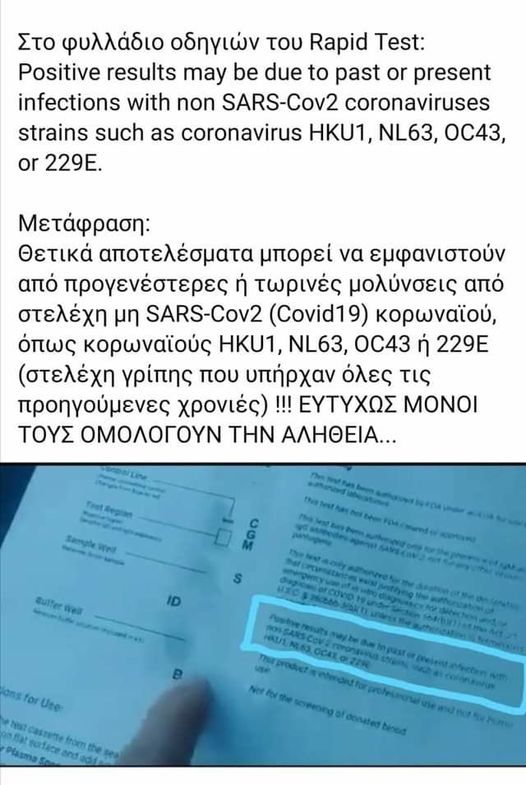 Όταν ο ίδιος ο εφευρέτης των τέστ, δηλώνει πως είναι ΑΝΑΞΙΟΠΙΣΤΑ…
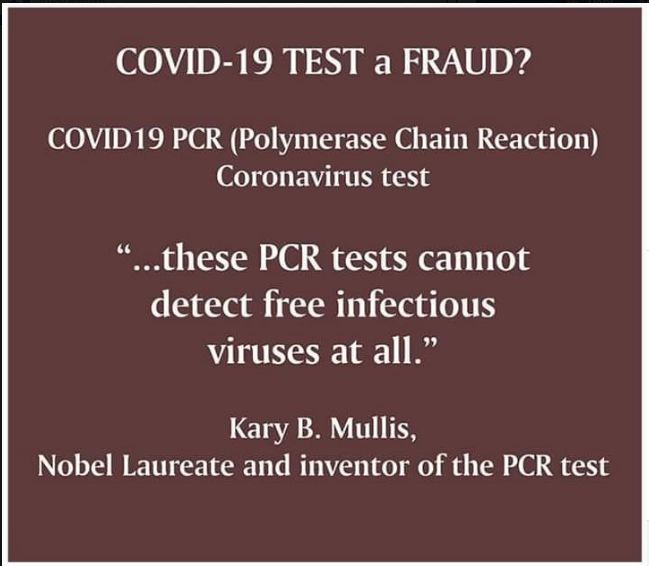 Όταν Δικαστήριο της Βιέννης, δηλώνει πως τα τεστ είναι ΑΝΑΞΙΟΠΙΣΤΑ…
 Όταν ο Έλον Μάσκ, δηλώνει πως τα τεστ είναι ΑΝΑΞΙΟΠΙΣΤΑ,

Ένα από τα καθάρματα της Χαζαροελίτ, ο Έλον Μασκ.
… ΤΙ ΑΠΟΦΑΣΗ ΠΡΕΠΕΙ ΝΑ ΔΗΛΩΣΕΙ ΤΟ ΔΙΚΑΣΤΗΡΙΟ ΤΗΣ… ΝΥΡΕΜΒΕΡΓΗΣ 2;;;
ΙΣΟΒΙΑ ή ΘΑΝΑΤΟΣ! ΛΙΓΟ ΤΟΥΣ ΕΙΝΑΙ
Καλλιόπη Σουφλή
Υ.Γ. Θα ευχηθώ μια δίκαιη δίκη… (σχήμα λόγου), αλλά με τα ΣΙΩΝΙΣΤΙΚΑ ΚΑΙ ΜΑΣΟΝΙΚΑ ΚΑΘΑΡΜΑΤΑ, ΤΙ ΔΙΚΑΙΟΣΥΝΗ ΠΕΡΙΜΕΝΕΤΕ;

Το τομάρι τους να γίνει σκιάχτρο προς μελλοντική αποφυγή τέτοιων εγκλημάτων
Της Ιωάννας Υψηλάντη
Ξεκινάει, σήμερα, στις 6μμ, η Δίκη της Νυρεμβέργης 2.
1000 δικηγόροι με επικεφαλής τον Γερμανό δικηγόρο Ράινερ Φιούλμιχ (Reiner Fullmich), γνωστό από τις κερδισμένες υποθέσεις του, κατά της Ντόυτσε Μπανκ και της Φολκς Βάγκεν, μαζί με πάνω από 10.000 εμπειρογνώμονες της Ιατρικής, κατηγορούν:
– Τον Παγκόσμιο Οργανισμό Υγείας
– Τον CDC (ΕΟΔΥ των ΗΠΑ) και
– Το Οικονομικό Φόρουμ του Νταβός, για “Εγκλήματα κατά της ανθρωπότητας”, βάσει των πρακτικών που ασκήθηκαν, για την αντιμετώπιση του κόβιντ-19.
Θα καταρρίψουν το πρώτο “όπλο”, που χρησιμοποιήθηκε, παγκοσμίως, για καταγραφή ψευδών κρουσμάτων και θανάτων, αλλά και των μέτρων, που ακολούθησαν, όπως τα γενικά λοκντάουν στις οικονομίες και στις κοινωνίες.
Τα PCR τεστ.
Αυτά που “μετρούσαν” λανθασμένα τον ιό, στους 35 κύκλους στην Ελλάδα και αλλού, στους 45 κύκλους ενισχύσεως, όταν ο ίδιος ο CDC παραδέχεται ότι καμία μέτρηση άνω των 28 κύκλων δεν είναι αποδεκτή, ως έγκυρη.
Εκτός από τα ψευδή τεστ και τα πλαστά πιστοποιητικά θανάτων (δικαστήριο της Λισαβώνας αποφάσισε, πριν λίγες μέρες, ότι από τους 17.000 θανάτους που αποδόθηκαν, από τις Πορτογαλικές υπηρεσίες Υγείας, στον κόβιντ, μόνον οι 153 οφείλονταν στον ιό.)
Οι νομικοί θ΄ αποδείξουν ότι το “πειραματικό εμβόλιο” παραβιάζει το άρθρο 32 της Σύμβασης της Γενεύης IV (1949) για “πειράματα που δεν απαιτούνται για την ιατρική περίθαλψη ενός προστατευόμενου ατόμου”.
Επίσης, ότι το πειραματικό γενετικό εμβόλιο παραβιάζει και τους 10 Κώδικες της Νυρεμβέργης, που η παραβίαση τους επιφέρει την θανατική ποινή.
Για όποιον θέλει να το παρακολουθήσει: ΕΔΩ
Ετικέτες: ΔΙΚΗ ΤΗΣ ΝΥΡΕΜΒΕΡΗΣ, ΚΟΡΟΝΟΙΟΣ, ΚΟΡΥΦΑΙΑ, ΠΡΩΤΟ ΘΕΜΑ, ΤΕΣΤ
Ιούλ 05
«Έχουμε φτάσει στο άκρο της γελοιότητας» είπε ο καθηγητής Γ.Ιωαννίδης

Ιούλ 05
Απογοήτευση και οργή στην κυβέρνηση: Αδυνατεί να πείσει τους πολίτες να εμβολιαστούν

Σε πλήρεις ρυθμούς κινείται η κυβερνητική προπαγάνδα για την περίφημη ινδική μετάλλαξη προετοιμάζοντας το κλίμα για το αφήγημα της επέλασής της στη χώρα.
Το ένα μετά το άλλο τα στελέχη της «κυβέρνησης» των λοιμωξιολόγων κάνουν την εμφάνισή τους, προειδοποιώντας ότι έρχεται η μετάλλαξη της Ινδίας.
Πρώτα ο Σ.Τσιόδρας ο οποίος σε σύσκεψη υπό τον πρωθυπουργό μίλησε για «αύξηση» των κρουσμάτων σε Αττική, Κρήτη και νότιο Αιγαίο.Σ.γ.: Αύξηση των κρουσμάτων, όχι των θανάτων, καθότι ο ιός είναι πιο μεταδοτικός αλλά σαφώς εξασθενημένος και όχι θανατηφόρος εκτός από πάσχοντες με βαριά υποκείμενα που μέλλει να πεθάνουν έτσι κι αλλιώς.
Τη «σκυτάλη» πήρε μετά η Ματίνα Παγώνη, η οποία κατά τη διάρκεια τηλεοπτικής της συνέντευξης εμφανίστηκε ανησυχούσα για τα χαμηλά ποσοστά εμβολιασμών και την ινδική μετάλλαξη.
Μάλιστα η Παγώνη είπε ότι όσοι θέλουν να φύγουν για διακοπές θα πρέπει να εμβολιαστούν πρώτα. (σ.σ. για όσους έχουν χρήματα για να κάνουν διακοπές).
«Τα πράγματα δεν είναι καλά, γιατί ελπίζαμε ότι οι εμβολιασμοί θα είχαν προχωρήσει πολύ. Ιδιαίτερα πολλοί νέοι εμβολιάστηκαν την πρώτη εβδομάδα και ύστερα έπεσαν τα ποσοστά», τόνισε.
«Μας έπεσαν τα ποσοστά των εμβολιασμών – Πρέπει να τα σηκώσουμε»
Το «τείχος ανοσίας» από το 70 πήγε τώρα στο 80%
Ιδιαίτερα, υπογράμμισε πως είναι αναγκαίο να προχωρήσουν οι εμβολιασμοί ώστε να χτιστεί το «τείχος ανοσίας» μέχρι τα τέλη Αυγούστου. «Η ινδική μετάλλαξη καραδοκεί και η μεταδοτικότητά της είναι ιδιαίτερα αυξημένη» είπε.
«Μέχρι τέλη Αυγούστου αυτό το τείχος ανοσίας,[1] που πρέπει να είναι άνω του 80%, (σ.σ. παλαιότερα μιλούσαν για τείχος στο 70%) μπορούμε να το πετύχουμε εάν τρέξουμε τους εμβολιασμούς. ΟΥΤΟΠΙΑ. Όσοι δεν έχουν εμβολιαστεί, θα είναι πολύ δύσκολα τα πράγματα με την ινδική μετάλλαξη, η οποία έχει επιθετικότητα 50 έως 70% αύξηση, που σημαίνει πως όσοι δεν έχουν εμβολιαστεί μπορεί να φτάσουν μέχρι και τις ΜΕΘ. ΑΠΕΙΛΗ ΓΙΑ ΝΑ ΤΡΟΜΑΞΕΤΕ. Είναι ότι χειρότερο μπορεί να συμβεί. Το μήνυμα είναι ένα: πριν φύγουμε για διακοπές θα πρέπει να πάμε να εμβολιαστούμε».
«Θα είμαστε προετοιμασμένοι για τον Οκτώβριο, γιατί τα πράγματα δυσκολεύουν, ο καιρός είναι εναντίον μας κι εμείς θα πρέπει να έχουμε χτίσει το τείχος ανοσίας. Το σύστημα υγείας είναι σίγουρο ότι δεν θα αντέξει. Αυτό που πρέπει όλοι να κατανοήσουν ότι δεν θα απαλλαγούμε από τον ιό και τις μεταλλάξεις του.
Το θέμα είναι γίνει και η δεύτερη δόση, για να μιλάμε για πλήρη κάλυψη. Ξέρετε πόσοι θα μπορούσαν να έχουν εμβολιαστεί σήμερα που έφευγαν με τα πλοία; Αν υπήρχαν συνεργεία, θα είχε εμβολιαστεί πολύς κόσμος. Θα πρέπει να οργανώσουμε γρήγορο εμβολιασμό για να αντιμετωπίσουμε τις μεταλλάξεις του ιού», κατέληξε η κ. Παγώνη. Σ.γ.:Η γυναίκα λέει αυτά για τα οποία πληρώνεται σαν αξιοθρήνητο φερέφωνο που έχει καταντήσει!!!

Ιούλ 05
Απροσδόκητη συμμετοχή του πατραϊκού λαού χθες στην Πάτρα.
Η συγκέντρωση ήταν προς συμπαράσταση του Ναύαρχου Αντώνη Παπαντωνίου στα Προπύλαια του ΕΚΠΑ.
Το κλίμα ενθουσιώδες οι συμμετέχοντες Πατρινοί επέμεναν, εντελώς αυθόρμητα να κάνουν πορεία στο κέντρο της Πάτρας υπό τη διακριτική παρακολούθηση της αστυνομίας.
Πολλοί ζήτησαν να ξαναγίνει η συγκέντρωση καθημερινή ώστε να γίνει μαζικότερη και να είναι ανοικτά τα μαγαζιά.
Οψόμεθα…
Πιο κάτω δείτε φωτό από τη συγκέντρωση της Πάτρας.
 Συγκέντρωση Πάτρας 4/7/2021

Συγκέντρωση Πάτρας 4/7/2021
 Συγκέντρωση Πάτρας 4/7/2021
Ιούλ 05
ΜΑΙΡΗ ΚΑΡΑ. – 5 Ιούλ 2021 – 11:37

ΟΙ ΕΛΛΗΝΕΣ ΠΟΥ ΑΓΑΠΑΝΕ ΤΗΝ ΠΑΤΡΙΔΑ ΜΑΣ ΜΕ ΕΡΓΑ ΚΑΙ ΟΧΙ ΜΟΝΟ ΜΕ ΛΟΓΙΑ…
ΤΟ ΑΠΟΔΕΙΚΝΥΟΥΝ ΜΕ ΤΗΝ ΠΑΡΟΥΣΙΑ ΤΟΥΣ ΣΤΟ ΚΑΛΕΣΜΑ ΤΟΥ ΑΝΤΩΝΗ ΠΑΠΑΝΤΩΝΙΟΥ ΣΤΑ ΠΡΟΠΥΛΑΙΑ…
ΕΚΕΙ ΑΠΟΦΑΣΙΖΟΥΝ ΣΑΝ ΕΛΕΥΘΕΡΟΙ ΕΛΛΗΝΕΣ ΓΙΑ ΤΟ ΜΕΛΛΟΝ ΤΟΥΣ…
ΚΑΙ ΤΟ ΜΕΛΛΟΝ ΤΟΥ ΕΘΝΟΥΣ ΤΟΥΣ.
ΟΛΟΙ ΟΙ ΑΛΛΟΙ ΣΥΝΕΧΙΖΟΥΝ ΤΗΝ ΖΩΟΥΛΑ ΤΟΥΣ ΣΑ ΝΑ ΜΗΝ ΣΥΜΒΑΊΝΕΙ ΤΙΠΟΤΑ ΚΑΙ ΕΛΠΙΖΟΥΝ ΝΑ ΕΡΘΕΙ Η ΕΛΕΥΘΕΡΙΑ ΑΠΟ ΤΟΝ ΟΥΡΑΝΟ…
ΑΥΤΟ ΔΕΝ ΘΑ ΓΙΝΕΙ ΠΟΤΕ ΓΙΑΤΙ ΤΗΝ ΓΗΙΝΗ ΑΤΜΟΣΦΑΙΡΑ ΤΗΝ ΈΧΕΙ ΠΕΡΙΚΥΚΛΩΜΕΝΗ ΤΟ ΜΑΤΡΙΞ ΚΑΙ ΔΕΝ ΜΠΟΡΕΙ ΝΑ ΕΙΣΕΛΘΕΙ ΤΙΠΟΤΑ…
Η ΣΩΤΗΡΙΑ ΘΑ ΕΡΘΕΙ ΑΠΟ ΤΟΥΣ ΑΦΥΠΝΙΣΜΕΝΟΥΣ ΕΛΛΗΝΕΣ ΚΑΙ ΜΟΝΟ…
ΚΑΙ ΜΟΝΟ ΑΥΤΟΙ ΘΑ ΣΩΘΟΥΝ…
ΑΥΤΟ ΝΑ ΤΟ ΚΑΤΑΛΑΒΟΥΝ ΟΛΟΙ!
Ιούλ 04
4/7/2021
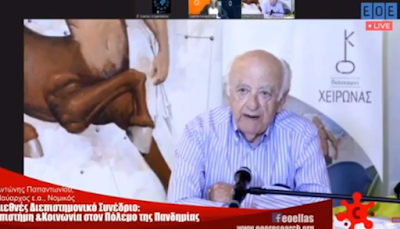
Ο Ναύαρχος και Νομικός Αντώνης Παπαντωνίου
Ιούλ 04

ΤΡΙΤΗ, 6 ΑΠΡΙΛΙΟΥ 2021
Γ.Ν.Αεροπορίας, Γιώργος Καρυστινός:
Υπάρχει σκοπούμενος δόλος και απάτη πίσω από το covidbusiness”. Με το θέμα του covid έχει γίνει το εξής: Η συγκεκριμένη ομάδα ιών τύπου corona (ΔΕΝ είναι 1 ιός, αλλά ομάδα, κάτι σαν να λέμε αιλουροειδή) υπάρχουν στη γη εδώ και εκατομμύρια χρόνια και προκαλούν λοιμώξεις αναπνευστικού….

Κάθε χρόνο μεταλλάσσονται, αφού τα προηγούμενα στελέχη έχουν ήδη προκαλέσει την παραγωγή αντισωμάτων σε πάρα πολύ μεγάλο ποσοστό πληθυσμού κι αν δεν μεταλλαχθούν ώστε να μπορούν να ξαναπροσβάλλουν, απλά θα εξαφανιστούν από τη γη γιατί ο γενικός πληθυσμός που έχει αναπτύξει αντισώματα δεν μπορεί να ξαναπροσβληθεί, ώστε να αναπαραχθεί ο ιός (δηλ πρακτικά η ετήσια μετάλλαξή τους είναι μέθοδος επιβίωσής τους).
Οι ιοί προσβάλλουν μόνο ένα είδος κυττάρων ο καθένας, όχι πολλά είδη κυττάρων, έχουν δηλαδή “εξειδίκευση”.
Όταν εισβάλλουν, ρίχνουν το ανοσοποιητικό (ειδικά τα λευκά αιμοσφαίρια), όπως ξέρουμε από φοιτητές (θα θυμάσαι ότι αν σε γενική αίματος είναι λίγο χαμηλά τα λευκά, ο ιατρός ρωτάει: μήπως πέρασες γρίππη τελευταία?).
Προκαλούν όμως ήπια ως ηπιο-μέτρια συμπτώματα.
Όμως το ότι ρίχνουν το ανοσοποιητικό (λευκά), δίνει συχνά την ευκαιρία σε μικρόβια (εδώ: συχνότερα στο μυκόπλασμα) να εισβάλλουν και να προκαλέσουν μικροβιακή πνευμονία (το μυκόπλασμα προκαλεί την λεγόμενη άτυπη πνευμονία).
Η κομπίνα που έχει στηθεί είναι ότι τα χαρακτηριστικά της επιλοίμωξης με μικρόβια και ειδικά από μυκόπλασμα τα πλασσάρουν ότι δήθεν είναι του ιού ενώ ΔΕΝ είναι του ιού, αλλά των μικροβιακών επιλοιμώξεων (με πιο χαρακτηριστικές αυτές από μυκοπλάσμα)!
Τα μικρόβια μπορούν να προσβάλλουν πολλά όργανα, όχι οι ιοί! Ομοίως και να προκαλέσουν αιμορραγικά ή θρομβωτικά φαινόμενα, έκκριση κυτοκίνης κλπ, απότοκα υπερβολικής γενικευμένης αντίδρασης του ανοσοποιητικού (ενδεχομένως λόγω και “πανικού” του ανοσοποιητικού, αφού ενστικτωδώς το σώμα αντιλαμβάνεται ότι έχει προσβληθεί από πολύ ισχυρότερο λοιμογόνο αίτιο σε σχέση με ιό).
Τα μικρόβια όμως, χτυπιούνται με αντιβιοτικά. Πλασσάροντας ότι δήθεν τα συμπτώματα επιλοίμωξης (με ξαφνική επιδείνωση κλινικής εικόνας με δύσπνοια-πτώση κορεσμού) είναι του ιού, ΑΠΟΤΡΕΠΟΥΝ τον κόσμο να πάρει αντιβιοτικά, με αποτέλεσμα τα μικρόβια και ειδικά το μυκόπλασμα που είναι πολύ επιθετικό, να αφήνονται ανεξέλεγκτα να δρουν! Κάπως έτσι καταλήγουν οι ασθενείς σε διασωληνώσεις η/και θανάτους!
Τι πρέπει να γίνει, είναι πολύ απλό: Αντιβιοτικά με ΕΝΑΡΞΗ συμπτωμάτων:
Co-amoxiclav (Augmentin) 1gr ανά 12ωρο για 7-8 μέρες ΚΑΙ Azithromycin (Zithromax) 500mg 1 φορά τη μέρα για 5-7 μέρες (λαμβάνονται και τα δύο αντιβιοτικά ταυτόχρονα).
Επί αλλεργίας στο Augmentin, δίδεται clarithromycin (Claricid) 500 mg ανά 12ωρο για 5-7 μέρες.
Επί επιδείνωσης με δύσπνοια-πτώση κορεσμού: stop τα ανωτέρω και έναρξη moxifloxacin (avelox) 400mg 1 φορά ημερησίως για 5-7 μέρες (πολύ πιο αποτελεσματικό).
Υπ’όψιν ότι η υδροξυχλωροκίνη που “διαφημίστηκε”, εκτός ότι έχει σοβαρές παρενέργειες (περαιτέρω μείωση λευκών αιμοσφαιρίων και πρόκληση παράτασης διαστήματος QT στο καρδιογράφημα-προκαλεί κοιλιακές ταχυκαρδίες που συχνά είναι θανατηφόρες) και δεν προσφέρει τίποτα, αν ληφθεί απαγορεύεται ο ασθενής να πάρει avelox (το πολύ δραστικό αντιβιοτικό)![1]
Πρέπει να διακοπεί η υδροξυχλωροκίνη για 2-3 μέρες και μετά μπορεί να δοθεί avelox (που θα είναι πολύ αργά, αφού τα μικρόβια και ειδικά το μυκόπλασμα, θα αφεθούν να δρουν ανεξέλεγκτα αυτές τις επιπλέον 2-3 μέρες, με καταστροφικές συνέπειες).
Βοηθητική επίσης των συμπτωμάτων επί μικροβιακής επιλοίμωξης είναι και η χορήγηση κορτιζόνης.
Υπ’όψιν ότι δεν χρειάζεται νοσηλεία, υπό την προϋπόθεση ότι τα αντιβιοτικά θα ξεκινήσουν ΕΓΚΑΙΡΑ και όχι καθυστερημένα! Γι’αυτό από 1/9/20 αυστηροποίησαν τη συνταγογράφησή τους με κριτήρια (ακτινογραφία θώρακος+ εξετάσεις αίματος+καλλιέργειες αίματος), που για να πληρούνται, ο ασθενής πρέπει να πάει νοσοκομείο να τα κάνει ή σε μεγάλο διαγνωστικό κέντρο, όπου όμως λόγω συμπτωμάτων ΔΕΝ θα του τα κάνουν, γιατί θα του πουν να πάει σπίτι του και να μείνει εκεί βάσει (αθλίων) οδηγιών του ΕΟΔΥ και να έρθει μόνο όταν εμφανίσει δύσπνοια (δηλ όταν πλέον θα έχει καταρρεύσει το αναπνευστικό από μικροβιακή επιλοίμωξη!).
Κάπως έτσι “πέτυχαν” την αύξηση των σοβαρώς επιδεινούμενων ασθενών αυτό το Φθινόπωρο-Χειμώνα. Κατά τη γνώμη μου πρόκειται για ένα ακόμα έγκλημά τους (στα τόσα που έχουν διαπράξει ήδη).
Ελπίζω να βοήθησα να ξεκαθαρίσει το τοπίο”.
Σύντομο βιογραφικό:
Ο Γεώργιος Καρυστινός γεννήθηκε το 1968 στην Αθήνα. Είναι απόφοιτος του Ιατρικού τμήματος της Στρατιωτικής Σχολής Αξιωματικών Σωμάτων και υπηρετεί στην Πολεμική Αεροπορία.
Έχει αποφοιτήσει από τα σχολεία: Αεροπορικής Ιατρικής, Υπερβαρικής – Καταδυτικής Ιατρικής και από το σχολείο Πυρηνικής, Βιολογικής, Χημικής Ιατρικής και Άμυνας. Υπηρέτησε σε διάφορες μονάδες της Πολεμικής Αεροπορίας ως στρατιωτικός ιατρός και κατέχει το βαθμό του Σμηναγού.
[1]΄Υπάρχουν διαφωνίες ως προς την αποτελεσματικότητα του Plaquenil δηλ. της θειικής υδροξυχλωροκίνης, άλλοι γιατροί ιδιαίτερα ισχυρίζονταζι ότι είναι φραγμός στον Covid-19 και δεν έχουν χάσει ούτε έναν ασθενή με τη χορήγησή της.
ΠΗΓΗ:http://greeknewsondemand.com/2021/07/04/%ce%b3%ce%b9%ce%b1%cf%84%cf%81%cf%8c%cf%82-%ce%b1%ce%b5%cf%81%ce%bf%cf%80%ce%bf%cf%81%ce%b9%ce%b1%cf%82-%ce%b3%ce%b9%cf%89%cf%81%ce%b3%ce%bf%cf%82-%ce%ba%ce%b1%cf%81%cf%85%cf%83%cf%84/
Ιούλ 03
These are the COVID-19 vaccine prospects that have made it to phase three trials and beyond.
COVID-19 vaccines have reached consumers in record time. Though the process can typically take 10 to 15 years, the U.S. Food and Drug Administration has granted emergency authorization to vaccines made by Pfizer, Moderna, and Johnson & Johnson in less than a year. Before now, the fastest-ever vaccine—for mumps—took four years to develop in the 1960s.
Even after a vaccine is authorized or fully licensed, it faces potential roadblocks when it comes to scaling up production and distribution, which also includes deciding which populations should get it first—and at what cost. (Here’s why determining who is “first in line” for the vaccine depends on your state.)
Yet several efforts are underway to help produce and distribute the vaccines more quickly. Here’s everything you need to know—including primers on how vaccines and clinical trials work, the latest news on vaccine distribution and safety, and a detailed breakdown of each of the candidates that have reached phase three and beyond.
More than 60 vaccines are still going through a three-stage clinical trial process that’s required before they are sent to regulatory agencies for approval. Given the urgent need, some vaccine developers have compressed the clinical process for SARS-CoV-2 by running trial phases simultaneously.
Phase one: Checks the safety of a vaccine and determines whether it triggers an immune response in a small group of healthy humans.
Phase two: Widens the testing pool to include groups of people who may have the disease or be more likely to catch it, to gauge the vaccine’s effectiveness.
Phase three: Expands the pool up to the thousands to make sure the vaccine is safe and effective among a wider array of people, given that immune response can vary by age, ethnicity, or by underlying health conditions.
The COVID-19 candidates, like all vaccines, essentially aim to instruct the immune system to mount a defense, which is sometimes stronger than what would be provided through natural infection and comes with fewer health consequences.
To do so, traditional vaccines use the whole coronavirus, but in a killed or weakened state. Others use only part of the virus—whether a protein or a fragment. Some transfer the instructions for coronavirus proteins into an unrelated virus that is unlikely or even incapable of causing disease. Finally, cutting-edge vaccines under development rely on deploying pieces of the coronavirus’s genetic material, enabling our cells to temporarily make coronavirus proteins needed to stimulate our immune systems. (Find out more about vaccines and how they work.)
Nucleic acid: Relies on injecting snippets of a virus’s genetic material, either DNA or messenger RNA (mRNA), into human cells. It spurs the production of viral proteins that mimic features of the coronavirus, training the immune system to recognize its presence.
Knocked-out virus: Uses a non-infectious form of the coronavirus that can no longer cause full-blown disease but can still provoke an immune response. The virus can either be fully inactivated or weakened. These modes are considered the most classic ways to make vaccines.
Viral vector: Essentially a “Trojan horse” presented to the immune system. One type involves introducing a piece of DNA from SARS-CoV-2 into another unrelated germ—for example, an adenovirus, which typically causes the common cold. When this modified adenovirus is injected into humans, the hope is that it will instruct cells to make coronavirus proteins and will trigger an immune response.
Protein: These vaccines are typically made from coronavirus proteins, which can be synthesized or brewed in labs like beer. Some versions involve coating a carrier—such as nanoparticles—with proteins to better aid delivery and uptake by cells.
In the United States, more than half of the population has received at least one dose, and 47 percent of people are fully vaccinated. As of July 2, the U.S. had administered more than 328 million shots of the authorized vaccines and had distributed more than 382 million doses. The CDC has also approved Pfizer’s vaccine for emergency use in adolescents ages 12 to 15, which is seen as key to helping the country reach herd immunity.
On June 22, President Joe Biden’s administration acknowledged that the country will not meet the president’s previously announced goals to administer at least one shot to 70 percent of American adults and fully immunize 160 million adults by July 4. White House COVID-19 response coordinator Jeff Zients said it will take a few more weeks to reach those goals.
In its efforts to do so, the U.S. has focused on adults who have been less eager to get the vaccine. Efforts include a website to help people find vaccines, as well as an increase in walk-up vaccination sites, pop-up clinics, and plans to increase funding and access to clinics in rural areas. On June 2, Biden announced a new slew of incentives and efforts to remove barriers to vaccination, from free beer to free childcare coverage. Pharmacies are also extending their hours, and the Biden administration is partnering with Black-owned barbershops and beauty salons to administer the vaccines.
States, which are still responsible for rollout decision making, have widened eligibility to include all people 12 and older. The Biden administration has dedicated nearly $20 billion to the vaccine rollout as part of the $1.9 trillion COVID-19 rescue package proposed in January and signed by Biden on March 11.
The World Health Organization is also coordinating global efforts to develop a vaccine, with an eye toward delivering two billion doses by the end of 2021. It is also leading an initiative through the COVAX Facility to ensure that all countries have equitable access to the vaccine. COVAX has distributed more than 91 million doses to 133 countries. The WHO has approved the Pfizer-BioNTech, AstraZeneca-Oxford, Johnson & Johnson, Moderna, Sinopharm, and Sinovac vaccines for emergency use.
On May 27, however, COVAX acknowledged that the crisis in India has led to a shortfall of 190 million doses. In a joint statement, COVAX administrators said the consequences of that shortfall “could be catastrophic.” They called on world leaders to share more doses and commit additional funding to the global effort. On June 3, the Biden administration said that it will share 80 million doses by the end of June; 75 percent of those doses will be shared through COVAX and the rest will go to countries experiencing surges and to U.S. neighbors. The U.S. also announced on June 11 that it will purchase 500 million doses of the Pfizer vaccine and donate them to low- and middle-income countries. Two hundred million doses will be delivered by the end of 2021 and the rest will be delivered in the first half of 2022.
On June 13, national leaders at the G7 summit announced plans to donate 870 million doses to the global vaccination effort. Most of the doses will be distributed through COVAX, with the aim to deliver at least half of them by the end of 2021. Pfizer, Moderna, and Johnson & Johnson have also pledged to send more doses of their vaccines to low- and middle-income countries. According to Agence France Presse, the companies will collectively provide around 3.5 billion doses by the end of 2022. The European Union also said it would donate at least 100 million doses by the end of 2021. The Biden administration has pledged $4 billion to the COVAX Facility.
On June 23, the U.S. Food and Drug Administration said it plans to add a warning label to the Pfizer and Moderna vaccines about rare cases of heart inflammation in adolescents and young adults. The news comes after the CDC’s Advisory Committee on Immunization Practices announced that it has identified more than 300 cases of myocarditis and pericarditis that it acknowledged are likely linked to the vaccines. The agency says these cases are rare but higher than expected. It also said the benefits of the shots outweigh the risks.
An earlier CDC report released February 19 revealed that severe reactions to the Pfizer-BioNTech and Moderna COVID-19 vaccines are rare. The report documented only 4.5 cases of anaphylaxis per million doses of vaccine administered during the reporting period, which the CDC notes is comparable with rates for other types of vaccines. U.K. regulators have also published safety data for the Pfizer-BioNTech vaccine showing that most side effects are mild and consistent with what is typical of other vaccines. Still, as a precautionary measure, U.K. officials have advised people with a history of serious allergic reactions not to get the Pfizer-BioNTech vaccine.
In April, the European Medicines Agency issued statements saying that unusual blood clots should be listed as a very rare but possible side effect of both the AstraZeneca and Johnson & Johnson vaccines. In a review of 86 reported cases related to the AstraZeneca vaccine, the EMA’s safety committee found a potential link between it and the clots, with most known cases occurring in women under age 60 within two weeks of receiving the first dose. The EMA continues to stress that the odds of developing a clot after vaccination are extremely low, and that the benefits of getting vaccinated outweigh the risks. They also recommend that people seek immediate medical attention if they experience symptoms related to clotting, including persistent pain, shortness of breath, and headaches or blurred vision.
On April 23, CDC director Rochelle Walensky recommended for the first time that pregnant people receive the COVID-19 vaccine. The CDC’s official guidelines leave it up to pregnant people to decide for themselves whether to get the vaccine, but Walensky pointed to a recent study published in the New England Journal of Medicine that showed no safety concerns among pregnant people who received the mRNA vaccines made by Moderna and Pfizer-BioNTech.
Here are the vaccines that have made it to phase three and beyond:
Name: JNJ-78436735
Who: One of the world’s largest multinational corporations, based in New Jersey, specializing in healthcare and pharmaceutical products.
What: A single-dose vector vaccine. (Here’s how the Johnson & Johnson vaccine works.)
Latest news: On July 1, Johnson & Johnson announced that its vaccine offers strong protection against Delta, the more contagious variant that is rapidly circulating. New studies showed a slight drop in efficacy compared to the original virus, but it is more effective against Delta than the Beta variant of concern. The studies also showed that the protections last for at least eight months.
On June 9, a study published in the journal Nature showed that Johnson & Johnson’s vaccine is effective in protecting against virus variants, including the Beta and Gamma variants of concern. The study showed that the vaccine elicits neutralizing antibodies and a T-cell response among people who live in areas where the variants are widely circulating, including Brazil and South Africa.
Approval status: Approved for use in the U.S., Bahrain, Canada, and the European Union.
Distribution: On March 2, the U.S. announced that Johnson & Johnson has partnered with its competitor Merck to increase the supply of its COVID-19 vaccine. Merck will dedicate two facilities to producing the vaccine, which could double the amount of available doses. Biden said that the additional doses will allow the U.S. to vaccinate all adults by the end of May.
On June 11, the New York Times reported that the FDA has told Johnson & Johnson to throw out 60 million doses made at its plant in Baltimore. The news came a day after CNN reported that the U.S. hasn’t sent any shipments of the vaccine since the first week of May due to a lack of supply caused by earlier issues at the plant. On June 10, Johnson & Johnson also announced that the FDA has approved an extension of the shelf life of its vaccine from three to four and a half months.
Efficacy and safety: On February 24, an FDA analysis confirmed Johnson & Johnson’s earlier report that its vaccine is safe and effective in preventing COVID-19. The report found the vaccine is 72-percent effective in preventing COVID-19 based on U.S. trials, and 85-percent effective in preventing severe disease across all regions. It also shows that the vaccine was 64-percent effective in preventing disease in the company’s South African trials, which is higher than had previously been reported.
In the spring, the vaccine’s rollout was briefly halted in the U.S. and across Europe as regulators investigated reports of blood clotting among people who have received the shot. The FDA and CDC reviewed 15 cases of blood clots. The cases—which the agencies noted are “extremely rare”—occurred in women between the ages of 18 and 48 within six to 13 days after vaccination. The Europeans Medicines Agency also said that the cases it reviewed occurred in people under 60—mostly women—within three weeks of vaccination.
On April 23, the U.S. FDA and CDC lifted the pause on Johnson & Johnson’s vaccine and said that immunizations can resume immediately. The agencies said that the risk of blood clots is “very low” and that the benefits of getting the vaccine outweigh the risks. It will add information about the increased risk of blood clots to the vaccine’s label. The decision came days after the European Medicines Agency said that blood clots should be listed as a “very rare” side effect of Johnson & Johnson’s COVID-19 vaccine.
Clinical trials status: On September 23, Johnson & Johnson announced the launch of its phase three “ENSEMBLE” trial to evaluate the safety of the vaccine—and how well it works—among up to 60,000 adults from a variety of countries. The trial will include “significant representation” from older populations and those with underlying conditions that make them more susceptible to COVID-19.
On October 12, Johnson & Johnson announced that it paused phase three trials for an independent safety review due to an unexplained illness in a participant. The company didn’t provide any details, in part to protect the patient’s privacy, but said that illnesses and accidents are expected in large clinical studies. What’s more, study pauses are routine for clinical trials and aren’t typically reported. On October 23, the company announced it would resume trials, which were fully enrolled with 45,000 participants by December 17.
On April 2, Johnson & Johnson announced that it has begun vaccinating children age 12 to 17 as part of its phase 2a clinical trial. The company said it will initially test the vaccine in adolescents age 16 to 17 before expanding it to younger children.
Name: ChAdOx1 nCoV-19
Who: The U.K. university, in collaboration with the biopharmaceutical company AstraZeneca.
What: A viral vector vaccine that requires two doses.
Latest news: On June 25, preliminary results from a British study showed that mixing doses of the AstraZeneca and Pfizer vaccines provides strong protection against COVID-19. Researchers told the New York Times that the protection is strong regardless of the order in which the vaccines are administered. The findings will be useful for those who are unable to get a second AstraZeneca vaccine due to production delays and safety concerns, although researchers say it’s still best to get two doses of the same vaccine for now.
In Canada, meanwhile, on June 29 regulatory officials advised people with a history of capillary leak syndrome against receiving the AstraZeneca vaccine. Health Canada is also updating the vaccine’s label to add the syndrome as a potential side effect.
Approval status: Approved for use in the United Kingdom, the European Union, Argentina, India, and other countries.
Efficacy: On March 24, AstraZeneca released the primary analysis of its U.S. phase three clinical trials showing that its vaccine is 76 percent effective at preventing COVID-19, slightly lower than the 79 percent efficacy it had announced two days earlier based on a partial analysis of the data. It is also 85 percent effective in people 65 and older and 100 percent effective at preventing severe cases of the disease.
U.S. health officials had taken the unusual step of questioning the decision to release the interim results, describing them as “outdated and potentially misleading.” In a letter obtained by the Washington Post, an independent panel of experts at the National Institutes of Health that oversees U.S. clinical trials said that it had recommended the company release a later analysis instead, showing the vaccine may be 69 to 74 percent effective.
On February 3, AstraZeneca and Oxford released a preprint study of a phase three trial showing that their vaccine is 76-percent effective at preventing COVID-19 after one dose, with no severe cases or hospitalizations reported. The data also suggest that the vaccine may reduce asymptomatic transmission of the virus. Weekly swabs of participants testing for the presence of the virus found a 67-percent reduction in positive swabs after the first dose.
The companies also said that the vaccine’s efficacy increased to 82 percent when the second dose was taken after 12 weeks or longer, rather than the originally recommended four-week interval. The British government has recommended the longer gap in its rollout of the vaccine to prioritize getting the first shot to as many at-risk people as possible.
On February 7, South Africa halted its use of the AstraZeneca-Oxford vaccine after preliminary laboratory studies showed it offered only minimal protection against the virus variant that is dominant in that country. The finding was later confirmed by a study published in the New England Journal of Medicine showing that the vaccine does not protect against mild to moderate cases of COVID-19 caused by the South African variant. Early data suggested that the vaccine will still effectively protect against the variant that is prevalent throughout the U.K.
Safety: On June 9, a study published in the journal Nature Medicine found that people who have received the AstraZeneca vaccine have a slightly increased risk of a bleeding disorder. The analysis of 2.53 million people who received the vaccine found an incidence of 1.13 cases per 100,000 vaccines. Researchers said the benefits of getting the vaccine outweigh the risks. The study echoes and earlier safety review conducted by the European Medicines Agency.
Distribution: Project members say their candidate can be stored at temperatures seen in common refrigeration. Oxford and AstraZeneca expect to produce up to three billion doses of the vaccine in 2021.
On December 30, the U.K. announced changes to its vaccine delivery plan: With COVID-19 infections spreading rapidly, the country said it would prioritize delivering the first dose of either vaccine to as many at-risk people as possible, based on data provided to and released by health regulators. It will do so by delaying administration of the second dose of the AstraZeneca-Oxford drug. A similar rule was issued for the Pfizer-BioNTech vaccine, but regulators didn’t provide data to back the new regimen. Overall, the U.K. still recommends that recipients receive two doses of either vaccine for maximum benefit.
On February 15, the WHO listed the AstraZeneca-Oxford vaccine for emergency use, which will allow the agency to begin rolling out the vaccine in low-income countries through the COVAX Facility. Reuters reports that COVAX plans to deliver nearly two billion doses to more than 90 low- and middle-income countries by the end of the year.
On April 26, the Associated Press reported that the U.S. plans to share its AstraZeneca vaccine stockpile with the rest of the world—up to 60 million doses. The U.S. has not yet authorized the company’s vaccine for use.
The European Union also said on April 26 that it is suing AstraZeneca over the delays in shipping hundreds of millions of doses of its vaccine. According to the New York Times, AstraZeneca has said it will only be able to deliver a third of the 300 million doses it had promised Europe by the end of June. The lawsuit will hinge on whether AstraZeneca can prove it has made its “best efforts” to deliver the doses on time, according to the terms of the contract.
Clinical trials status: On December 11, AstraZeneca and Russia’s Gamaleya Institute announced plans to work together to study the possibility of combining Oxford’s vaccine with Gamaleya’s Sputnik V vaccine. Since both use the same adenovirus, researchers will investigate whether a combination of the two will improve efficacy.
The AstraZeneca-Oxford vaccine’s phase three trial aims to recruit up to 50,000 volunteers in Brazil, the U.K., the United States, and South Africa. On September 8, AstraZeneca paused the trials for a safety review due to an adverse reaction in one participant in the U.K., which the company described as a “routine action.” After an investigation by independent regulators, the trials resumed in the U.K., Brazil, South Africa, and India in September and resumed in the U.S. a month later.
Name: BNT162b2
Who: One of the world’s largest pharmaceutical companies, based in New York, in collaboration with German biotech company BioNTech.
What: A nucleic-acid vaccine that requires two doses taken 21 days apart.
Latest news: On June 28, a study published in the journal Nature showed that the Pfizer and Moderna vaccines elicit “robust and prolonged” immune responses. As the New York Times reported, the findings suggest that people who are immunized with these vaccines may not need booster shots as protection may last for years so long as the virus doesn’t mutate to evade it.
Approval status: On December 2, the U.K. became the first Western country to approve any COVID-19 vaccine when it authorized the Pfizer-BioNTech candidate—making the drug the first mRNA vaccine in history allowed for human use. The FDA granted emergency approval to this vaccine on December 11, a day after an advisory panel decided 17-4 that the benefits of the candidate outweigh the risks for anyone over the age of 16. The vaccine has also been granted emergency approval in Canada, the European Union, and other countries.
On May 12, the CDC approved Pfizer’s vaccine for emergency use in adolescents ages 12 to 15. U.K. regulators have also approved this vaccine for use in the same age group, while the European Union granted conditional authorization.
On May 7, Pfizer started its application for full FDA approval of its vaccine for people ages 16 and up. The company will submit all required information to the regulatory agency over the next few weeks, CNN reports, with a goal of getting full approval in the coming months.
On May 4, Pfizer CEO Albert Bourla said that the company expects to file for emergency use authorization of its COVID-19 vaccine for children ages 2 to 11 in September. Bourla also said that safety data from its phase two trials in pregnant people is expected in late July or early August.
Distribution: Pfizer and BioNTech have signed several contracts with the U.S. government to provide 300 million doses by July 31, 2021.
The European Union said on April 14 that it has begun negotiations with Pfizer-BioNTech for 1.8 billion doses of their vaccines for 2022 and 2023. The move is part of the bloc’s plans to pivot away from the AstraZeneca and Johnson & Johnson vaccines in favor of the mRNA vaccines.
On April 15, Bourla told CNBC that people will likely need a third dose of the Pfizer-BioNTech vaccine within 12 months of being fully vaccinated. He added that it’s possible people will need an annual booster of the COVID-19 vaccine, though variants “will play a key role” in determining when a booster will be needed.
Globally, Pfizer expects to be able to produce up to 50 million vaccine doses in 2020 and 1.3 billion doses by the end of 2021. Questions have been raised over the vaccine’s storage, which requires ultra-cold freezers set at minus 70 degrees Celsius (-94 degrees F). On February 19, however, Pfizer and BioNTech said that their vaccine can remain stable for two weeks at temperatures between minus 25℃ and minus 15℃ (-13℉ to 5℉), a common range in pharmaceutical freezers and refrigerators. The finding would allow for easier distribution of the vaccine in communities where ultra-cold storage requirements present a challenge. The companies say they have submitted the new data to the FDA for review.
Efficacy: On June 10, a study published in the journal Nature showed that two doses of the Pfizer vaccine protects against several virus variants, including the Delta and Eta variants. The news came a few days after the CDC announced that the Pfizer and Moderna vaccines reduce the risk of infection by 91 percent for fully vaccinated people.
On April 1, Pfizer and BioNTech announced that their vaccine is 91.3 percent effective for at least six months after the second dose and 100 percent effective against the more contagious variant circulating in South Africa. The updated analysis of the vaccine’s phase three clinical trials also showed that it offers full protection against severe cases of COVID-19 with no serious safety concerns. A preliminary study also suggests that the Pfizer-BioNTech and Moderna vaccines protect against a more contagious variant that drove a surge in cases in India, B.1.617.2.
The CDC has also released a study of the U.S. vaccine rollout showing that the Pfizer-BioNTech and Moderna vaccines are 90 percent effective in preventing symptomatic COVID-19 in real-world conditions. The study analyzed the efficacy of the two mRNA vaccines among nearly 4,000 health-care workers, first responders, and other frontline workers who were the first to receive the jab in the U.S. It also showed the vaccines are 80-percent effective after one dose. The findings confirm earlier studies from the U.K. and Israel.
On December 10, the New England Journal of Medicine published the results of Pfizer’s phase three study, showing the vaccine was safe and 95-percent effective in protecting against COVID-19 in people 16 and older. Pfizer and BioNTech have also announced that a phase three trial shows that their vaccine is safe and 100 percent efficacious among children between the ages of 12 and 15, and that it elicited robust antibody responses.
On February 17, the New England Journal of Medicine published a preliminary report showing that the Pfizer-BioNTech vaccine remains effective in protecting against the virus variants found in the U.K. and Brazil.
On March 11, Pfizer announced that preliminary findings from Israel’s rollout suggest its vaccine is effective at preventing COVID-19 transmission. The company says that its vaccine was 97-percent effective at preventing symptomatic COVID-19 cases and 94-percent effective against asymptomatic infections. Those findings are bolstered by a Mayo Clinic study showing that the mRNA vaccines made by Pfizer and Moderna have been shown to significantly reduce asymptomatic transmission in the U.S.
Safety: On June 23, the U.S. Food and Drug Administration said it plans to add a warning label to the Pfizer and Moderna vaccines about rare cases of heart inflammation in adolescents and young adults. The news comes after the CDC convened an emergency meeting of its advisory committee to discuss “rare but higher-than-expected” cases of myocarditis and pericarditis among young people who have received the vaccines. The committee acknowledged that these cases are likely linked to the vaccines but that the benefits of the shots outweigh the risks.
Severe allergic reactions following immunization with the Pfizer-BioNTech vaccine have been reported in many countries. White House advisor Anthony Fauci told CNBC in December that some adverse reactions are expected when a vaccine is distributed to a wider population. Regulators in the U.S. and U.K. have also released reports offering reassurances that severe reactions are rare.
Clinical trials status: On November 18, Pfizer and BioNTech announced the conclusion of their phase three trials. The trials launched in July, enrolling a diverse population in areas with significant SARS-CoV-2 transmission. Pfizer has expanded the trial to include 44,000 people across multiple countries.
On February 18, Pfizer and BioNTech announced the launch of a phase two/three clinical trial to study the vaccine’s safety and efficacy among 4,000 pregnant women over the age of 18. The companies have also launched a phase 1/2/3 study in children between the ages of six months and 11 years.
On June 8, Pfizer said that it will expand its clinical trials to a larger group of children under age 12. After a phase one study showed that the vaccine was safe and effective in a group of 144 children, the clinical trials will now enroll up to 4,500 children at more than 90 sites in the U.S., Finland, Poland, and Spain. Pfizer will test a dose of 10 micrograms in children ages 5 to 11, and three micrograms for children from six months to five years old.
The company expects to have data for the older group in September and will likely file for emergency authorization for that group later that month. Data for children ages two to five will likely come soon afterward, while data for the youngest age group is not expected until October or November.
Name: mRNA-1273
Who: A Massachusetts-based biotech company, in collaboration with the National Institutes of Health.
What: A nucleic-acid vaccine that requires two doses.
Latest news: On June 28, a study published in the journal Nature showed that the Pfizer and Moderna vaccines elicit “robust and prolonged” immune responses. As the New York Times reported, the findings suggest that people who are immunized with these vaccines may not need booster shots as protection may last for years so long as the virus doesn’t mutate to evade it.
Moderna also announced on June 29 that its vaccine is effective against the Delta variant, which is fast becoming the dominant strain in many countries, as well as several other variants of concern.
Approval status: On December 18, the FDA granted emergency approval to Moderna’s COVID-19 vaccine, a day after an advisory panel decided 20-0, with one abstention, that the benefits of the vaccine outweigh the risks, such as the mild side effects reported in their clinical trial. The vaccine has also been approved in the European Union, Canada, the U.K., Israel, and by the WHO.
On June 1, Moderna announced that it has applied for full FDA approval of its COVID-19 vaccine for use in people age 18 and older. The company also plans to file for emergency use authorization for teens ages 12 to 17. A study of clinical trials among adolescents in this age group shows that its vaccine is safe and 100 percent effective. The study also showed the vaccine is 93 percent effective among participants in this age group two weeks after the first dose.
Distribution: Moderna’s candidate was the second vaccine to receive emergency authorization in the U.S., joining Pfizer’s candidate. On December 11, the Trump administration purchased an additional 100 million doses of Moderna’s vaccine. Two months later, the Biden administration procured an additional 100 million doses, for a total of 300 million by the end of July.
On April 2, Moderna announced that the FDA has authorized it to increase the number of doses in its vials from 10 to 11. Regulators are also permitting the company to use new vials that allow for 15 doses. The FDA also said that Moderna’s vaccine can now be kept at room temperature for up to a day. The vaccine can otherwise be safely stored on ice or in a normal refrigerator for 30 days. These changes are expected to help the company distribute its vaccine more quickly.
The company also says it remains on track to deliver at least 500 million doses globally per year beginning in 2021, thanks in part to a deal it has struck with Swiss manufacturer Lonza that will allow it to manufacture up to a billion doses a year.
Efficacy: On February 17, the New England Journal of Medicine published a preliminary report showing that Moderna’s vaccine remains effective in protecting against the virus variant found in the U.K. However, it may be less effective in protecting against the South African variant—although researchers noted that further study is needed.
In December, an FDA analysis of the phase three study of Moderna’s vaccine confirmed that it is 94.1-percent effective in preventing mild cases of COVID-19 and 100-percent effective at preventing severe cases after taking two doses.
On April 6, findings from Moderna’s phase three clinical trials published in the New England Journal of Medicine showed that its vaccine elicits a strong antibody response for at least six months after the second dose.
Safety: On June 23, the U.S. Food and Drug Administration said it plans to add a warning label to the Pfizer and Moderna vaccines about rare cases of heart inflammation in adolescents and young adults. The news comes after the CDC convened an emergency meeting of its advisory committee to discuss “rare but higher-than-expected” cases of myocarditis and pericarditis among young people who have received the vaccines. The committee acknowledged that these cases are likely linked to the vaccines but that the benefits of the shots outweigh the risks.
Clinical trials status: Moderna announced on December 17 that it is launching clinical trials to evaluate the vaccine’s safety in children and people with cancer; it will also establish a “pregnancy registry” to track the vaccine’s safety in people who are pregnant.
The company started the third phase of its clinical trials in July 2020. Preliminary findings from its phase one trials showed that healthy subjects—including elderly patients—produced coronavirus antibodies and a reaction from T cells, another part of the human immune response. Phase three is testing the vaccine in 30,000 U.S. participants. The company also announced plans to test the safety and efficacy of a booster shot that would be delivered a year after the first pair of vaccine doses, according to CNBC. The trial will likely begin in July 2021.
On February 24, Moderna announced that it has shipped doses of a booster vaccine to the U.S. National Institutes of Health for clinical trials. The phase one trial will determine whether the booster can improve immunity against the South Africa variant. Moderna is also investigating using a third dose of its approved vaccine to protect against variants.
Name: Abdala
Who: A government-run research institute in Cuba.
What: A protein subunit vaccine that’s administered in three doses.
Latest news: On June 22, Cuba announced that the Abdala vaccine is 92.28 percent effective against COVID-19. Data has not yet been released, but Reuters reports that Cuban regulators are expected to grant emergency use authorization to both the Abdala and Soberana-02 vaccines. However, the country has already begun administering the two vaccines among health workers as part of an “intervention study.”
Clinical trials: In March Cuba launched phase three clinical trials for the Abdala vaccine among 48,000 volunteers.
Name: Soberana-02
Who: A government-run research institute in Cuba.
What: A conjugate vaccine that uses part of the virus spike protein.
Latest news: On June 22, the New York Times reported that the Soberana-02 vaccine was 62 percent effective at preventing COVID-19 after two of its three required doses. Results for all three doses is expected within weeks.
Clinical trials: On March 4, Cuba became the first country in Latin America to announce the launch of a phase three clinical trial for one of its COVID-19 vaccines, the Miami Herald reported. The Cuban government hasn’t released any data from early-stage trials but said the phase three trial will be conducted in Havana among 44,000 volunteers.
Name: CVnCoV
Who: A German biopharmaceutical company in partnership with Bayer, a German multinational pharmaceutical company.
What: An mRNA vaccine that’s administered in two doses taken 28 days apart.
Latest news: On June 16, CureVac reported disappointing results from a study of its clinical trials showing its vaccine is 47 percent effective in preventing COVID-19, falling short of the company’s own criteria for success. CureVac attributed its results to the virus variants that are now circulating. It sequenced 124 cases of COVID-19 among clinical trial participants and found only one case was caused by the original SARS-CoV-2 virus and more than half were caused by variants of concern.
The New York Times reports that CureVac still intends to apply for approval from the European Medicines Agency. The company has a deal to provide 405 million doses to the European Union if its vaccine is authorized.
Approval status: Not approved for use.
Efficacy and safety: On January 11, CureVac announced that preliminary results show its vaccine prompted robust antibody and T-cell responses in rhesus macaques.
Clinical trials status: On December 14, CureVac announced it had begun enrolling participants in a phase 2b/3 study to assess its vaccine’s safety and efficacy in more than 35,000 participants in Europe and Latin America. One week later, the company launched a separate phase three trial in healthcare workers in Mainz, Germany.
Name: NVX-CoV2373
Who: A biotechnology company based in Gaithersburg, Maryland.
What: A protein vaccine that involves a nanoparticle carrier to better aid delivery and uptake by cells.The vaccine is administered in two doses, 21 days apart.
Latest news: On June 14, Novavax announced that its vaccine is safe and 90.4 percent effective in protecting against COVID-19—including the more contagious virus variants that are circulating. The vaccine is also 100 percent effective at preventing moderate and severe disease among 29,960 clinical trial participants age 18 and older in the U.S. and Mexico. The company said that it will file for emergency authorization in the third quarter of this year, though the New York Times reports that U.S. regulators may tell Novavax to apply for full approval rather than emergency authorization since the country already has three vaccines available for emergency use.
The company also said that its clinical trials among adolescents ages 12 to 18 recently completed enrollment.
Approval status: Not approved for use.
Efficacy and safety: On March 11, Novavax announced that a final analysis of its phase three clinical trials in the U.K. shows that its vaccine is 96.4-percent effective in preventing COVID-19. It also announced the findings of its phase 2b clinical trial in South Africa, which showed the vaccine was only 48.6-percent effective against the strains circulating there. Both trials showed the vaccine is 100-percent effective at preventing severe cases of the disease.
On January 28, Novavax had announced preliminary results of its phase three trials in the U.K., which showed at the time that its vaccine is 89.3-percent effective in preventing COVID-19. On September 2, a study of the company’s phase one trial published in the New England Journal of Medicine found that the vaccine was safe and produced coronavirus antibodies at a higher level than is seen among those who have recovered from COVID-19. It also stimulated T cells, another arm of the human immune response.
Clinical trials status: On September 24, Novavax announced the launch of its phase three trial in the United Kingdom, which will evaluate the vaccine in up to 10,000 people, both with and without underlying conditions. Up to 400 participants will also be vaccinated against the seasonal flu as part of a sub-study that will help determine whether it is safe to give patients both vaccines at the same time. On November 30, Novavax said it had completed enrollment in its phase three trial in the U.K.
On December 28, Novavax announced the launch of a phase three study in the U.S. and Mexico, which will evaluate the safety and efficacy of its vaccine in up to 30,000 adults.
Who: A Chinese biopharmaceutical company, in collaboration with Brazilian research center Butantan.
What: An inactivated vaccine.
Latest news: On June 1, the WHO listed Sinovac’s vaccine for emergency use, clearing the way for it to be distributed to low-income countries through the COVAX Facility. The vaccine’s level of protection is lower than others—late-stage trials found that it is 51 percent effective in preventing COVID-19. Still, Nature reports that it is 100 percent effective at preventing severe disease and therefore is key to helping curb the pandemic.
Approval status: Approved for limited use by the WHO as well as in China, Indonesia, Brazil, and other countries.
Efficacy and safety: Reports released in early January place CoronaVac’s efficacy below that of other authorized vaccines. Results from a late-stage clinical trial released on January 13 found that CoronaVac had an efficacy of 50.4 percent, slightly more than the 50-percent minimum recommended by the World Health Organization. The difference comes down to the earlier estimate’s exclusion of trial participants who got “very mild infections” but did not require clinical assistance.
On April 7, a preliminary study of CoronaVac’s vaccine rollout in Brazil showed that the vaccine is about 50 percent effective in protecting against COVID-19 in a region where the highly transmissible P.1 variant is circulating.
Clinical trials status: CoronaVac entered phase three trials in July, with plans to recruit nearly 9,000 healthcare professionals in Brazil, in addition to phase three trials in Indonesia. A planned trial in Bangladesh was delayed, after Bangladesh refused in October to co-finance a late-stage trial.
Name: None
Who: A global biopharmaceutical company in partnership with a global healthcare company.
What: An adjuvant-supported recombinant-protein vaccine.
Latest news: On May 27, Sanofi and GSK announced that they’ve started to enroll participants in a phase three clinical study of their COVID-19 vaccine candidate. The study will test the safety and efficacy of the vaccine in 35,000 volunteers ages 18 and older in the U.S., Asia, Africa, and Latin America. The study’s broad geographic range will allow the companies to evaluate the vaccine’s efficacy against the virus variants that are circulating around the world.
Approval status: Not approved for use.
Efficacy and safety: On May 17, the companies announced that a study of their phase two clinical trials shows the vaccine generated a high level of neutralizing antibodies with no safety concerns.
Name: None
Who: An Indian vaccine and pharmaceutical company in partnership with the Baylor College of Medicine.
What: A protein-based subunit vaccine that requires two doses administered 28 days apart.
Latest news: On April 26, the companies announced that they have received approval to launch a phase three clinical trial of their vaccine candidate. The trial will evaluate the efficacy and safety of the vaccine among more than 1,200 volunteers ages 18 to 80 at 15 sites across India.
Approval status: Not approved for use.
Distribution: If the vaccine is approved for use, it will be distributed through the COVAX Facility, a global effort to ensure the equitable distribution of COVID-19 vaccines.
Name: VLA2001
Who: A vaccine developer based in France.
What: An inactivated virus, adjuvant-supported vaccine, with two doses administered three weeks apart.
Latest news: On April 21, Valneva announced the launch of phase three clinical trials to study the safety and efficacy of its COVID-19 vaccine. The trial will compare the efficacy of the vaccine to that of AstraZeneca’s conditionally approved vaccine. Approximately 4,000 volunteers will receive two doses of either vaccine to determine the immune response of each. Valneva says it hopes to file for regulatory approval in the fall of 2021.
Approval status: Not approved for use.
Safety and efficacy: On April 6, Valneva announced that a study of its phase 1 and 2 clinical trials show that its vaccine prompted a strong immune response with no safety concerns.
Who: A China-based pharmaceuticals company.
What: An inactivated vaccine that requires two doses administered 28 days apart.
Latest news: On May 14, China approved the Kangtai shot for emergency use, just weeks after the vaccine launched its phase three clinical trials.
Approval status: Authorized for emergency use in China.
Clinical trials: Kangtai’s phase three clinical trials are underway, testing the vaccine’s safety and efficacy among 28,000 adults age 18 and older.
Who: China’s state-run pharmaceutical company, in collaboration with the Wuhan Institute of Biological Products.
What: Two inactivated SARS-CoV-2 vaccines.
Latest news: On May 7, the World Health Organization listed the Sinopharm vaccine for emergency use in adults 18 and older. WHO’s Strategy Advisory Group of Experts estimated the vaccine’s efficacy to be 79 percent among all age groups.
Distribution: Authorities in China have set a goal to vaccinate 50 million people by Lunar New Year in mid-February, despite the lack of evidence that their available vaccines are safe and effective. Chinese officials have said the vaccine will be free for Chinese citizens, and that they will prioritize immunizations for high-risk groups such as the elderly and people with underlying conditions.
On January 13, Hungary’s government announced that it had reached a deal with Sinopharm to buy the company’s vaccine, following Hungary’s criticisms of the pace of the European Commission’s vaccine rollout.
Approval status: China has approved one of the company’s vaccines for general use and another for limited use. One of the Sinopharm vaccines has also been approved by the World Health Organization as well as in Bahrain, the United Arab Emirates, and other countries.
Sinopharm filed for final regulatory approval from China in late November, two months after the New Yorker reported that hundreds of thousands of Chinese civilians have already been vaccinated under the government’s emergency-use approval. China began to innoculate medical workers and other high-risk groups with the Sinopharm trial vaccines in July, making it the first experimental vaccine available to civilians beyond clinical volunteers.
Efficacy and safety: On December 30, the company announced results of its phase three study showing one of its vaccines to be 79-percent effective in preventing COVID-19. The company did not provide any data backing up its claim. In its earlier approval of a Sinopharm vaccine, the UAE said that an interim analysis of the phase three study showed the candidate is 86-percent effective in preventing COVID-19 with no serious safety concerns. UAE officials also claimed the vaccine is 100-percent effective in preventing moderate and severe cases of the disease.
Preliminary findings from two randomized trials, published in the Journal of the American Medical Association, have shown the vaccine can trigger an antibody response with no serious adverse effects. The study did not measure T cell-mediated immune responses. These results are significant, though, as they are the first published data from human clinical trials for a COVID-19 vaccine that uses a whole, inactivated virus.
Clinical trials status: Sinopharm launched its first phase three trial in July among 15,000 volunteers—aged 18 to 60, with no serious underlying conditions—in the UAE. The company selected the UAE because it has a diverse population made up of approximately 200 nationalities, making it an ideal testing ground. Sinopharm will also undertake phase three trials in locations such as Peru and Bahrain.
Name: CoVLP
Who: A Canadian biotechnology company, in partnership with British multinational pharmaceutical company GlaxoSmithKline.
What: A plant-derived recombinant vaccine with an adjuvant that requires two doses administered 21 days apart.
Latest news: On March 16, Medicago and GlaxoSmithKline announced that their vaccine had entered phase three clinical trials to study its safety and efficacy in up to 30,000 volunteers in 10 countries, including Canada and the U.S. In November 2020, the companies said that their phase one clinical trials showed the vaccine produced antibody and T-cell responses with no severe adverse events reported.
Name: COVAXIN
Who: An Indian biotechnology company, in collaboration with the Indian Council of Medical Research and the National Institute of Virology.
What: An inactivated vaccine, which requires two doses that are administered 28 days apart.
Latest news: On March 3, Bharat Biotech announced that an interim analysis of its phase three trial showed its vaccine is 81-percent effective in protecting against COVID-19 after the second dose. A separate preliminary study also indicated that the vaccine produces antibodies that can neutralize the virus variant that originated in the U.K.
Approval status: Authorized for emergency use in India.
Distribution: India has the second-highest caseload in the world—only behind the U.S.—with more than 11 million people infected. As a result, the country is embarking on an ambitious plan to vaccinate 300 million frontline workers and vulnerable people by August 2021.
On January 12, Bharat Biotech announced that it had signed an agreement with Precisa Medicamentos, a Brazilian pharmaceutical company, to sell COVAXIN in Brazil.
Efficacy and safety: On January 21, The Lancet published interim findings from COVAXIN’s phase one study that showed the vaccine elicited an immune response in participants. The study identified only one serious adverse event, and it was unrelated to the vaccine.
Clinical trials status: On November 16, Bharat Biotech announced it has begun phase three trials involving 26,000 participants at more than 25 centers across India.
Name: Sputnik V
Who: A Russian research institution, in partnership with the state-run Russian Direct Investment Fund.
What: A viral vector vaccine that uses two strains of adenovirus and requires a second injection after 21 days to boost the immune response.
Latest news: On March 4, the European Union announced that it is starting a rolling review of the Sputnik V vaccine. The announcement came after a handful of European countries said they would consider approving the vaccine without E.U. approval. Hungary has already authorized the vaccine.
Approval status: In August, Russia cleared the Sputnik V vaccine for widespread use and claimed it as the first registered COVID-19 vaccine on the market—before the vaccine’s phase three trials had begun and despite the lack of published evidence at the time. It has since been approved in Belarus, Argentina, Venezuela, and other countries.
Efficacy and safety: On February 2, the medical journal The Lancet published the results of a phase three trial in Moscow that found the Sputnik V vaccine is safe and 91.6-percent effective in preventing COVID-19. The study, which involved more than 22,000 participants, also showed the vaccine is 100-percent effective in preventing moderate or severe cases of the disease, as no such cases were confirmed at least 21 days after receiving the first dose.
Distribution: Global demand for Sputnik V has soared in the weeks since the vaccine’s efficacy data was published. The vaccine makers have reached deals with more than 40 countries in Latin America, Eastern Europe, Asia, and Africa. On February 19, the African Union announced that Russia has offered them 300 million doses of the Sputnik V vaccine, which they will make available starting in May.
Clinical trials status: On December 11, the Gamaleya Institute and biopharmaceutical company AstraZeneca announced they will work together to study the possibility of combining Sputnik V with the candidate that AstraZeneca has developed with the University of Oxford. Since both candidates use the same adenovirus, researchers will investigate whether combining them will improve efficacy of the AstraZeneca vaccine, which is 70.4-percent effective in preventing COVID-19.
Name: CoviVac
Who: A Russian research center.
What: An inactivated vaccine given in two doses, 14 days apart.
Approval status: On February 20, Russia approved the CoviVac vaccine for use even though late-stage clinical trials to test its safety and efficacy have not yet begun. Reuters reports that early-stage trials with 200 participants showed the vaccine has no side effects.
Distribution: The Chumakov Center plans to produce half a million doses per month.
Name: Bacillus Calmette-Guerin BRACE trial
Who: The largest child health research institute in Australia, in collaboration with the University of Melbourne.
What: For nearly a hundred years, the Bacillus Calmette-Guerin (BCG) vaccine has been used to prevent tuberculosis by exposing patients to a small dose of live bacteria. Evidence has emerged over the years that this vaccine may boost the immune system and help the body fight off other diseases as well.
Latest news: On November 10, a U.S. study published in the Journal of Clinical Investigation found that among 6,201 healthcare workers in Los Angeles, those who had previously received the BCG vaccine reported symptoms of COVID-19 less often than those who hadn’t, a finding that study authors say strengthens the case for further research. In October, the U.K. launched a study of the BCG vaccine that is part of the Australian-led trials. The study is seeking to recruit 1,000 frontline health-care workers to test the vaccine’s effectiveness against COVID-19.
Clinical trials status: In April, researchers from the Murdoch Children’s Research Institute began a series of randomized controlled trials that will test whether BCG might work on the coronavirus as well. They aim to recruit 10,000 healthcare workers in the study. In an April 2020 scientific brief, the World Health Organization found that there is no current evidence that the BCG vaccine protects people against infection with the coronavirus.
Approval status: Not approved for use.
Who: A Chinese biopharmaceutical company.
What: A viral vector vaccine.
Latest news: A Russian pharmaceutical company Petrovax announced that more than 90 percent of participants in Russian trials of Ad5-nCoV had high levels of antibodies, but few additional details are currently available. Indonesia has ordered 20 million doses of CanSino’s vaccine; Mexico signed an agreement to buy 35 million doses.
Approval status: Though the company was still technically in phase two of its trial, on June 25, CanSino became the first company to receive limited approval to use its vaccine in people. The Chinese government has approved the vaccine for military use only, for a period of one year.
Efficacy and safety: Preliminary results from phase two trials, published in The Lancet, have shown that the vaccine produces “significant immune responses in the majority of recipients after a single immunisation.” There were no serious adverse reactions documented.
Clinical trials status: On December 21, CanSino announced that it has recruited more than 20,000 participants for its phase three trials in Pakistan, Russia, Mexico, and Chile. On August 15, Russian biopharmaceutical company Petrovax announced it had launched the first phase three clinical trial of Ad5-nCoV.
Who: A Russian biotechnology institute.
What: A protein vaccine, namely it uses small fragments of viral antigens called peptides to produce an immune response.
Latest news: On January 13, Russian state news agency TASS reported that of the more than 2,000 volunteers who had received both doses of EpiVacCorona’s two-dose regimen, none reported adverse reactions from the vaccine. In November, Russia launched mass trials of its EpiVacCorona vaccine; the trials will inoculate 150 people over the age of 60 and 3,000 volunteers over the age of 18.
Approval status: On October 14, Russia granted regulatory approval to EpiVacCorona even though the vaccine candidate has not published any results and has not entered phase three of its clinical trials. It is the second vaccine candidate that Russia has approved for use despite a lack of published evidence about its safety and efficacy.
Who: An Indian pharmaceutical company.
What: A DNA-based vaccine that is delivered by a skin patch.
Latest news: On January 3, Zydus Cadila announced it had received approval from Indian regulators to launch a phase three trial testing the safety and efficacy of its vaccine in about 30,000 volunteers.
Approval status: Not approved for use.
Safety and efficacy: In December, Zydus Cadila said that a combined phase one/two study of its vaccine showed it was safe and prompted an immunogenic response, but the company did not share any data.
Who: A Chinese biopharmaceutical company, in partnership with the Institute of Microbiology at the Chinese Academy of Sciences.
What: A subunit vaccine that uses pieces of protein from a pathogen to trigger an immune response.
Latest news: In November, Chinese health officials announced the launch of phase three trials for the Anhui Zhifei vaccine. The trials—which will recruit 29,000 volunteers aged 18 or older—are expected to be conducted in China, Indonesia, Pakistan, and Ecuador.
Approval status: Not approved for use.
Who: A research institute in Kazakhstan.
What: An inactivated vaccine.
Latest news: On January 14, Kazakh health officials granted a nine-month temporary registration to the QazCovid-In vaccine, despite a lack of data from its ongoing phase three trials. Prime Minister Askar Mamin has previously said he expects mass vaccination to begin in March 2021.
Approval status: Granted temporary registration in Kazakhstan.
Clinical trials status: In December, the institute announced that the Kazakh Ministry of Health approved the launch of phase three trials, which will assess the vaccine’s safety and efficacy in 3,000 volunteers.
Who: A Chinese research institute.
What: An inactivated vaccine that requires two doses taken 14 days apart.
Latest news: In December, researchers launched phase three clinical trials to test the efficacy and safety of the vaccine in 34,020 participants in Malaysia and Brazil.
Safety and efficacy: Preliminary results of the vaccine’s phase one trial showed that it prompted an immune response with no serious adverse incidents.
ΠΗΓΗ:https://www.nationalgeographic.com/science/article/coronavirus-vaccine-tracker-how-they-work-latest-developments-cvd
Πρόσφατα Σχόλια