
Long-Term Use of Statins Linked to Heart Disease: Studies


Updated:
Statins Deplete Heart-Protecting Nutrients
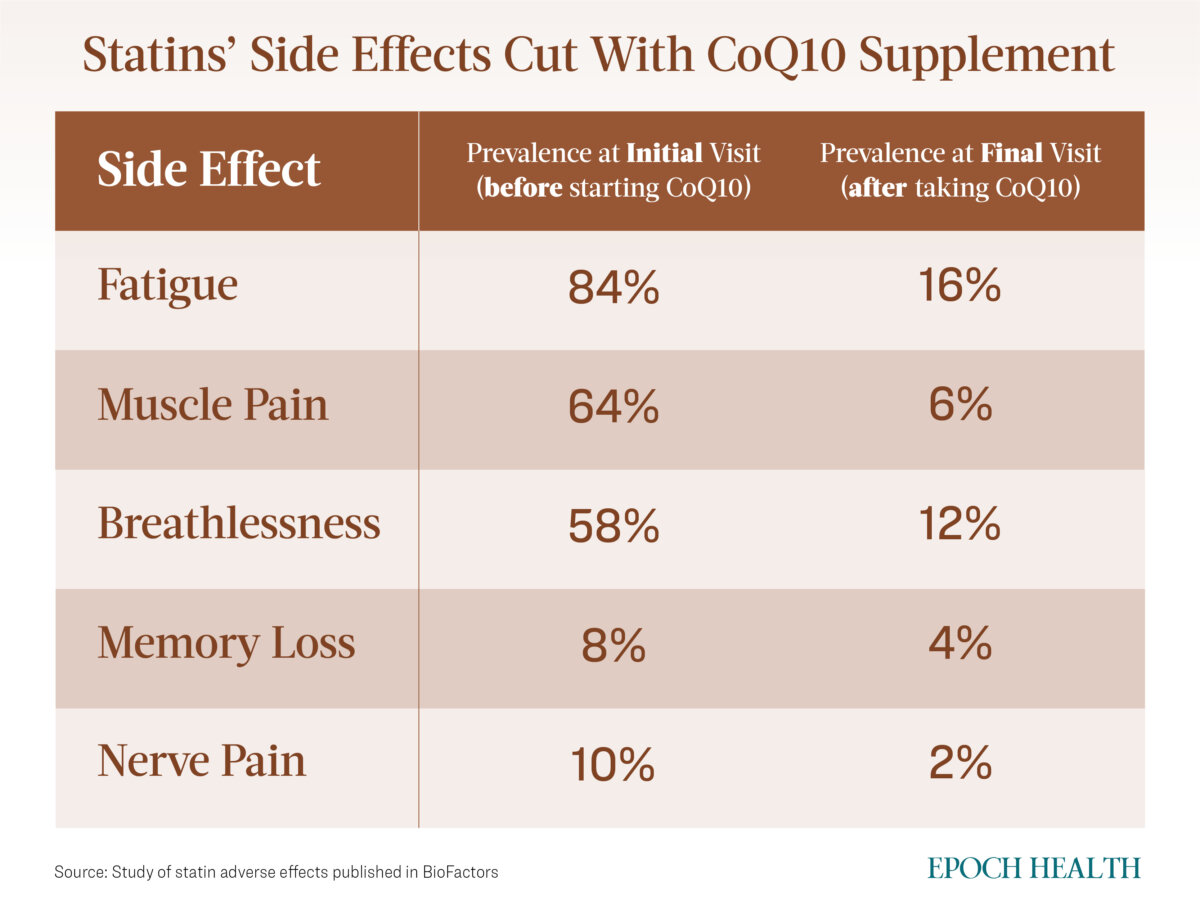
The review, published in Clinical Pharmacology, suggests that statins may act as “mitochondrial toxins,” impairing muscle function in the heart and blood vessels by depleting coenzyme Q10 (CoQ10), an antioxidant cells use for growth and maintenance. Multiple studies show that statins inhibit CoQ10 synthesis, leading many patients to supplement.
CoQ10 is vital for producing ATP, the cell’s fundamental energy carrier. Insufficient CoQ10 inhibits ATP production, resulting in an energy deficit that the review authors say “could be a major cause for heart muscle and coronary artery damage.”
Statins Deplete Vitamin K, Raising Heart Calcification Risk
Statins impair the production of vitamin K, an essential vitamin in managing calcification, according to the review. Optimal vitamin K2 intake helps avoid plaque buildup of atherosclerosis—thickening or hardening of the arteries—and keeps calcification risk low.
Coronary calcification happens when calcium accumulates in the walls of the coronary arteries, which provide oxygen to the heart. This plaque buildup is a sign of early coronary artery disease, which can block blood flow and trigger a heart attack.
Statins also damage selenoproteins, carriers of the mineral selenium, which is essential for heart health.


Physicians Overlook Statins as Driver of Heart Failure: Experts
Based on emerging evidence of statins’ potential cardiac downsides, the authors of the new review warned that “physicians in general are not aware that statins can cause heart failure and are clearly not recognizing it.” Although doctors readily diagnose heart failure in statin users, they usually attribute it to factors such as age, high blood pressure, or artery disease.
Doctors prescribing cholesterol drugs “cannot ignore the moral responsibility of ‘informed consent,’” the researchers wrote, noting that patients deserve full disclosure of side effects such as cardiovascular disease and heart failure.
With more than 1 million annual heart failure hospitalizations in the United States, the condition is often referred to as an epidemic—and, according to the review, it may be that “statin drug therapy is a major contributing factor.”
During an annual physical my cholesterol was slightly high and my PC doctor quickly wrote a script for statins, no mention whatsoever of side effects, etc.
As he started toward the door I asked, “What are the chances we could handle the problem with diet and exercise?” He turned his head halfway toward me and said, “none.”
That was the last time I ever saw him (got a new PC) and I threw the script in the trash.
Contrary to popular belief, the older you are, the higher your cholesterol should be.
Statins aid in the development of diabetes and alzheimers and peripheral neuropathy!
Read the book, “Statin Nation.”
Ditch the statins!
Be your own health advocate and stop believing the doctors without question!
Remember what they did to you in covid!
ΠΗΓΗ:https://www.theepochtimes.com/health/long-term-use-of-statins-linked-to-heart-disease-studies-5532644

Πρόσφατα Σχόλια